

Europe should not detach itself from the US on defence, NATO chief Mark Rutte has warned, as he backs a 5% NATO spending goal and pushes back against Manfred Weber’s call for a “European NATO”.
New Delhi, 26 December 2025, Time 5:51 PM IST- NATO Secretary General Mark Rutte has dismissed growing calls for Europe to pursue full defence independence from the United States, insisting that transatlantic unity remains indispensable to the alliance’s strength. His remarks come amid renewed debates over Europe’s military future following the Trump administration’s pressure on NATO allies to increase spending and assume greater responsibility for their own security.
In an interview with the German Press Agency, Rutte emphasized that the United States remains “completely invested” in NATO, countering claims that Washington’s political turbulence could threaten the alliance’s cohesion.
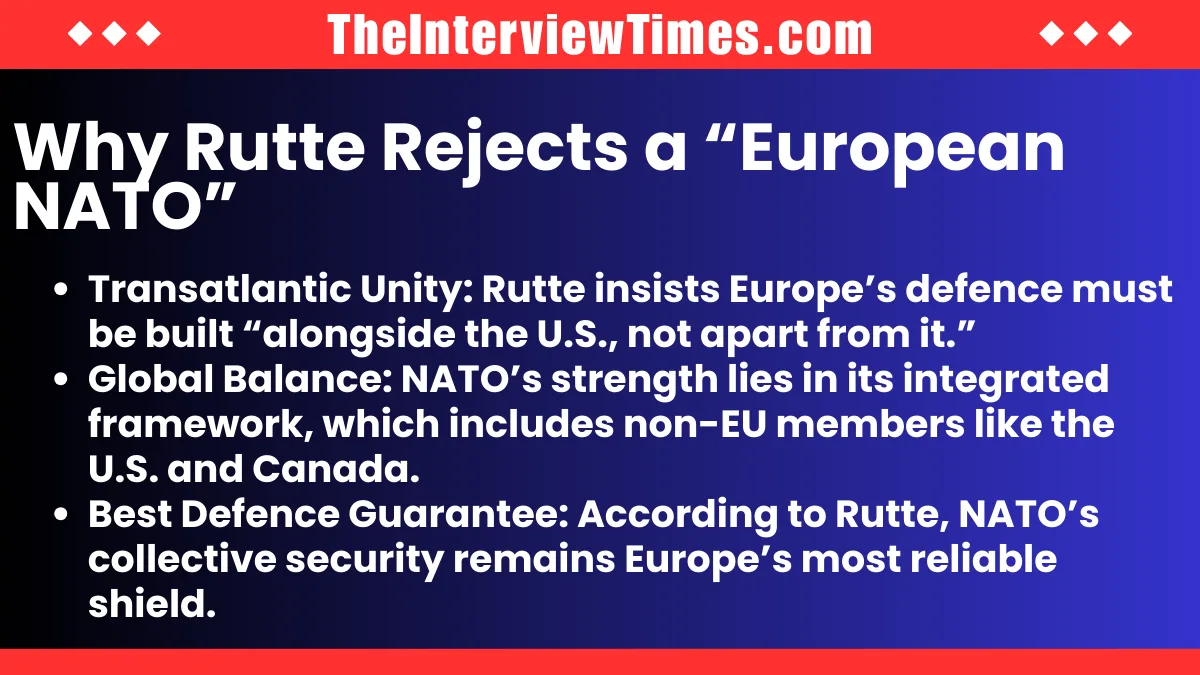
Responding directly to proposals for a “European NATO” by Manfred Weber, leader of the European People’s Party in the European Parliament, Rutte cautioned against conflating the European Union with NATO’s wider membership.
“When it comes to Europe and NATO, there is more than the EU,” Rutte said. “The EU’s 23 members within NATO account for only about a quarter of the alliance’s total economic strength. Seventy-five percent is still outside the EU — including the U.K., Norway, Canada, and of course the United States.”
Defence Spending Commitments
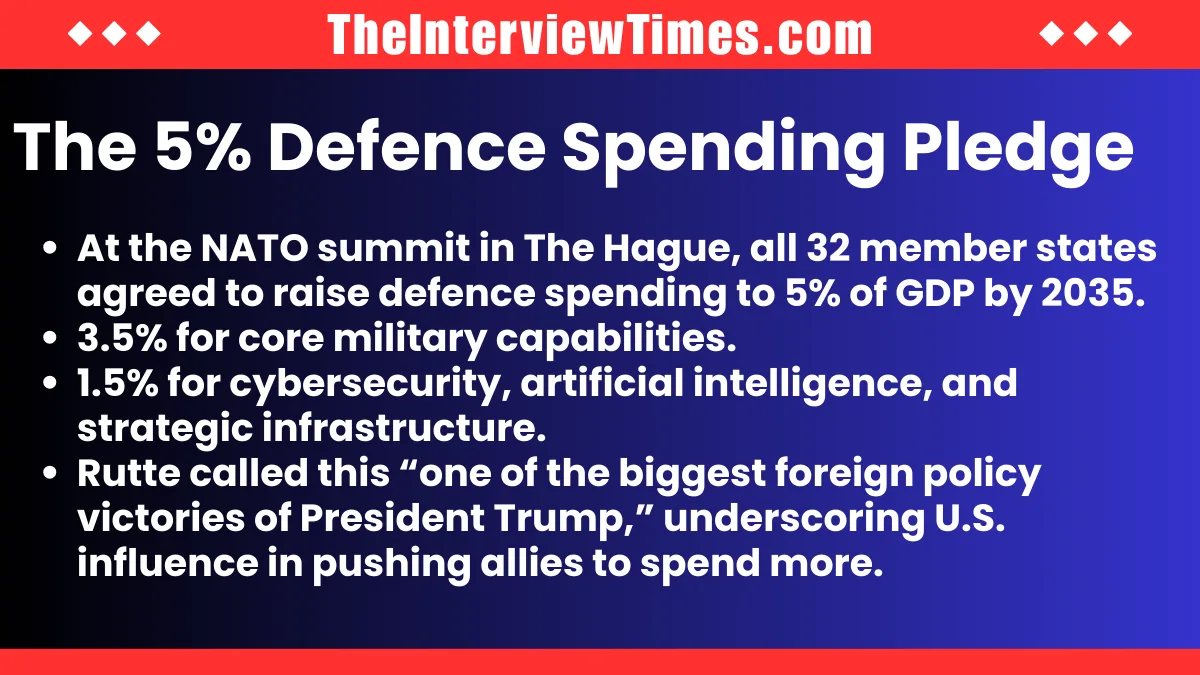
Mark Rutte’s comments followed the landmark NATO summit in The Hague, where all 32 member states agreed to raise defence spending to 5% of GDP by 2035, a sharp increase from the longstanding 2% benchmark. The agreement allocates at least 3.5% of GDP to core military capabilities and up to 1.5% for areas such as cybersecurity, artificial intelligence, and strategic infrastructure.
“I think it is still one of the biggest foreign policy victories of President Trump, the 5% target and the clear commitment to produce more,” Rutte noted.
The former Dutch prime minister, who took over as NATO chief in October 2024, underscored that Europe’s assumption of more defence duties must happen “alongside the U.S., not apart from it.”
Read Also: US Ambassador to NATO: Ukraine War Could End Within 90 Days
Weber’s European Defence Vision
Weber, a prominent German lawmaker, recently reignited the autonomy debate by proposing that German troops serve under a European flag in Ukraine and urging Brussels to craft a continental security strategy independent of Washington.
His remarks reflect rising sentiment within segments of the European Parliament that seek to hedge against long-term U.S. unpredictability.
Mark Rutte, while respectful of Weber’s initiative, diverged sharply on the need for separation from Washington.
“Manfred Weber has done a lot for European defence thinking, but I take a slightly different view,” he said, reiterating that NATO’s integrated framework “remains Europe’s best defence guarantee.”
Read Also: Parliament Passes SHANTI Bill, Opening India’s Nuclear Energy Sector to Private Companies
Strategic Crossroads for Europe
As the Trump administration’s National Security Strategy warns of potential “civilizational erasure” if Europe fails to secure itself, policymakers across the continent face renewed scrutiny over defence readiness and dependency on American security guarantees. While Rutte’s remarks reaffirm NATO’s traditional balance, the push for European strategic sovereignty shows no sign of fading, signaling continued friction between unity and self-reliance in shaping Europe’s defence future.
