
New Delhi, January 14, 2026, 10:58 a.m. IST
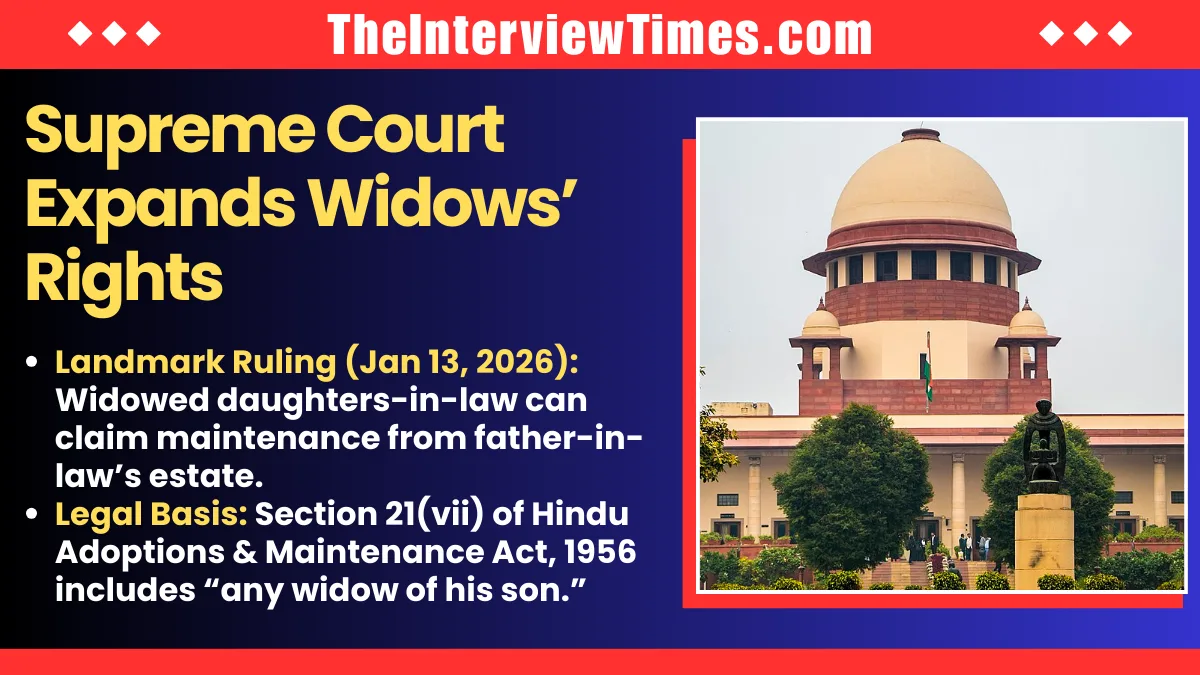
Supreme Court expands widows’ rights, allowing maintenance claims from in-laws’ estates under Hindu law, reinforcing equality and dignity.
The Supreme Court ruled on January 13, 2026, that widowed daughters-in-law can claim maintenance from their father-in-law’s estate under Hindu law, irrespective of whether their husband died before or after him.
The bench of Justices Pankaj Mithal and S.V.N. Bhatti dismissed appeals in Kanchana Rai & Anr. v. Geeta Sharma & Ors. (2026 INSC 54), upholding a High Court order and directing the Family Court to fix maintenance amounts.
Case Origins
Dr. Mahendra Prasad died in December 2021, leaving an estate contested by family members. Geeta Sharma, wife of his son Ranjit Sharma who died later, sought maintenance as a dependant under the Hindu Adoptions and Maintenance Act, 1956.
A Family Court rejected her claim, arguing she was not widowed at the time of her father-in-law’s death. The High Court overturned this in August 2025, prompting appeals from relatives including Kanchana Rai.
Must Read: TCS Layoffs Spark Backlash from Employee Advocacy Groups
Key Legal Interpretation
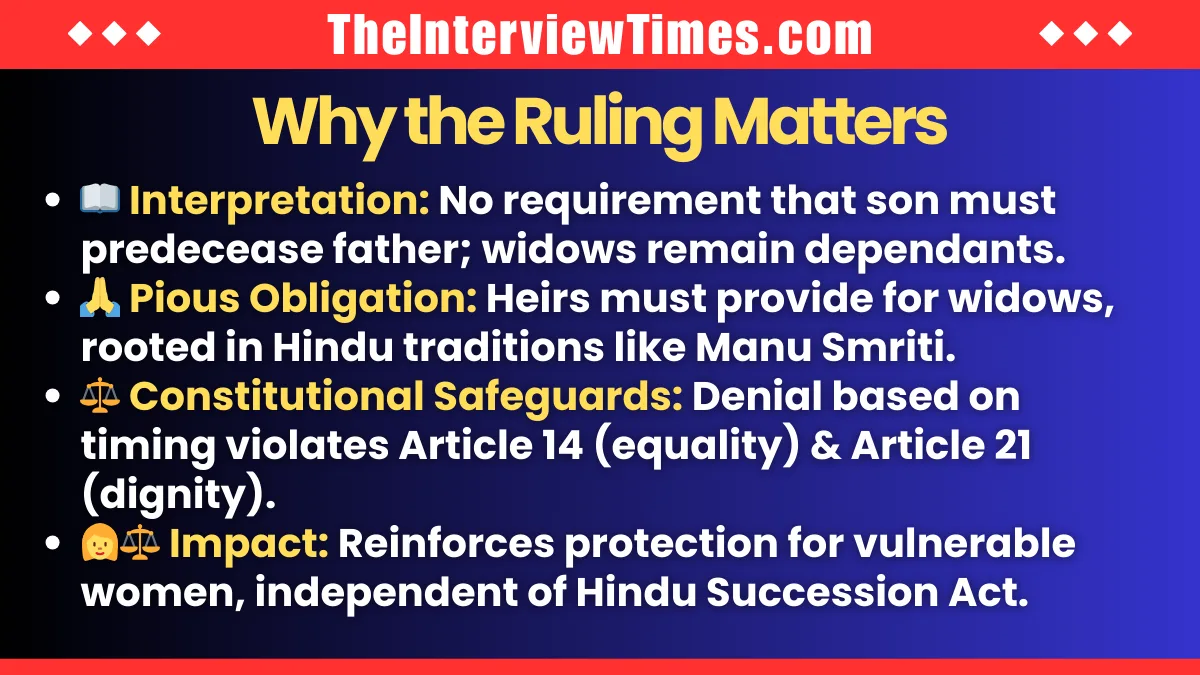
The court scrutinised Section 21(vii), defining dependants as including “any widow of his son,” without requiring the son to predecease the father. Justice Mithal noted the legislature’s intentional omission of “predeceased,” rejecting narrower readings.
Heirs must provide for such dependants from inherited funds, fulfilling a “pious obligation” rooted in Hindu traditions like Manu Smriti, which prohibits abandoning blameless relatives.
Widows’ Maintenance Rights: Constitutional Safeguards
Denying claims based on death timing would be arbitrary, violating Article 14’s equality guarantee and Article 21’s right to a dignified life, potentially leading to destitution.
The ruling reinforces protections for vulnerable women, independent of the Hindu Succession Act, prioritising statutory plain language.
