
New Delhi | January 29, 2026, 07:17 p.m. (IST)
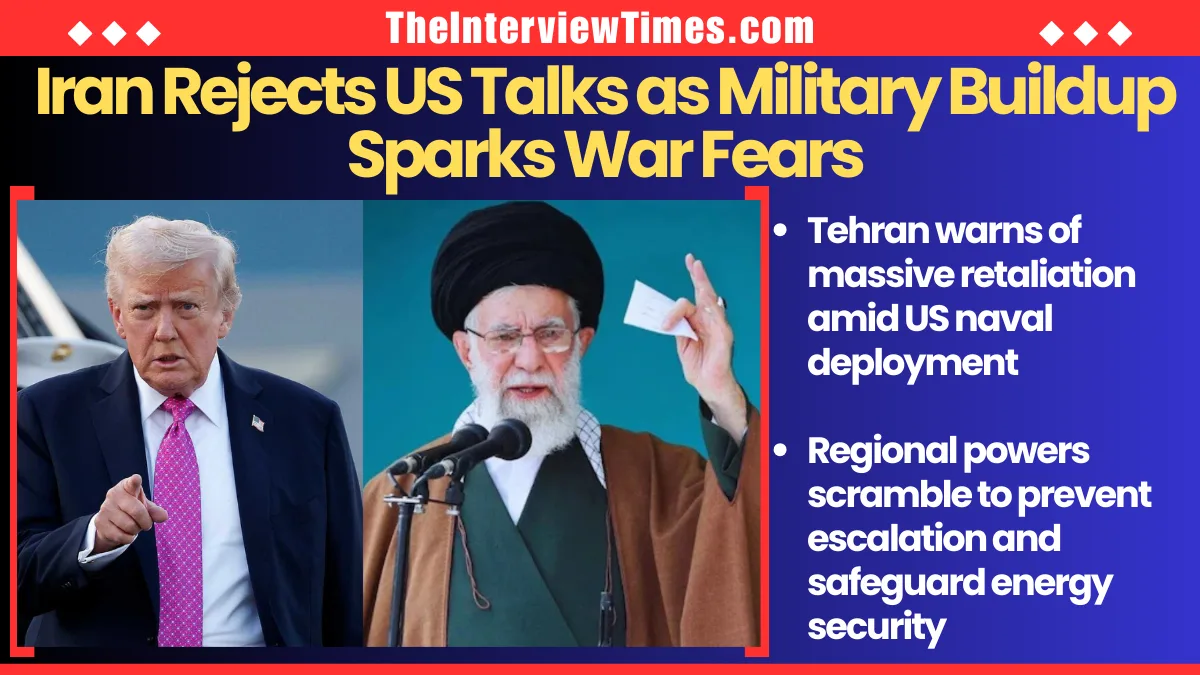
Iran rejects US talks amid rising military tensions as Trump deploys a carrier group, protests shake Tehran, and regional powers push diplomacy to avert war.
Key Highlights
- Iran has refused negotiations with the United States, citing military threats from Washington.
- President Donald Trump has ordered a major US naval deployment to the Middle East.
- Iran has placed its armed forces on high alert and warned of massive retaliation.
- Deadly protests inside Iran have deepened instability amid economic collapse.
- Regional powers are racing to prevent escalation and protect energy security.
Tensions between Iran and the United States have escalated sharply after Tehran rejected any talks under what it described as direct military pressure from Washington. The standoff follows President Donald Trump’s decision to deploy a large US naval force to the Middle East, a move that Iranian leaders say makes diplomacy impossible.
Iran’s government has simultaneously raised its military readiness and launched urgent diplomatic outreach across the region. Officials fear that continued pressure from Washington could trigger a wider conflict at a time when Iran is grappling with its most severe internal crisis in decades.
Protests and Economic Collapse Trigger Crisis
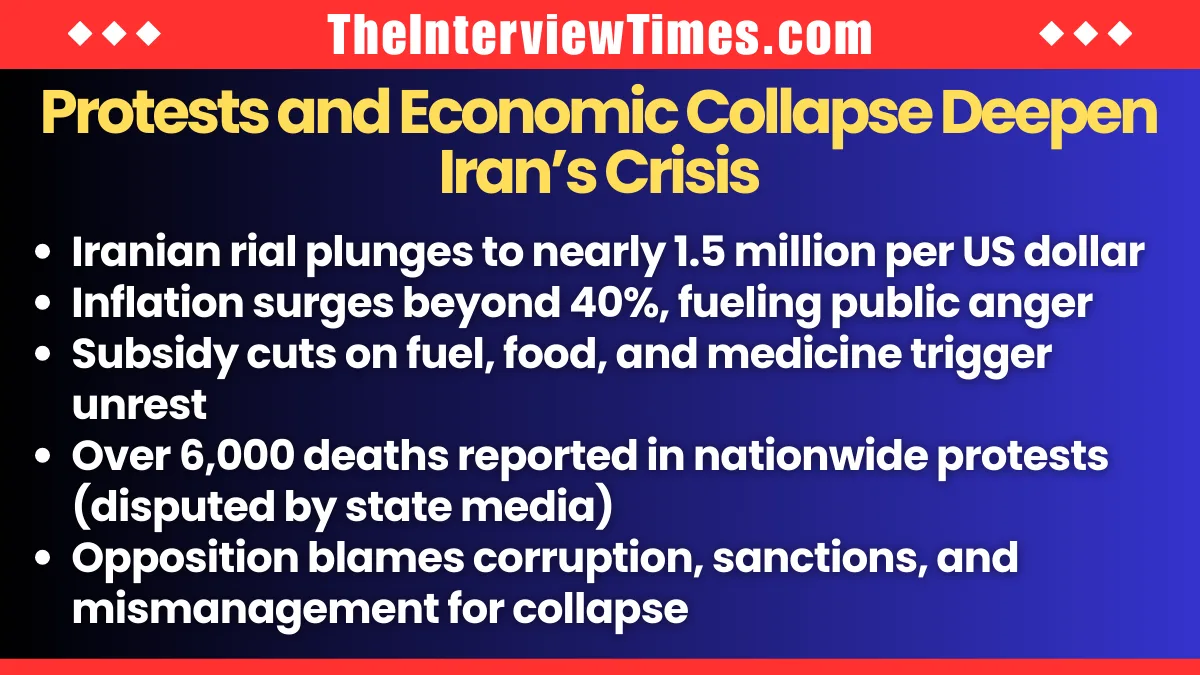
The current confrontation has its roots in widespread protests that erupted across Iran on December 28, 2025. Demonstrations were triggered by a dramatic collapse of the national currency, with the Iranian rial plunging to nearly 1.5 million per US dollar. Inflation has surged beyond 40 percent, while subsidy cuts on fuel, food, and medicine intensified public anger.
Shopkeepers in Tehran’s historic Grand Bazaar were among the first to shut down in protest. Unrest quickly spread to major cities and provincial towns despite a near total internet blackout imposed by Iranian authorities.
Security forces responded with overwhelming force. The US based Human Rights Activists News Agency reports at least 6,126 deaths, including protesters, security personnel, and bystanders. If confirmed, this would mark the deadliest unrest since Iran’s 1979 Islamic Revolution. Iranian state media disputes these figures, describing many of those killed as militants or terrorists.
Opposition groups and economists argue the unrest reflects deep frustration over economic mismanagement, corruption, and the long term impact of international sanctions.
Top News: Khaby Lame Sells TikTok Empire Company in $900 Million Deal
Iran’s Leadership Draws a Red Line
Iran’s Foreign Minister Abbas Araghchi said on January 28 that negotiations cannot take place under threat. He stated clearly that Iran has not initiated any talks with Washington and denied reports of contact with US envoy Steve Witkoff.
In a post on X, Araghchi said Iran’s armed forces are fully prepared to respond immediately to any act of aggression. He emphasized that diplomacy cannot succeed when one side relies on intimidation and military buildup.
Ali Shamkhani, a senior adviser to Supreme Leader Ayatollah Ali Khamenei, issued an even stronger warning. He said any US strike would lead to an immediate and unprecedented response targeting aggressors and their supporters, including sites inside Israel.
US Deploys Carrier Group and Signals Pressure
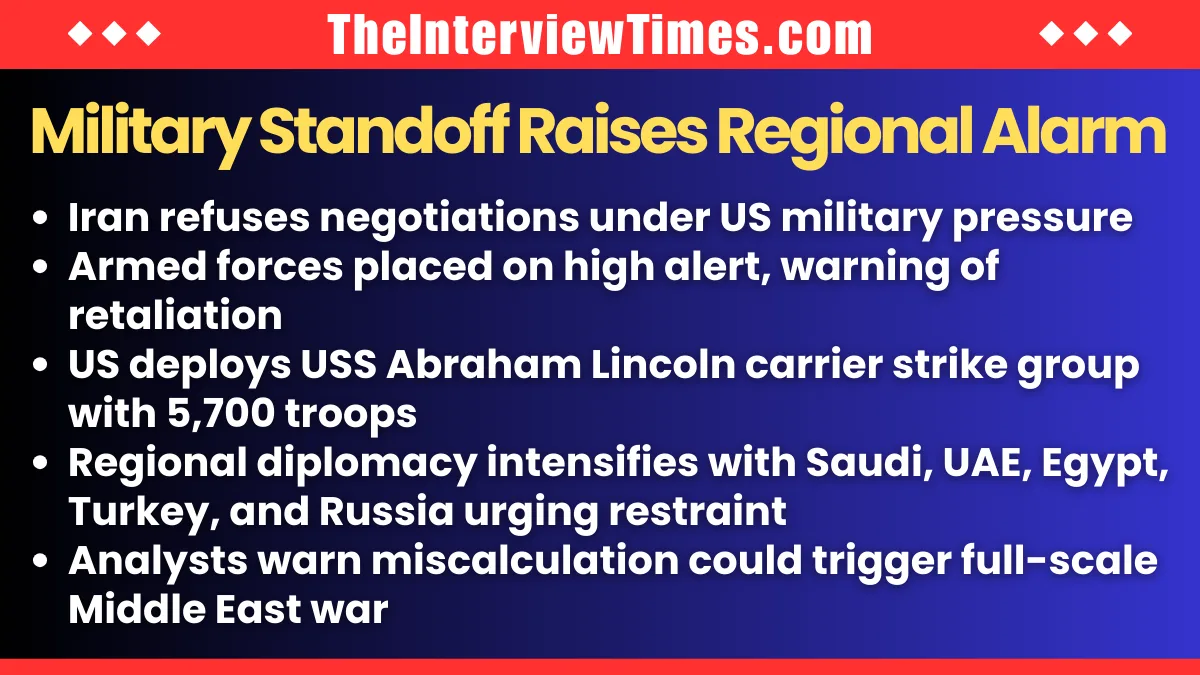
President Trump announced on Truth Social that a massive US armada is heading toward the region, including the USS Abraham Lincoln carrier strike group equipped with F 35C fighter jets and advanced destroyers. The deployment adds approximately 5,700 troops and brings total US forces in the Middle East close to 50,000.
Trump warned that the United States would act with speed and force if its demands were ignored. US officials insist the deployment is defensive, but the scale of the buildup has raised alarms across the region.
Secretary of State Marco Rubio told Congress that the Iranian regime is likely weaker than at any point in recent history. He cited economic collapse and widespread protests as signs of vulnerability. While Rubio said there are no formal plans for regime change, he acknowledged that Washington is evaluating all options.
Regional Diplomacy Intensifies
Fearing a wider war, Iran has launched a diplomatic push to prevent regional involvement in any US strike. Tehran says it has received assurances from Saudi Arabia and the United Arab Emirates that their airspace and territory will not be used for attacks on Iran.
Egypt’s Foreign Minister Badr Abdelatty has urged restraint in discussions with both Washington and Tehran. Qatar’s Prime Minister has also voiced support for de escalation efforts.
Turkey’s Foreign Minister Hakan Fidan warned that any US attack would be wrong and destabilizing. Russia has offered to mediate, with President Vladimir Putin signaling readiness to facilitate dialogue. Oman and other Gulf states have privately urged Washington to avoid military action, citing risks to energy infrastructure and regional stability.
High Stakes and Narrow Options Ahead
As US military assets move into position, Iranian leaders have warned that any strike on their territory or commanders would be treated as an act of full scale war. Analysts say the US strategy appears aimed at pressuring Tehran back to nuclear negotiations or exploiting internal unrest.
However, with Iran’s economy deteriorating and protests still simmering, the space for meaningful diplomacy is shrinking. Whether regional mediation can prevent miscalculation remains uncertain, but the cost of failure could be catastrophic for the Middle East.
Top News: Trump’s Board of Peace Faces Global Backlash Over UN Authority Challenge
