
Can dogs talk? Scientists explore new research revealing how dogs understand speech, communicate emotions, and what this means for human evolution.
Can Dogs Talk? Exploring the Real Possibilities
Imagine sitting on the couch when your dog looks at you and says, “Walk?” It’s a moment humans have dreamed of for centuries.
The question “Can dogs talk?” has long fascinated both scientists and pet owners. The idea lives in myths, movies, and bedtime stories. We’ve always wanted to know what our dogs would say if they could talk.
Now, researchers are asking that question with serious intent. Scientists from the BARKS Lab at Eotvos Lorand University in Hungary have reviewed decades of studies to explore whether dogs could ever learn to speak — or whether they already communicate better than we think.
Must Read: The Science of Aging: Why We Grow Old and What Can Slow It Down
A Bond Built Over Ages
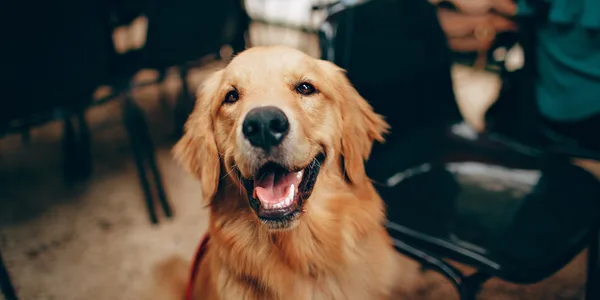
Humans and dogs have evolved side by side for thousands of years. This partnership changed both species. Dogs learned to read our moods and movements, while we learned to trust their instincts. That connection turned survival allies into family.
Scientists say this deep understanding makes dogs an ideal model for studying communication. They don’t just respond to commands; they sense intent.
A tilt of the head, a wag, or a soft whine – each carries meaning. Still, can dogs talk in the human sense? Speech is another level entirely. It demands anatomy and brain coordination that most species don’t have.
Why Dogs Can’t Talk Like Humans
Speech looks simple when humans do it. In reality, it’s one of the most complex biological acts. It requires precise timing between the lungs, larynx, tongue, and brain.
The human vocal system evolved for this. Dogs’ bodies didn’t. Their shorter vocal tracts and differently shaped mouths make it nearly impossible to form the wide range of sounds humans use for words.
Evolution shaped humans for language and dogs for empathy. Our lowered larynx helps us talk but makes choking easier — a trade-off dogs never made.
Dogs kept structures that let them bark, pant, and howl efficiently. Their anatomy suits their world, not ours. So while dogs can communicate, the answer to can dogs talk is — not in the way we do.
Can Dogs Talk? The Limits of Language in Dogs
“The real question is: are dogs really on the road to verbalization?” asked Dr. Rita Lenkei, one of the lead authors.
Dogs can understand plenty of words — even recognizing names of toys or family members. But can dogs talk using grammar or form new sentences? No. Their brains link words with emotions or objects, but they don’t organize symbols like humans do.
How Dogs Process Human Speech
Brain scans show that dogs process familiar words in regions similar to human language areas, though their neural patterns differ.
The parts of the dog brain that light up reveal recognition, not linguistic creativity. Dogs understand tone, rhythm, and intent better than syntax.
Over generations, dogs became experts in reading humans. Domestication selected for cooperation, not conversation — showing that dogs talk in their own emotional way, not through words.
Maybe Dogs Don’t Need to Talk
“Instead, we suggest that the focus should be on better understanding the unique ways dogs already communicate,” said Dr. Paula Perez Fraga.
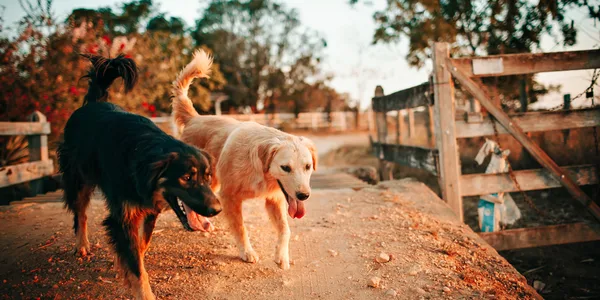
Dogs share their thoughts through subtle gestures. A shift in posture can show discomfort. A low growl can warn or worry. A sigh can signal relaxation.
These cues form a rich communication system shaped by emotion and context. So before asking can dogs talk, perhaps we should ask whether they even need to.
Lessons for Evolution
“Because we cannot recreate the conditions under which human speech emerged, comparative models are essential,” said Dr. Tamas Farago.
Studying dogs’ communication may reveal how empathy and cooperation paved the way for human speech. Their long history with humans makes them emotional mirrors — showing how shared understanding can evolve without words.
Must Read: The Rising Threat of Nightmare Bacteria: A Global Health Crisis
When Dogs Talk Without Words
Insights from dog-human communication could help engineers design social robots that respond to tone, motion, and emotion — much like dogs do.
Dogs may never form words, but they start conversations every day: nudging for attention, looking away when uneasy, or celebrating when you smile.
Their language is emotional, not verbal — and that may be why it works so well. Sometimes, the most meaningful conversations happen in silence.