
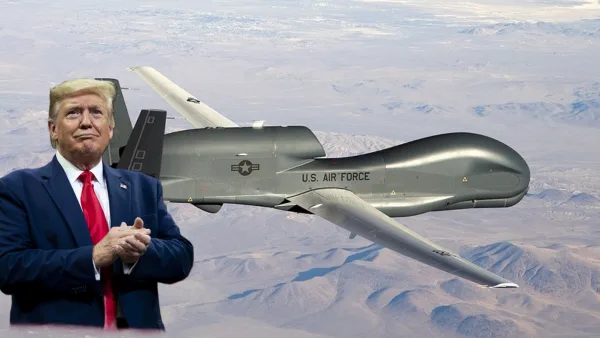
The U.S. Army plans to buy 1 million drones in a historic defense shift, marking the rise of expendable drone warfare and rapid unmanned military expansion.
TheInterviewTimes.com | Washington, D.C. | November 7, 2025 — In a groundbreaking announcement, the U.S. Army revealed plans to buy 1 million drones over the next three years, signalling a new era of drone warfare.
Army Secretary Daniel Driscoll said this large-scale drone acquisition represents a fundamental shift in defense strategy—where drones are treated as expendable tools rather than high-value assets.
The move reflects critical lessons from the Russia-Ukraine conflict, where drones have become central to every combat operation.
Drone Warfare: A Historic Expansion for the U.S. Army
The drone program is expected to increase production from 50,000 to millions annually—a transformation unmatched in U.S. military history. Driscoll emphasized that the drone must now be viewed as “ammunition” rather than equipment, allowing troops to deploy thousands in coordinated swarms during high-intensity conflicts.
Speaking at Picatinny Arsenal in New Jersey, he noted the need to build domestic drone manufacturing capacity to reduce reliance on foreign suppliers, especially China, which dominates the market for drone components such as motors, sensors, and batteries.
Must Read: US Government Shutdown Triggers Global Financial Liquidity Crisis
Lessons from Ukraine and China’s Drone Revolution
The U.S. strategy mirrors lessons from Ukraine, where drone warfare has changed the balance of power. Both Russia and Ukraine now produce about four million drones a year, while China manufactures roughly eight million—far exceeding U.S. output. These low-cost drones have destroyed tanks and artillery worth millions, proving that mass production and affordability can outmatch expensive platforms.
Driscoll said the U.S. Army is preparing for a similar transformation: “Within two years, we want a supply chain that can scale to any number of drones required in combat.” The Army is also testing counter-drone systems, including electromagnetic and net-based tools, to defend against enemy swarms.
Distributed Production: A New Drone Procurement Model
Rejecting the idea of a single central factory, the Army will distribute drone production contracts among several commercial firms. The goal is to accelerate output and foster innovation. The drone program favors smaller, tech-driven companies over legacy defense giants, tapping into the agility of the private sector.
Programs such as SkyFoundry are converting Army depots into drone assembly sites. Under the Pentagon’s Replicator initiative, companies like Anduril and Performance Drone Works are already building scalable drone models to meet the new defense requirements.
Industrial Challenges in the Drone Race
While the plan is ambitious, scaling up drone production faces significant obstacles. Bureaucratic bottlenecks, limited domestic suppliers, and funding uncertainties could delay progress. The Department of Government Efficiency (DOGE) has begun testing procurement models with 30,000 low-cost drones to evaluate readiness.
Defense Secretary Pete Hegseth’s directive to achieve “U.S. drone dominance” underscores the urgency of industrial reform. Analysts warn that the U.S. still lags behind its adversaries in mass-producing cheap, attritable drones, making this program a vital step toward parity.
Economic Impact and Global Implications
Following the announcement, drone-related stocks surged. Companies like Red Cat Holdings (RCAT) and Unusual Machines (UMAC) saw strong investor interest. Market analysts say this expansion in drone production could stimulate U.S. manufacturing, create new tech jobs, and reduce reliance on imports from China.
Social media defense watchers called the move “America’s drone awakening,” while Driscoll framed it as a “once-in-a-generation reindustrialization of the U.S. defense base.”
A New Age of Drone Warfare
The drone surge marks a paradigm shift in how wars will be fought in the 21st century. Cheap, expendable, and autonomous drones will dominate the skies, replacing traditional aircraft in many missions. For the U.S. Army, this drone acquisition surge is not just procurement—it’s the dawn of a new military philosophy built on scale, innovation, and resilience.