
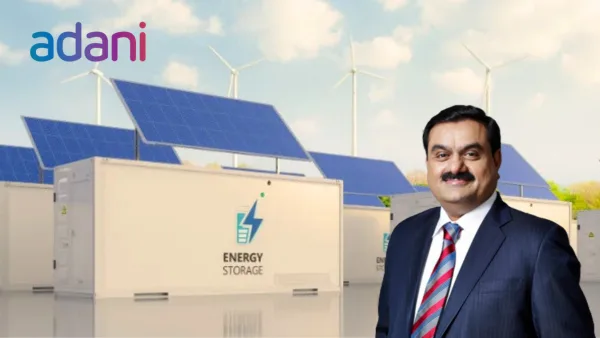
Adani Group unveils India’s largest battery energy storage project in Gujarat’s Khavda, marking a major milestone in renewable energy innovation.
Key Points
- Adani Group announces India’s largest Battery Energy Storage System (BESS) in Khavda, Gujarat.
- The project will have a 1,126 MW power and 3,530 MWh storage capacity, enabling round-the-clock renewable power.
- It’s part of Adani Green Energy’s 30 GW Khavda Renewable Park, the largest in the world.
- The project supports India’s 500 GW non-fossil fuel target by 2030.
- Scheduled for completion by March 2026, with expansion plans up to 50 GWh in five years.
Khavda Hosts India’s Largest Energy Storage System
TheInterviewTimes.com | November 11, 2025 — The Adani Group, through its renewable arm Adani Green Energy Limited (AGEL), has announced India’s largest Battery Energy Storage System (BESS) with a total capacity of 1,126 MW power and 3,530 MWh energy storage. The project, located at the world’s largest renewable energy park in Khavda, Gujarat, marks a pivotal step in India’s energy transition.
The company described the project as a “historic milestone”, emphasizing its role in enabling round-the-clock renewable power and enhancing national grid reliability. The facility features over 700 advanced lithium-ion battery containers managed by a next-generation Energy Management System (EMS).
Must Read: PM Narendra Modi in Bhutan: Inaugurates 1,020 MW Hydro Project with Bhutan King
Adani Group’s Vision for Clean Energy Leadership
Gautam Adani, Chairman of the Adani Group, said,
“This project sets a global benchmark for large-scale energy storage and reinforces India’s leadership in the clean energy revolution. It is a critical step toward achieving energy independence and meeting our nation’s 500 GW non-fossil fuel target by 2030.”
The Khavda BESS integrates seamlessly with AGEL’s 30 GW renewable energy park, which combines solar and wind power assets. The system will store surplus solar energy generated during the day and discharge it during evening peak demand, addressing the intermittency challenge faced by renewables.
Expansion Plans and Safety Innovations
AGEL plans to expand its storage portfolio aggressively:
- 15 GWh additional capacity by March 2027
- 50 GWh total portfolio within five years
The company emphasized the project’s cutting-edge safety architecture, including multi-layer fire detection and suppression systems, and compliance with international standards for grid-scale batteries.
Must Read: Bhutan Visa: A Step-by-Step Guide for Global Travelers
Industry Response and Government Backing
Energy experts have hailed the Adani Group’s initiative as a game-changer for India’s renewable sector. A senior official from the Ministry of New and Renewable Energy noted that,
“At 3,530 MWh, this single-location deployment will be among the largest in the world when completed.”
The announcement follows the Government of India’s rollout of Viability Gap Funding (VGF) tenders to promote large-scale energy storage, reflecting robust policy support for the sector.
Must Read: US Government Shutdown Nears End as Senate Passes Bipartisan Bill After 41 Days
Market Impact and Adani Group’s Renewable Dominance
Following the announcement, Adani Green Energy’s shares closed 2.8% higher on the BSE, signaling strong investor confidence. With this milestone, the Adani Group now boasts over 12 GW of operational renewable capacity and 30 GW under implementation, solidifying its position as India’s leading player in clean energy infrastructure.
Conclusion
The Adani Group’s battery energy storage initiative at Khavda is more than a technological breakthrough — it’s a strategic leap toward sustainable energy security. By coupling massive renewable generation with advanced storage, India is moving closer to achieving its net-zero and energy independence goals.
Must Read: India-Russia Worker Mobility Pact 2025: A New Era in Trade and Labour Cooperation