G7 Foreign Ministers Reaffirm Support for Ukraine and Global Security at Niagara Summit
At the G7 Foreign Ministers’ Meeting in Niagara, world leaders reaffirmed support for Ukraine, urged peace in the Middle East, and strengthened Indo-Pacific cooperation.
G7 Foreign Ministers Meet in Niagara
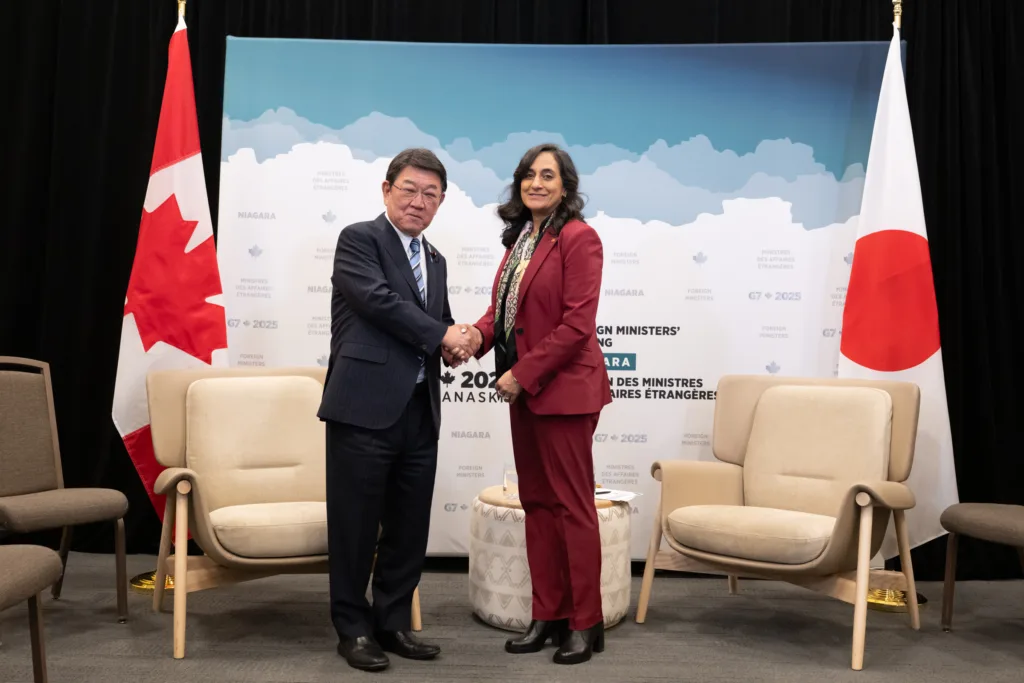
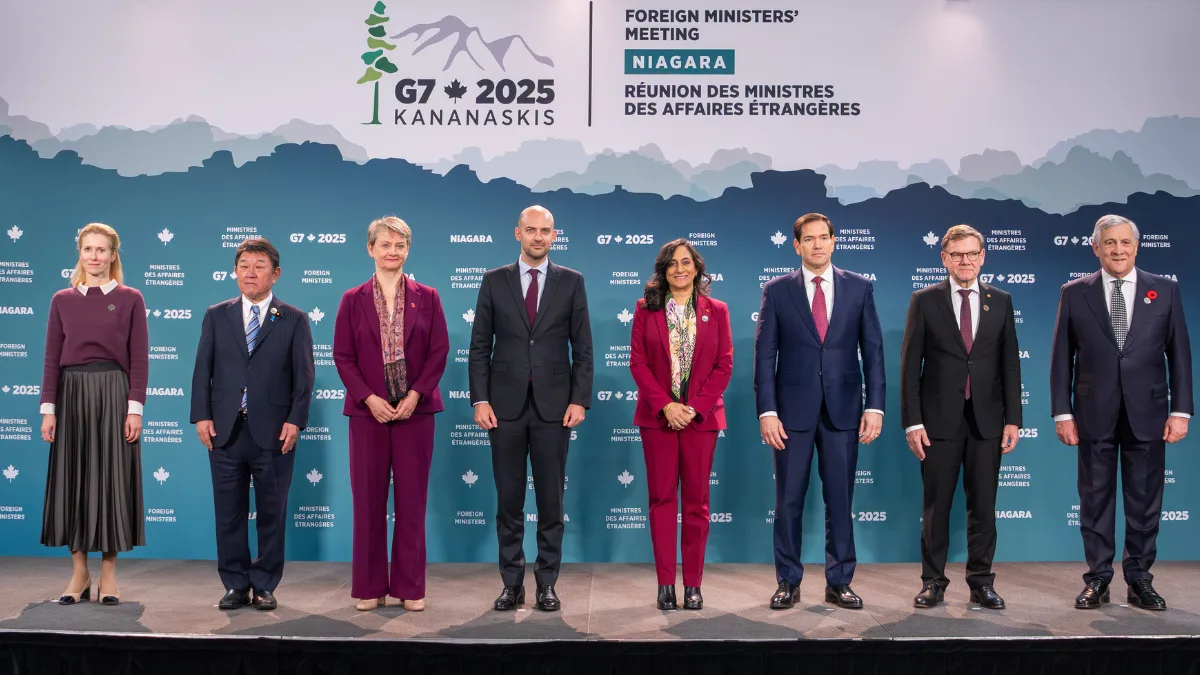
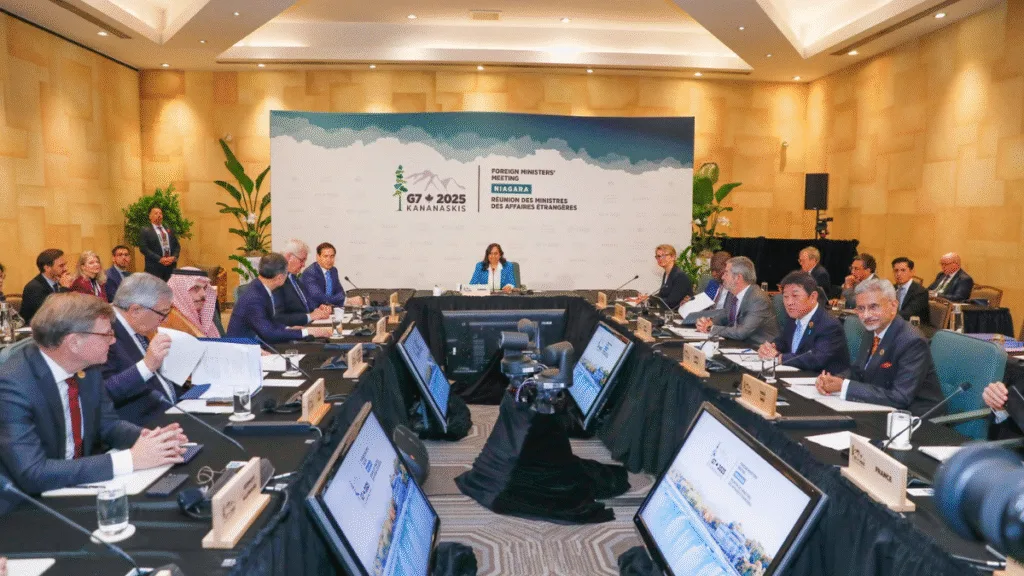
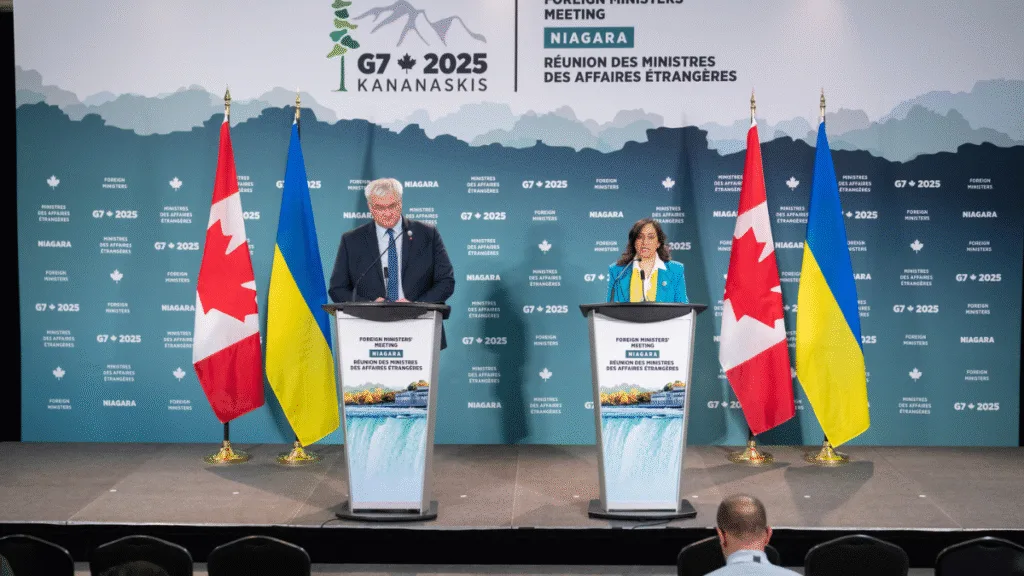
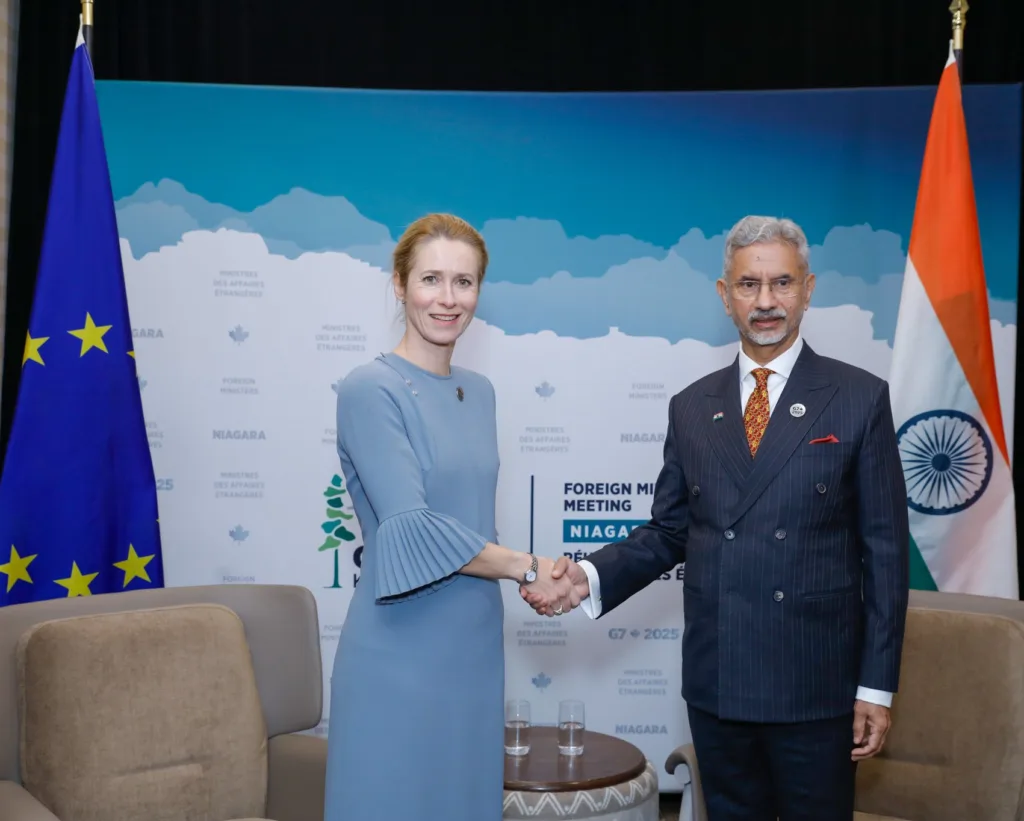
TheInterviewTimes.com | November 13, 2025 — The G7 Foreign Ministers of Canada, France, Germany, Italy, Japan, the United Kingdom, and the United States — along with the European Union’s High Representative — met in the Niagara Region, Ontario, on November 11–12, 2025. Delegates from India, Brazil, Saudi Arabia, South Africa, and Ukraine also participated, reflecting an expanded dialogue on global challenges including maritime security, energy resilience, and critical minerals.
The G7 Foreign Ministers’ Meeting in Canada concluded with a strong joint statement reaffirming unity on Ukraine, Middle East peace, Indo-Pacific security, and critical mineral supply chains, signaling a coordinated global response to evolving geopolitical challenges.
Key Points:
- G7 Foreign Ministers met in Canada under the Canadian presidency, joined by ministers from India, Brazil, and other global partners.
- The group reaffirmed unwavering support for Ukraine, calling for an immediate ceasefire and measures against Russian enablers.
- They welcomed President Trump’s Gaza peace plan, urging humanitarian access and continued dialogue for Middle East stability.
- The ministers emphasized freedom of navigation in the South China Sea and opposed coercive tactics in the Indo-Pacific.
- The meeting also addressed critical minerals, energy security, and economic resilience to reduce dependencies on non-market actors.
Support for Ukraine and Sanctions Against Russia
In one of the most prominent declarations, the G7 Foreign Ministers reaffirmed their “unwavering support for Ukraine”, emphasizing the country’s right to sovereignty and territorial integrity. The statement called for an immediate ceasefire, beginning with the current line of contact as the basis for negotiations.
The ministers pledged to increase economic pressure on Russia and warned against countries aiding Moscow’s war efforts, including Iran, North Korea, and China. They also discussed leveraging immobilized Russian sovereign assets to support Ukraine’s reconstruction and defence.
Day 2 of the #G7ForeignMinisters meeting focused on deepening collaboration on global peace and security issues. Key topics of discussion included Ukraine and defence cooperation, advancing peace in the Middle East, and energy security and critical minerals. #G7Kananaskis2025 pic.twitter.com/w7e6SzWuUj
— G7 (@G7) November 13, 2025
Middle East Peace and Iran’s Nuclear Commitments
Addressing the Middle East, the ministers backed President Trump’s Comprehensive Plan to End the Gaza Conflict, welcoming the ceasefire and the release of hostages. They called for unrestricted humanitarian aid through the UN and Red Crescent channels.
The statement also urged Iran to resume full cooperation with the International Atomic Energy Agency (IAEA) and comply with nuclear non-proliferation agreements. The ministers supported direct U.S.–Iran talks facilitated by European partners to reduce regional tensions.
Indo-Pacific Security and China’s Expanding Role
The G7 reaffirmed commitment to a “free and open Indo-Pacific”, expressing serious concern over China’s coercive maneuvers in the East and South China Seas. The ministers stressed that the 2016 Arbitral Tribunal ruling remains binding and opposed any unilateral attempts to alter the status quo.
They emphasized peaceful cross-Strait dialogue with Taiwan and supported its participation in international organizations. The ministers also called on Beijing to demonstrate transparency regarding its military expansion and nuclear arsenal.
Global Conflicts: Haiti, Sudan, and DRC
The G7 Foreign Ministers voiced concern over escalating violence in Sudan, condemning ethnically motivated attacks and urging an immediate ceasefire. They expressed support for diplomatic efforts to restore peace and facilitate humanitarian aid.
On Haiti, the ministers called for voluntary contributions to implement UN Security Council Resolution 2793 and welcomed a Regional Maritime Security Initiative aimed at combating organized crime in the Caribbean. They also urged progress toward free and fair elections.
In the Democratic Republic of Congo (DRC), the G7 condemned ongoing violence and sexual abuse, supporting peace processes under UNSC Resolution 2773 and praising the recent Paris Conference on regional stability.
Critical Minerals, Energy Security, and Economic Resilience
A key outcome of the Niagara meeting was the reaffirmation of the G7 Critical Minerals Action Plan, emphasizing sustainable supply chains and diversification away from non-market dependencies. The ministers warned against market distortions and overcapacity, calling for transparent trade in critical minerals like lithium, graphite, and cobalt.
The group agreed to pursue joint initiatives to strengthen global economic resilience, enhance energy security, and safeguard maritime trade from illicit activities such as sanctions evasion, illegal fishing, and arms transfers.
Must Read: India Rationalizes Royalty Rates for Critical Minerals to Boost Green Energy and Reduce Imports

Conclusion: Unity Amid Global Challenges
The G7 Foreign Ministers concluded by underscoring that maritime security, economic cooperation, and shared democratic values remain the foundation of global peace. The Niagara Summit set the tone for stronger G7 coordination and expanded partnerships with emerging powers like India, Brazil, and South Africa — reaffirming a rules-based international order amid rising geopolitical complexity.