
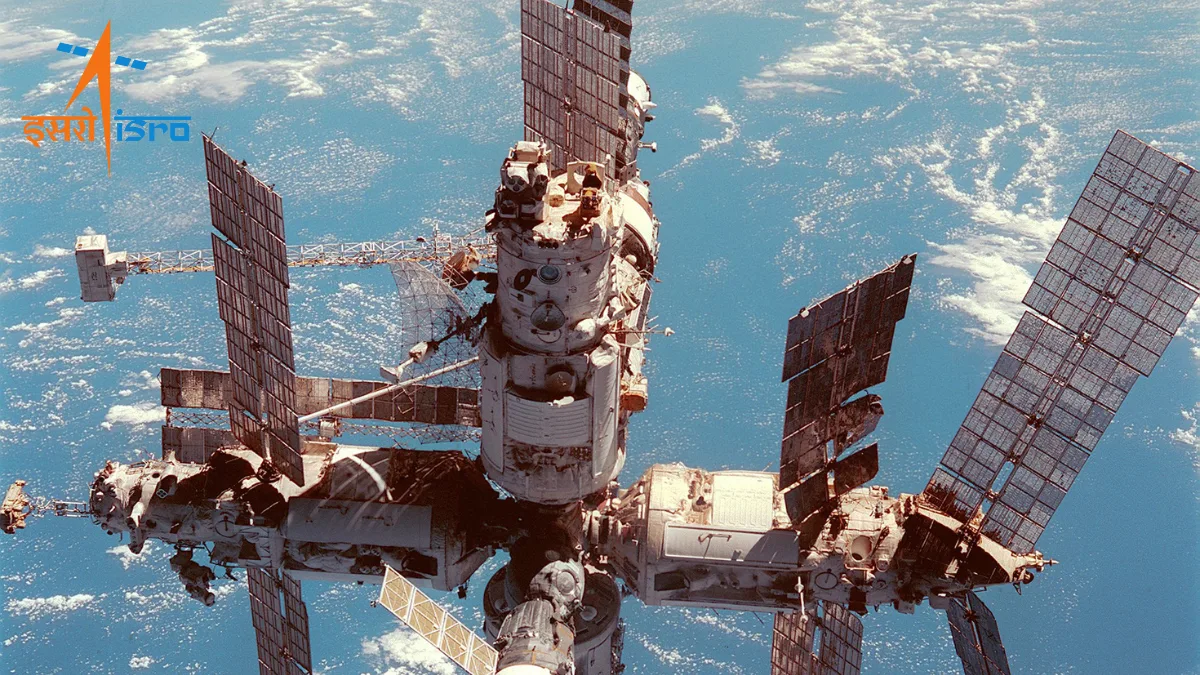
India’s space ambitions accelerate as ISRO confirms the Chandrayaan-4 lunar sample-return mission for 2028 and advances plans to build the Bharatiya Antariksh Station by 2035. With rising spacecraft production, private sector partnerships, and a booming space economy, India aims to expand its global space leadership.
India’s Space Ambitions Surge as ISRO Sets Chandrayaan-4 for 2028, Plans Indigenous Space Station by 2035
TheInterviewTimes.com | November 16, 2025: India’s Space Ambitions are entering their most pivotal phase as the Indian Space Research Organisation (ISRO) unveils an expansive roadmap for deep-space exploration, spacecraft production, and long-term human presence in orbit. With the Chandrayaan-4 mission confirmed for 2028 and a fully indigenous space station scheduled for 2035, India is preparing to make an assertive leap in the global space race.
Chandrayaan-4: India Targets First-Ever Lunar Sample Return
ISRO Chairman V. Narayanan announced that the Chandrayaan-4 mission aims to bring back up to 3 kilograms of lunar soil and rocks from near the Shiv Shakti Point—Chandrayaan-3’s successful 2023 landing site.
This lunar sample-return mission will be a technological breakthrough. Only three nations—the United States, Russia, and China—have ever achieved such a feat. A successful Chandrayaan-4 will firmly elevate India’s Space Ambitions and strengthen its scientific influence.
The mission will deploy a multi-module architecture, including an orbiter, lander, ascent module, and re-entry capsule. It is expected to push India into a new era of advanced lunar exploration and planetary science.
Scaling Up Production: ISRO Triples Spacecraft Output
To meet growing national and global demand, ISRO plans to triple spacecraft production within three years. The agency is targeting seven additional launches this financial year, including PSLV and GSLV missions.
A landmark milestone will occur in February 2026, when ISRO launches the first fully industry-built PSLV, manufactured by Hindustan Aeronautics Limited (HAL) and Larsen & Toubro (L&T). This marks a major expansion of India’s public-private space partnerships.
This manufacturing surge is crucial as India’s Space Ambitions expand into commercial satellite launches, global navigation systems, climate monitoring missions, and deep-space programs.
Must Read: New Theory Suggests Aliens May Find Spaceflight Boring, Deepening the Alien Cosmic Silence Mystery
India to Build Its Own Space Station by 2035
Beyond lunar exploration, ISRO is developing the Bharatiya Antariksh Station, India’s first homegrown space station.
The project includes five modular units, with the first module expected to launch around 2028.
Once operational by 2035, India will join the United States and China as the only nations with independent space stations. This becomes even more significant as the ISS moves toward decommissioning later in the decade.
The station will support microgravity research, advanced material testing, biomedical studies, and future human spaceflight missions—cementing India’s Space Ambitions to become a self-reliant human spaceflight nation.
A Rapidly Growing Space Economy
India’s space sector is expanding at an unprecedented pace.
More than 450 industries and 330+ space startups now contribute to a domestic market valued at $8.2 billion.
This is a dramatic rise from only three space startups a few years ago, highlighting the transformation sparked by the Space Policy reforms and increased private participation.
ISRO aims to increase India’s share of the global space economy from 2% to 8% by 2030, powered by satellite services, launch contracts, space manufacturing, and deep-tech innovation.
India’s Space Ambitions: Key Takeaways
- ISRO sets Chandrayaan-4 for 2028 with a goal to return 3 kg of lunar samples.
- India’s spacecraft production will triple within three years, boosting mission frequency.
- The first industry-built PSLV to launch in February 2026.
- India’s indigenous space station is planned for 2035, with the first module by 2028.
- India’s space economy now includes 450 industries and 330+ startups, targeting 8% global share by 2030.