
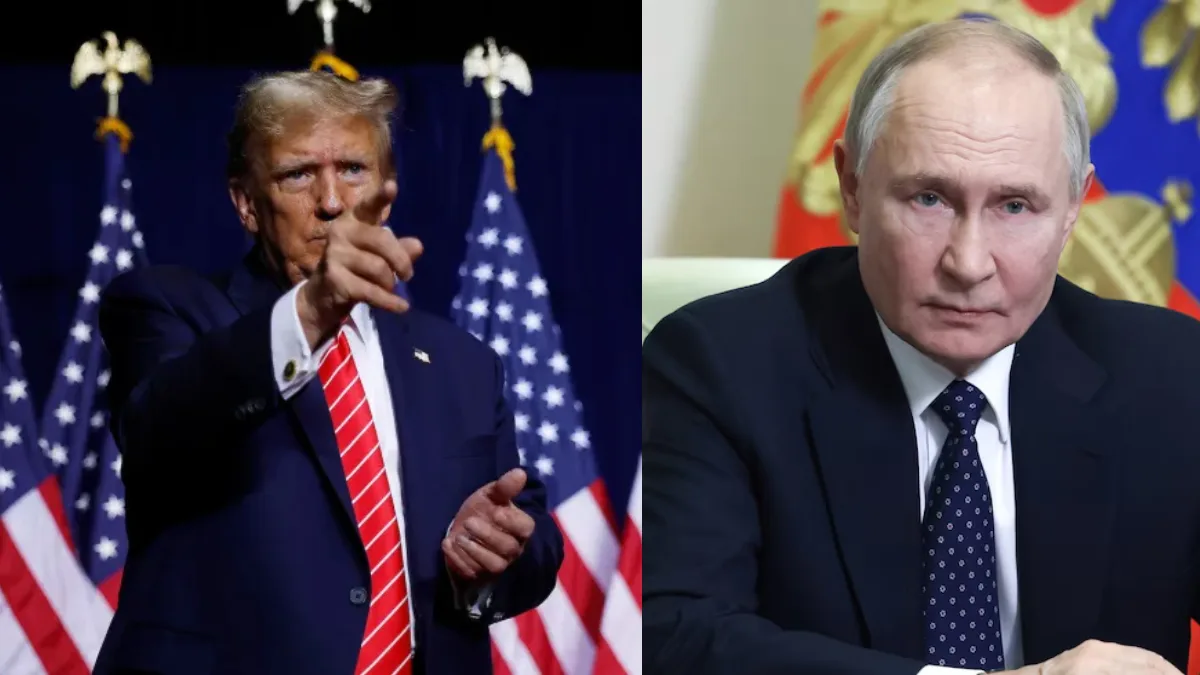
Sanctioning Russia Act of 2025 has emerged as the most forceful U.S. legislative push yet to penalize countries that continue trading with Moscow, as President Donald Trump announced sweeping bipartisan efforts to impose tariffs of up to 500% on nations supporting Russia’s wartime economy. The proposed bill aims to economically isolate Russia by targeting major global players involved in energy and strategic trade.
U.S. Pushes Sanctioning Russia Act of 2025 With 500% Tariff Threat for Russia-Linked Trade
TheInterviewTimes.com | November 17, 2025: Unveiled on November 16 at Palm Beach International Airport, Trump declared that the U.S. would apply “very severe sanctions” against any nation conducting business with Russia. He added that Iran may also fall under similar punitive measures, signaling an expanded scope of Washington’s sanctions strategy.
The Sanctioning Russia Act of 2025 is being led by Senators Lindsey Graham (R-SC) and Richard Blumenthal (D-CT), and has already secured over 80 cosponsors—a rare display of unity in a polarized Congress. Lawmakers describe the bill as a “bone-crushing” response to Russia’s continued offensive against Ukraine and its refusal to engage in meaningful peace negotiations.
The act would grant the president broad authority to implement tariffs as economic punishment. Its primary targets include nations that continue purchasing Russian oil, gas, and uranium, with a strong emphasis on China and India, which collectively accounted for 85% of Russia’s oil exports as of August, according to the Center for Research on Energy and Clean Air.
Global Energy Markets on Edge Amid Escalating U.S. Measures
This legislative push follows a new wave of U.S. Treasury sanctions on Russian energy giants Lukoil and Rosneft, announced on October 22 and scheduled to take effect on November 21. Treasury Secretary Scott Bessent stated that these actions were needed due to Russia’s “lack of serious commitment to a peace process.”
Early responses from global markets have already surfaced. Major Chinese state-owned oil companies and several Indian refiners have begun reducing purchases of Russian crude. With the possibility of 500% tariffs, analysts warn that the international energy trade could face severe disruptions, forcing countries to rework supply chains and diversify imports.
Senate Majority Leader John Thune has suggested that lawmakers are prepared to fast-track the bill for a vote, though no formal timeline has been provided.
Moscow Calls Measures Hostile; EU Aligns With U.S. Pressure
Russian President Vladimir Putin blasted the sanctions as “unfriendly acts,” warning that such steps could lead to spiking global oil prices and destabilize energy markets. “No self-respecting country decides anything under pressure,” Putin said, emphasizing Russia’s defiance despite mounting international penalties.
Meanwhile, the European Union is moving in parallel. On October 23, the EU approved its 19th sanctions package against Moscow, marking the strongest coordinated transatlantic push yet to isolate Russia economically.
A provision within the Sanctioning Russia Act of 2025 permits the president to issue national-security waivers, allowing selective exemptions. Still, lawmakers insist the core intention is uncompromising pressure on countries that financially sustain Russia’s military operations.
Must Read: US-Israel Gaza Talks Collapse Over Hamas Disarmament Dispute
A Turning Point for U.S. Foreign Policy
If passed, the Sanctioning Russia Act of 2025 would represent a landmark escalation in America’s sanctions architecture—one that extends beyond direct U.S.-Russia relations to reshape the behavior of global trade partners. By targeting major players in the energy trade, Washington aims to dismantle Russia’s revenue base and accelerate the end of the conflict in Ukraine.
International observers say the bill could recast the geopolitical and commercial landscape across Asia, Europe, and the Middle East. As the world waits for congressional action, global markets and diplomatic channels are bracing for the far-reaching implications of this high-stakes legislation.
Sanctioning Russia Act of 2025: Key Takeaways
- The Sanctioning Russia Act of 2025 proposes tariffs up to 500% on countries trading with Russia.
- The bipartisan bill has 80+ cosponsors, signaling rare political unity.
- China and India, major importers of Russian energy, are primary targets of the legislation.
- Russia warns of global oil disruptions; the EU has already approved its 19th sanctions package.
- The act is poised to reshape global energy trade and intensify economic pressure on Moscow.