
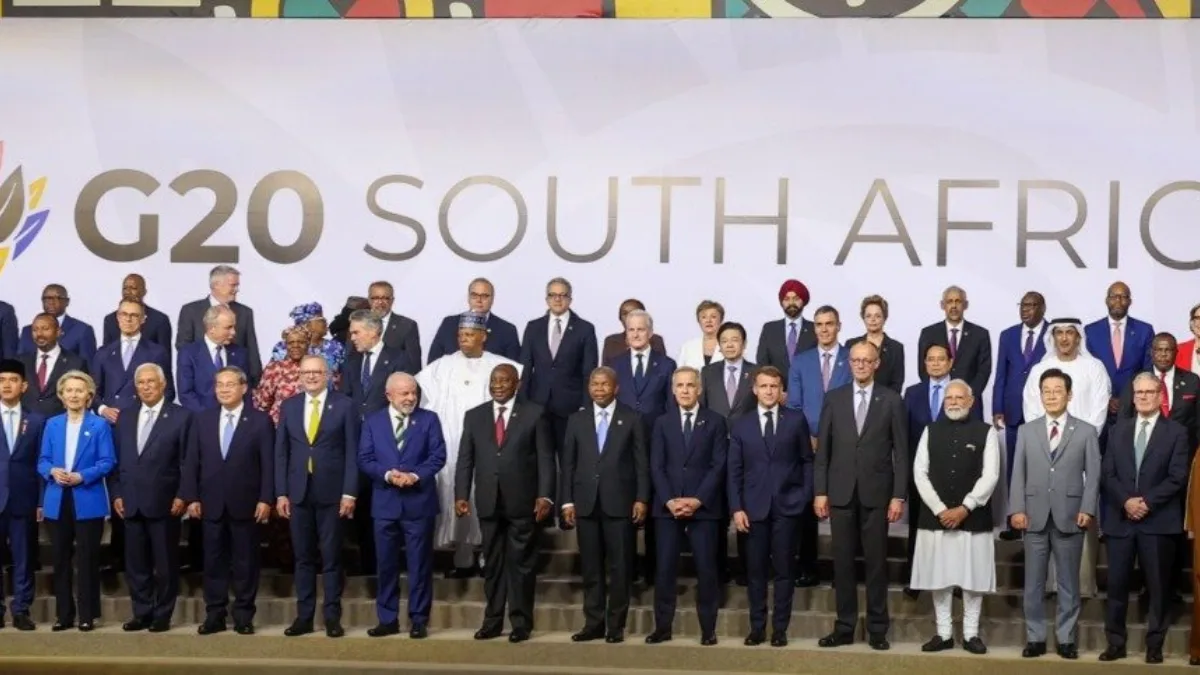
European and allied leaders at the G20 Summit in Johannesburg cautiously welcomed the 28-point Trump Peace Plan for Ukraine but insisted it requires major revisions. With concerns over troop limits, NATO restrictions, and territorial concessions, leaders stressed that any final agreement must safeguard Ukraine’s sovereignty and security.
TheInterviewTimes.com | November 22, 2025: European and allied leaders have issued a measured but firm response to former U.S. President Donald Trump’s newly unveiled Trump Peace Plan, describing it as a “starting point” that still needs significant improvements to ensure a just and durable peace in Ukraine.
The joint statement—released by leaders from the UK, France, Germany, Italy, Spain, Netherlands, Poland, Finland, Norway, the European Union, Canada, and Japan—was announced at the G20 Summit in Johannesburg, where diplomacy surrounding the Ukraine war has dominated discussions.
En un momento tan crítico para la seguridad de Europa, los líderes europeos hemos reafirmado en el G20 nuestro rotundo apoyo a Ucrania.
— Pedro Sánchez (@sanchezcastejon) November 22, 2025
La paz en Ucrania debe ser justa, duradera y sostenible.
Europa no fallará al pueblo ucraniano. pic.twitter.com/73qoCa2rxD
Trump Peace Plan Faces Immediate Pushback Over Military Limits
European officials acknowledged that Trump’s 28-point proposal contains “important elements” but warned that several provisions could undermine Ukraine’s long-term security.
One of the most controversial clauses limits the Ukrainian armed forces to 600,000 troops, down from the current estimate of 880,000 personnel—a reduction leaders believe could leave Kyiv dangerously exposed.
The plan also bans Ukraine from joining NATO, a key demand long echoed by Moscow but rejected by much of the Western alliance due to its implications for Ukrainian sovereignty.
“We are concerned by the proposed limitations on Ukraine’s armed forces, which would leave Ukraine vulnerable to future attack,” the joint statement declared, underscoring the coalition’s most pressing concern.
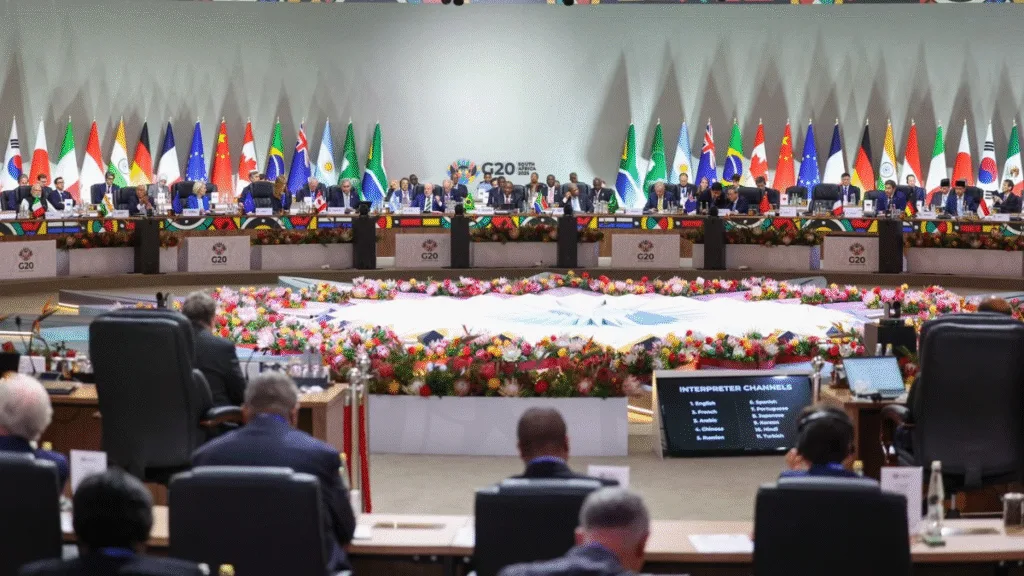
Territorial Concessions Ignite Strong Opposition in Kyiv and Europe
At the center of the controversy are the plan’s territorial requirements. The Trump Peace Plan calls for Ukraine to cede:
- Crimea, annexed by Russia in 2014
- Luhansk and Donetsk, partially controlled by Russian-backed forces
These concessions directly challenge Ukraine’s internationally recognized borders and have triggered alarm among its allies.
In return, Trump proposes “security guarantees” for Ukraine—but leaders warn the assurances are vague, lacking the binding commitments Kyiv has repeatedly requested. The plan promises only a “coordinated military response” if Russia resumes hostilities, a phrase many view as insufficiently concrete.
Europe Insists: “Nothing About Ukraine Without Ukraine”
European Commission President Ursula von der Leyen reiterated that any peace framework must involve Kyiv at every stage.
“Nothing about Ukraine without Ukraine,” she declared at the summit, signaling that the Trump Peace Plan cannot be negotiated solely between Washington and Moscow.
UK Prime Minister Keir Starmer added that the goal in Johannesburg is to strengthen the proposal so it better reflects Ukraine’s needs.
“The framework must support Ukraine’s security and future,” he said.
Ukraine Agrees to Engage but Warns of a Historic Crossroads
Ukrainian President Volodymyr Zelenskyy has authorized a delegation to meet U.S. officials in Switzerland to examine the proposal. His administration said Ukraine would remain open to constructive talks but emphasized its commitment to defending national interests.
“Ukraine will never be an obstacle to peace,” the president’s office stated, while Zelenskyy described the moment as “one of the most difficult” in the nation’s history.
The Swiss discussions are expected to focus heavily on territorial integrity, security guarantees, and the future of Ukraine’s Euro-Atlantic partnerships.
Putin Signals Conditional Support as Trump Issues Ultimatum
Russian President Vladimir Putin said the proposal “could serve as a foundation for a final peace settlement,” though he acknowledged that substantial negotiation remains ahead.
Trump, however, has adopted a forceful tone, saying Ukraine must accept the plan:
“He’ll have to accept it, and if he doesn’t, then, I suppose, they should just continue fighting.”
This ultimatum has heightened concerns that the plan could pressure Ukraine into concessions without adequate protection.
Global Diplomacy Enters a High-Stakes Phase
As world leaders prepare for the Swiss talks, uncertainty surrounds whether the Trump Peace Plan can evolve into a viable path toward ending one of Europe’s most destructive conflicts in decades.
With Kyiv, Moscow, Washington, and Europe locked in a complex geopolitical equation, the coming days could determine whether diplomatic progress emerges—or whether the war continues without a clear resolution in sight.
Key Takeaways
- The Trump Peace Plan is viewed as a starting point but requires major revisions.
- Europe strongly opposes troop caps, NATO restrictions, and territorial concessions.
- Ukraine will engage in talks but warns it must protect sovereignty.
- Russia is cautiously optimistic, while Trump has issued an ultimatum.
- The Swiss discussions will shape the next phase of global diplomacy on Ukraine.