
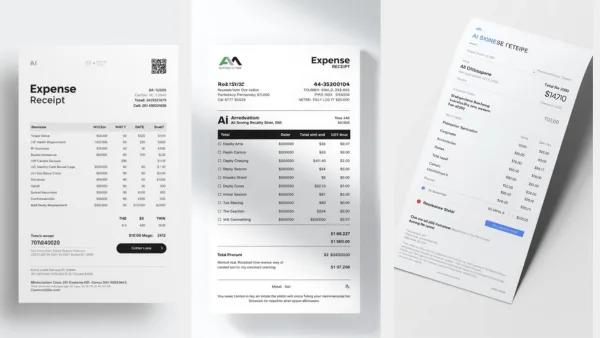
AI expense fraud is rising sharply as fake AI-generated receipts slip past detection, costing companies billions in global corporate losses.
AI Expense Fraud Reaches Crisis Levels
TheInterviewTimes.com | New Delhi | October 28, 2025 — AI expense fraud is escalating at an alarming rate, overwhelming traditional corporate audit systems and inflicting billions in financial losses worldwide. Companies are struggling to detect hyper-realistic, AI-generated fake receipts that are now flooding expense management systems and reshaping the fight against digital fraud.
Must Read: The Beautiful Lie: The Torenza Woman and the Seduction of Synthetic Reality
The Surge of AI-Generated Expense Fraud
Since early 2025, expense management providers have reported that nearly 14% of all fraudulent claims are now AI expense fraud—a massive leap from zero at the start of the year. With advanced image-generation tools from OpenAI and Google, employees can now create authentic-looking fake receipts using only text prompts.
These AI-generated receipts replicate real paper textures, natural imperfections, and logos, making them virtually indistinguishable from genuine ones. As a result, AI expense fraud has become a major threat to global compliance operations.
Detection Systems Under Severe Strain
Traditional controls—such as template matching, Optical Character Recognition (OCR), and manual review—are proving inadequate against next-generation AI fakes. Unlike earlier copy-based fraud, these AI-generated receipts are unique and original, enabling AI expense fraud to evade duplication checks and visual analysis.
Even advanced AI-powered systems like Oversight’s Receipt Analytics, known for 90% accuracy, are in a constant race to update their models as forgeries evolve in sophistication.
Billions Lost to AI Expense Fraud
Industry reports estimate that corporate fraud cost the world $534 billion in the past year, with AI expense fraud contributing a growing share. In the U.S. alone, companies lost nearly 10% of annual revenue to expense and digital fraud—a 46% increase over 2024.
Analysts predict AI expense fraud could push losses even higher, with total AI-related fraud in the U.S. projected to reach $40 billion by 2027, up from $12 billion in 2023. Deepfakes, synthetic invoices, and fake receipts are driving this unprecedented escalation.
Must Read: Indian Oil Profit Soars 7,280% in Q2 FY26: Record ₹13,288 Crore Net Gain Fuels Energy Sector Revival
AI Tools in Corporate Defence
In response, businesses are deploying AI-powered compliance platforms to combat AI expense fraud. These systems analyze metadata, identify image anomalies, and verify line-item purchase details beyond what manual reviewers can detect.
For example, Oversight’s Receipt Analytics now detects 30–60% more out-of-policy expenses while cutting false positives by 80%. Yet, fraudsters are adapting—using screenshots or cropped images to erase metadata and conceal AI origins, allowing AI expense fraud to persist undetected.
The Association of Certified Fraud Examiners (ACFE) has identified AI expense fraud as one of the fastest-growing corporate risks of 2025, warning that such fake receipts can be produced by anyone, even without technical expertise.
The New Arms Race in Corporate Compliance
Experts warn that AI expense fraud marks the start of a prolonged arms race between digital fraudsters and compliance professionals. As both sides use AI to outmaneuver each other, finance departments must invest in advanced detection models, staff training, and inter-industry collaboration.
AI-driven deception is no longer a theoretical risk—it’s a present and expanding threat transforming the landscape of corporate finance and governance. Companies that fail to modernize their systems risk substantial financial and reputational damage from unchecked AI expense fraud.