

New Delhi, January 11, 2026, 09:46 a.m. IST: In the heart of the Middle East, Iran stands at a crossroads. For over three decades, one man has held the highest power in the country: Ayatollah Ali Khamenei, the Supreme Leader. As protests rage across cities from Tehran to Shiraz, demanding change and even the end of his rule, it’s time to look at who he is, how he rose to power, and why so many Iranians are taking to the streets today. This story draws from historical facts and recent events to explain the man behind Iran’s theocratic system in straightforward terms.
A Humble Start in a Religious Family
Ayatollah Ali Khamenei was born on April 19, 1939, in the holy city of Mashhad, in northeastern Iran. He grew up in a simple home as the second son of a local cleric, Javad Khamenei, facing tough times with limited money. From a young age, he dove into religious studies, learning at seminaries in Mashhad, Najaf in Iraq, and Qom in Iran. These places shaped his views as a Shia Muslim scholar.
In the 1960s, Khamenei joined the fight against Iran’s ruler at the time, Shah Mohammad Reza Pahlavi. The Shah’s government was seen as too close to the West and unfair to everyday people. Khamenei spoke out, got arrested six times, and even spent time in exile. He became a close follower of Ayatollah Ruhollah Khomeini, the fiery cleric who would lead the charge against the Shah.
The Islamic Revolution: A Turning Point for Iran
The story of Khamenei can’t be told without the Islamic Revolution of 1979. This was a massive uprising that changed Iran forever. Starting in 1978, millions of Iranians—workers, students, religious leaders, and others, protested against the Shah’s rule. They were angry about corruption, inequality, and the Shah’s tight grip on power, backed by the U.S.
Led by Khomeini from exile in France, the revolution used strikes, marches, and speeches to weaken the government. By February 1979, the Shah fled, and Khomeini returned to cheers from crowds. The old monarchy fell, and Iran became an Islamic Republic, a mix of elected leaders and religious oversight. This new system put clerics in charge, with Khomeini as the first Supreme Leader, holding final say on big decisions.
Khamenei played a key role in the revolution. He helped organize protests and spread Khomeini’s messages. After the win, he took on jobs like being a member of parliament and leading Friday prayers in Tehran. In 1981, he survived an assassination attempt that left his right arm paralyzed, showing the dangers of the new era.
Must Read: Explained: Why the United States Wants Greenland
Rising to Power: From President to Supreme Leader
Khamenei’s big break came in 1981 when he was elected Iran’s president, serving until 1989. During this time, Iran fought a bloody war with Iraq (1980-1988), which killed hundreds of thousands and hurt the economy. When Khomeini died in 1989, the Assembly of Experts, a group of clerics, picked Khamenei as the new Supreme Leader, even though he wasn’t the highest-ranked religious figure at first. They quickly gave him the title of Ayatollah to fit the role.
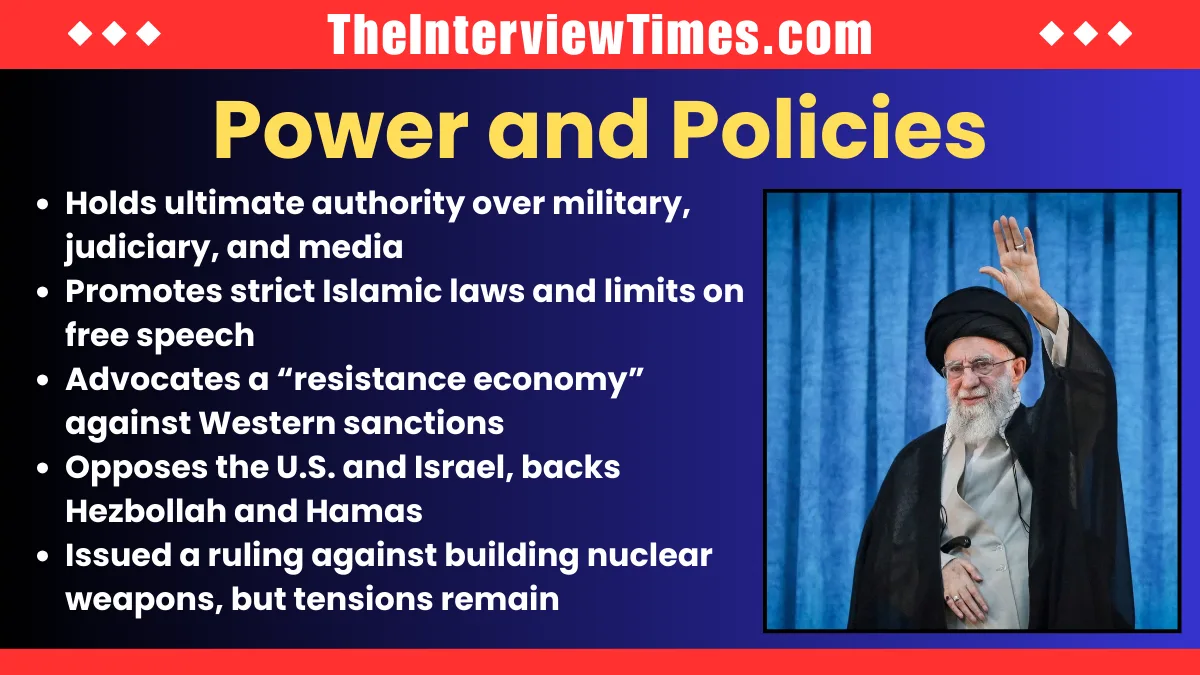
As Supreme Leader, Khamenei has huge power. He controls the military, including the powerful Islamic Revolutionary Guard Corps (IRGC), the judiciary, and state media. The president, like the current one, handles day-to-day things like the economy, but must follow Khamenei’s lead. This setup makes Iran a theocracy, where religion guides laws and politics.
Policies: Hardline Stance at Home and Abroad
Khamenei’s rule focuses on keeping the revolution’s ideals alive. At home, his policies enforce strict Islamic rules, like dress codes for women and limits on free speech. He supports a “resistance economy” to fight Western sanctions, pushing for self-reliance.
Abroad, he’s known for opposing the U.S. and Israel, calling them enemies. Iran under him backs groups like Hezbollah in Lebanon and Hamas in Gaza, part of what he calls the “axis of resistance.” On nuclear issues, he says Iran’s program is for peaceful energy, and he’s issued a religious ruling against building atomic bombs. But tensions with the West have led to tough sanctions, hitting Iran’s oil sales and trade.
Must Read: Yemen War Explained: Who’s Fighting, Why It Started, and What’s Next
The Current Storm: Iran’s Challenges in 2026
Today, Iran is in deep trouble. The economy is crumbling under years of sanctions, mismanagement, and spending on foreign fights. Inflation is sky-high, the rial (Iran’s money) has lost most of its value, and basics like food and water are hard to afford. Wars in the region, including losses for Iran’s allies like Hezbollah and Hamas, have weakened the country further.
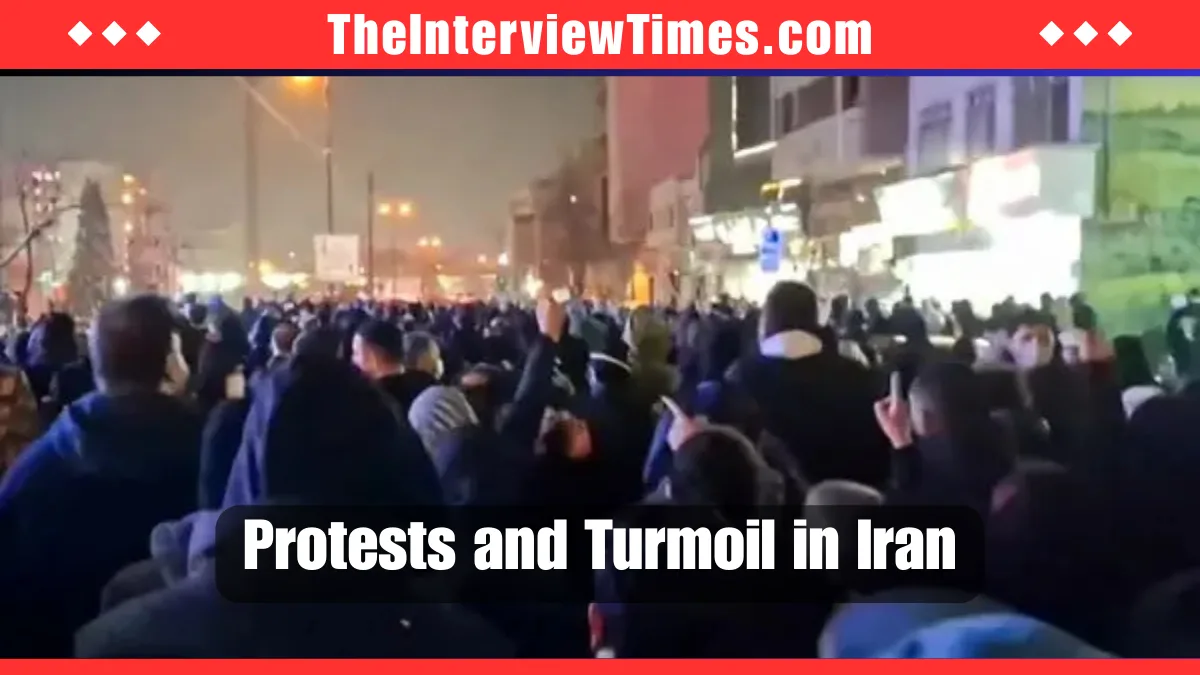
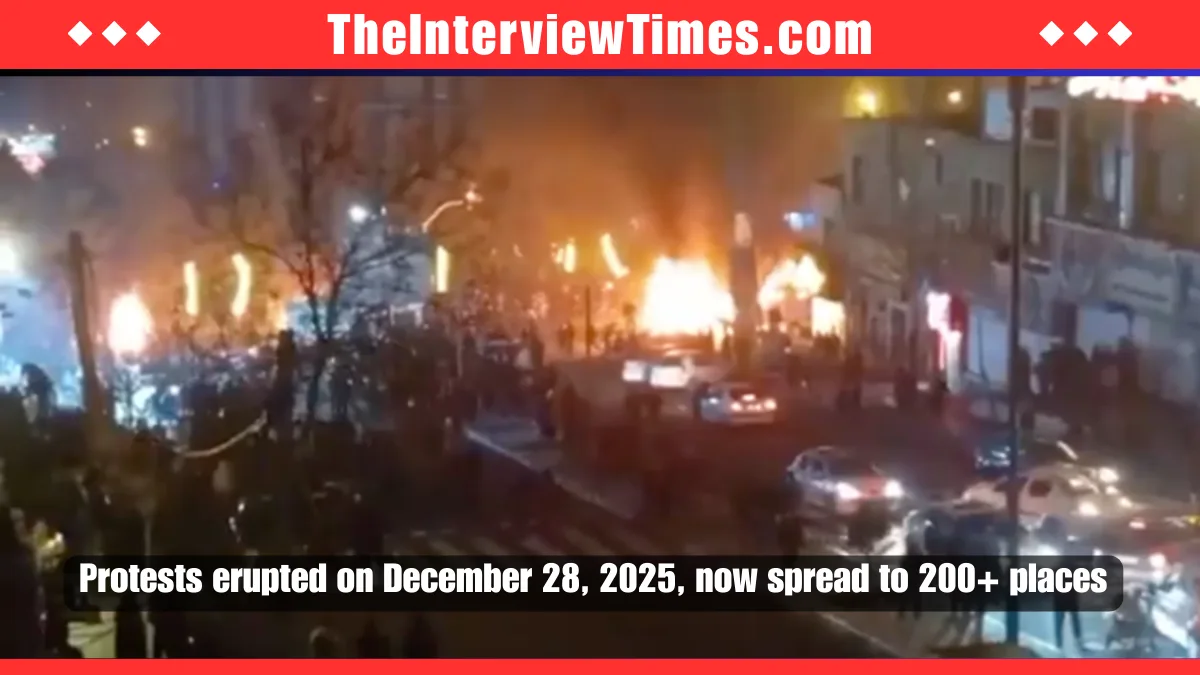
Protests that started on December 28, 2025, over rising prices have spread to over 200 places, turning into calls to end the Islamic Republic. The government has cut off the internet and phones to stop news from spreading, but clashes continue. At least 35 people have died, and thousands are arrested. Khamenei has called protesters “vandals” trying to please U.S. President Trump, vowing not to back down. Rumors even swirl that he’s fled to Russia, though they’re not proven.
Outside, the U.S. warns Iran, and Israel keeps up pressure after strikes on nuclear sites. Experts say this could be the regime’s weakest moment since 1979.

Why Are People Protesting?
At first, the protests were about money problems: soaring costs for bread and fuel, job losses, and empty bank accounts. Sanctions from the U.S. and others have made things worse, cutting off trade and causing shortages. Water crises in places like Shiraz add to the pain.
But quickly, shouts turned political. People blame corruption, where leaders get rich while others suffer. They hate the government’s harsh crackdowns, like arrests of minorities and limits on freedoms. Many are tired of money going to wars abroad instead of fixing things at home. Chants like “Death to the dictator” target Khamenei directly, showing deep anger at the system, he leads.
Exiled figures like Crown Prince Reza Pahlavi urge more action, and some wonder if this could topple the regime. Yet, Khamenei and the IRGC stay on high alert, ready to fight back.
Iran’s future hangs in the balance. Khamenei, once a revolutionary hero, now faces the biggest test of his rule. Will talks or force win out? Only time will tell, but the voices on the streets demand a new path.
