
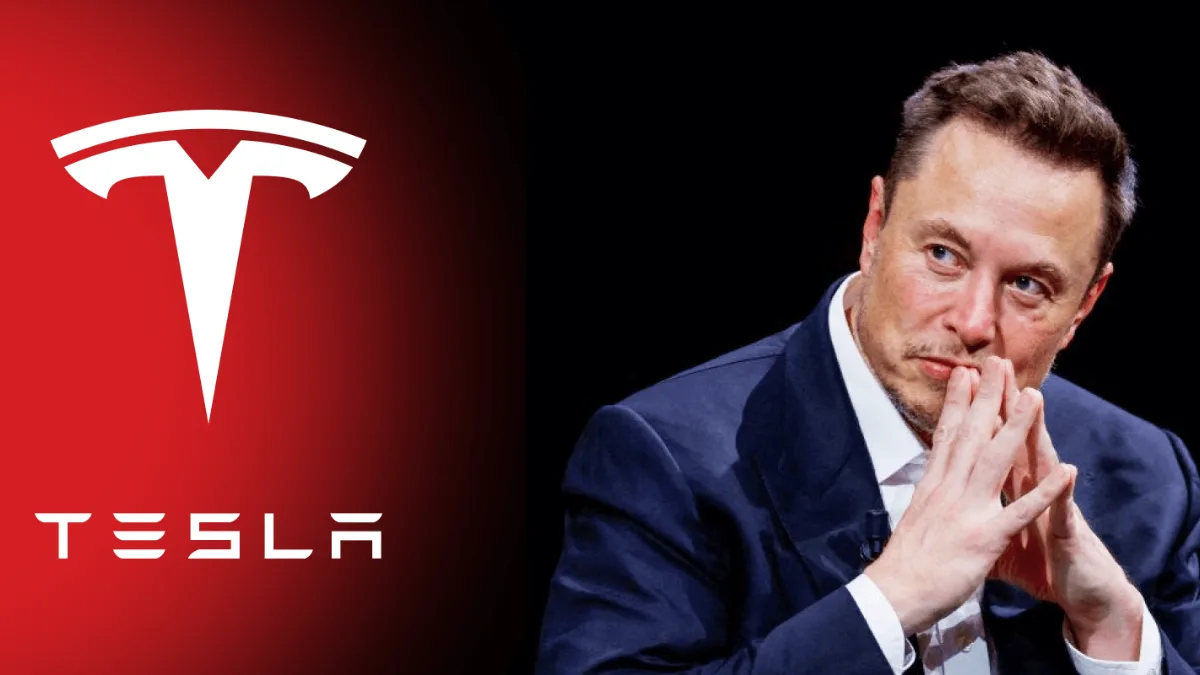
Tesla is staring at a massive financial setback as the ongoing legal battle over Elon Musk’s 2018 compensation package threatens a record-breaking Tesla profit hit of $26 billion. With the Delaware Supreme Court reviewing the case, the company faces significant governance scrutiny, shareholder tensions, and major implications for future profitability and leadership credibility.
Elon Musk Pay Battle Puts Tesla at Risk of Record $26 Billion Profit Hit
TheInterviewTimes.com | November 20, 2025: The automotive and clean-energy giant Tesla is confronting one of the most consequential financial and legal challenges in its history. A potential Tesla profit hit of up to $26 billion could reshape the company’s balance sheet over the next two years, threatening its leadership position in the global electric vehicle market.
This looming financial blow stems directly from the long-running court battle over Tesla CEO Elon Musk’s 2018 stock-based compensation package, which a Delaware court invalidated earlier this year, raising urgent questions about corporate governance and transparency.
Legal Battle Over Elon Musk’s 2018 Compensation Package
The controversy centers on a massive stock-option award approved for Elon Musk in 2018. Originally valued at $2.3 billion, the package granted Musk 303 million stock options tied to aggressive performance and valuation milestones. As Tesla’s share price soared, the theoretical value of the package ballooned to a staggering $116 billion.
In January 2024, Delaware Chancellor Kathaleen McCormick struck down the package, ruling that Tesla’s board lacked independence, failed to fully inform shareholders, and approved a deal overwhelmingly favorable to Musk. The judgment highlighted “deep governance lapses” and noted that the board effectively rubber-stamped one of the largest CEO pay deals in corporate history.
Tesla appealed. The Delaware Supreme Court heard the case on October 15, 2025, and its forthcoming decision will determine whether Tesla must absorb a one-time $26 billion accounting charge, representing the cost of a revised compensation package approved in August 2025.
If recorded over eight future quarters, this charge translates to a $3.25 billion quarterly hit—exceeding Tesla’s quarterly net income in all but four instances since it became profitable in 2019.
Must Read: Elon Musk Returns to White House as Ties with Trump Warm After Months of Public Feud
Financial Pressures Mount as Legal Uncertainty Grows
Tesla’s earnings have already shown signs of strain.
In Q3 2025, Tesla reported $1.37 billion in net income, a 37% year-on-year drop, despite achieving record revenues of $28.1 billion. The company cited weaker global EV demand, withdrawal of key government subsidies, and rising expenditures across robotics, AI development, and manufacturing scale-up.
Experts warn that the additional Tesla profit hit could undermine investor sentiment at a critical moment.
Brian Dunn, director of Cornell University’s Institute for Compensation Studies, criticized Tesla’s board for failing to exercise “reasonable fiduciary oversight,” arguing that the long-standing governance approach enabled a massive shift of shareholder value to Musk.
Adding further complexity, Tesla shareholders in November 2025 approved a new $1 trillion performance-based pay structure for Musk—an unprecedented package contingent on decade-long market cap and profitability milestones.
Corporate Governance Under Global Scrutiny
The outcome of Elon Musk’s compensation battle could reverberate far beyond Tesla.
Corporate governance researchers argue that the case will become a touchstone for how boards evaluate executive power in companies led by charismatic founders. The Delaware Supreme Court’s decision may set new expectations for transparency, independence, and shareholder protections in high-growth tech firms worldwide.
For Tesla, the stakes go well beyond finances. Its long-term innovation roadmap—from AI to autonomous driving to robotics—depends on consistent investor confidence and predictable financial reporting. A severe Tesla profit hit could slow expansion plans, tighten capital allocation, and reshape executive compensation strategies for years.
As investors await the court’s final decision, the global business community is watching closely. The verdict will define not only Tesla’s next chapter but also the evolving boundaries of corporate accountability in the world’s most influential technology companies.
Key Takeaways
- Tesla faces a potential $26 billion profit hit linked to the invalidation of Elon Musk’s 2018 pay package.
- The Delaware Supreme Court ruling will determine whether the accounting charge impacts the next two years of financial reporting.
- Tesla’s Q3 2025 net income fell 37%, intensifying concerns about future profitability.
- A new $1 trillion Musk pay package signals continued board confidence despite governance criticisms.
- The case may reshape global standards for executive compensation and board independence.