
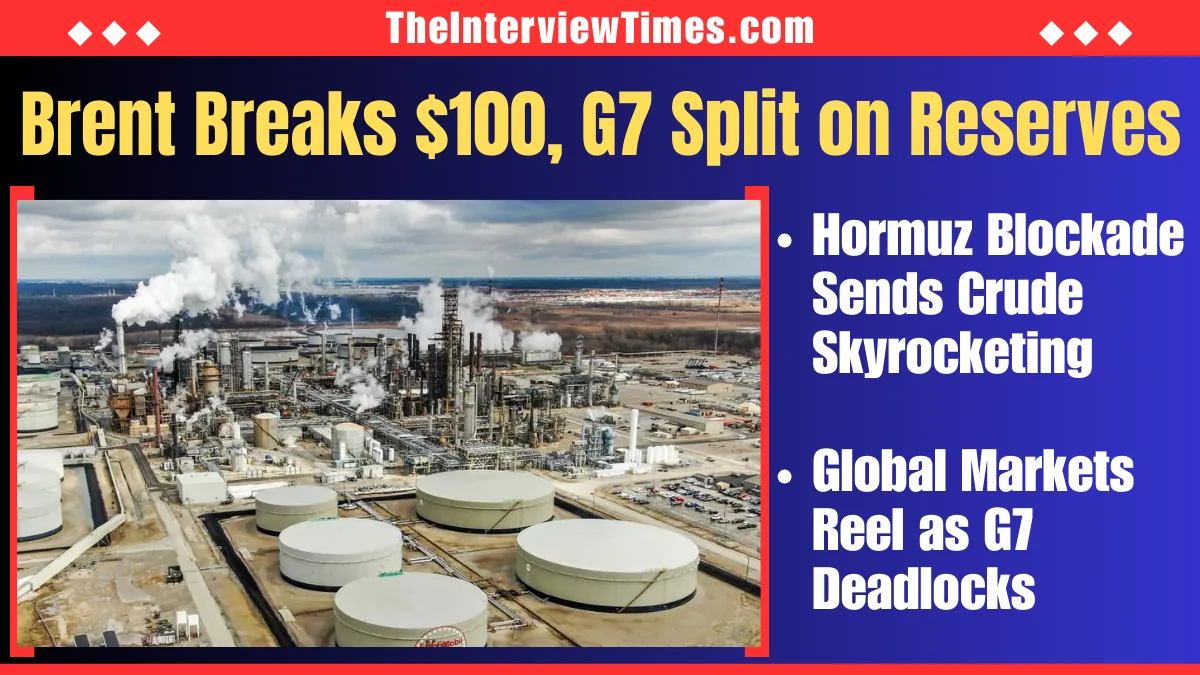
G7 Oil Reserve release stalls as G7 ministers fail to reach consensus during emergency talks while Brent crude surges past $100 amid Iran war disruptions.
Emergency G7 Meeting Yields No Consensus
G7 finance ministers convened an urgent virtual meeting on March 9, 2026, chaired by France’s Roland Lescure and joined by IEA Executive Director Fatih Birol, but declined to commit to a coordinated release from strategic petroleum reserves.
French officials stated the group is “not there yet” on organizing such a drawdown, despite support from three nations including the United States for tapping 300-400 million barrels. The session, starting at 8:30 a.m. ET, focused on stabilizing markets rocked by the U.S.-Israel conflict with Iran.
Oil prices had spiked dramatically beforehand, with Brent crude briefly hitting nearly $120 per barrel before easing to around $103. West Texas Intermediate (WTI) followed suit, climbing above $100 and posting historic one-day gains of up to 30 percent. This marks the first time Brent exceeded $100 since mid-2022, driven by fears of prolonged supply shortages.
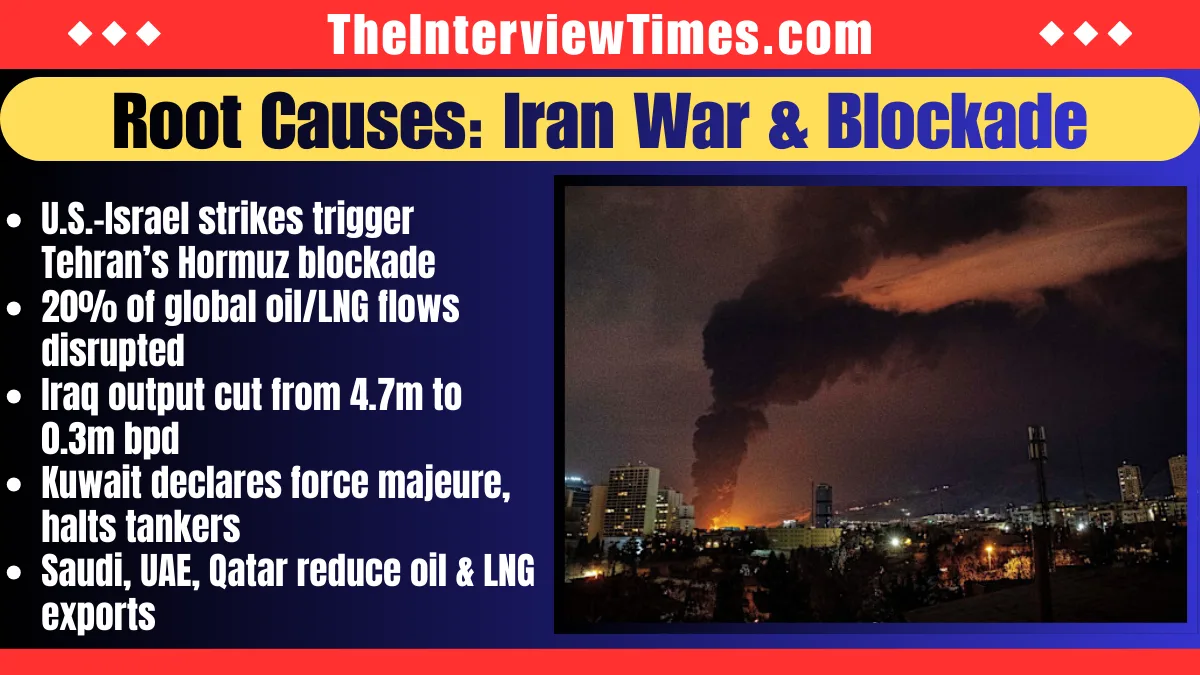
Root Causes: Iran War and Strait Blockade
The crisis stems from the U.S.-Israel military actions against Iran starting February 28, 2026, prompting Tehran to blockade the Strait of Hormuz, halting about 20 percent of global oil and LNG flows. Iran also attacked Gulf energy infrastructure, forcing major producers to act. Iraq slashed output at key fields to 0.3 million barrels per day from 4.7 million, while Kuwait declared force majeure and cut production due to storage limits and tanker threats. Saudi Arabia reduced operations at two fields, and the UAE along with Qatar halted LNG exports.
These disruptions equate to roughly 140 million barrels of oil, or 1.4 days of world consumption, now stuck without export routes. Analysts warn that without relief; prices could stay elevated as storage fills up across the Gulf.
Market Fallout Hits Consumers Worldwide
U.S. gasoline averages jumped 27 cents to $3.25 per gallon in the week ending March 5, per AAA data, with further rises expected. Global stocks plunged, with S&P 500 futures down 1.5 percent amid energy cost fears. President Donald Trump downplayed impacts on Truth Social, calling price hikes a “small price to pay for U.S.A. and World Safety and Peace.”
Brent has nearly doubled year-to-date, up 50 percent in the past month alone. Natural gas markets rallied sharply too, compounding inflation pressures in Europe and Asia.
What’s Next for Global Energy Policy
French President Emmanuel Macron signaled possible G7 leaders’ talks this week on the crisis. The EU’s oil and gas coordination groups meet Thursday to evaluate supply risks. While no immediate reserve release occurred, U.S. officials like National Economic Director Kevin Hassett reiterated monitoring, hinting at future action if Hormuz remains closed. Markets await producer updates and potential unilateral moves from IEA members holding 1.2 billion barrels in reserves.
Top News: Mojtaba Khamenei: Iran’s New Supreme Leader in 2026 Amid Ongoing War
