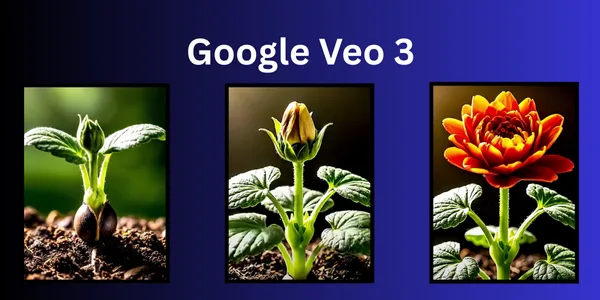
Google Veo 3 adds vertical video, 1080p HD resolution, and up to 50% API price cuts. The updates make AI video creation more affordable and mobile-friendly.
Google Veo 3, the company’s latest AI-powered video generation model, has received major upgrades that strengthen its position in the generative AI race. The new updates, announced on September 9, include vertical video support, 1080p resolution, and sharp API price reductions, making advanced video creation more affordable and mobile-friendly for developers and creators.
Three big AI updates for developers:
— Google DeepMind (@GoogleDeepMind) September 9, 2025
1️⃣ Veo 3 and Veo 3 Fast are now ready for scaled production use in the Gemini API
2️⃣ Make 16:9 videos in 1080p HD for even higher quality
3️⃣ Start generating 9:16 vertical clips
Find out more → https://t.co/tks44LiY7d pic.twitter.com/e4oPvP1TIQ
Vertical Video Support in Google Veo 3
One of the most important updates in Veo 3 is the ability to generate 9:16 vertical videos, designed for mobile-first platforms such as TikTok, Instagram Reels, and YouTube Shorts. Developers can activate this by setting the aspect Ratio=9:16 parameter in the Gemini API.
This upgrade aligns Veo 3 with the booming demand for vertical-first content and positions it as a strong tool for social media creators. While currently limited to API users, it could eventually expand to consumer-facing apps like Google Photos or Gemini.
Must Read: AI-Powered Stethoscope Detects Heart Conditions in Just 15 Seconds
Google’s Veo 3 Now Supports 1080p Resolution
Previously capped at 720p, Google’s Veo 3 and Veo 3 Fast now support 1080p HD video generation. Developers can set the resolution=1080p parameter for sharper visuals, though it currently works only in the 16:9 landscape format.
This improvement boosts the professional usability of Veo 3, making it suitable for marketing, advertising, and creative production. Google demonstrated this capability through its MediaSim demo app in AI Studio, showing how the model integrates with multimodal tools for interactive content creation.
API Price Cuts
Google has also announced significant API price reductions for Veo 3 and Veo 3 Fast, lowering costs by up to 50%:
- Google Veo 3 (Video + Audio): $0.75 → $0.40 per second
- Google Veo 3 (Video Only): $0.50 → $0.20 per second
- Google Veo 3 Fast (Video + Audio): $0.40 → $0.15 per second
- Google Veo 3 Fast (Video Only): $0.25 → $0.10 per second
With these cuts, Veo 3 becomes more cost-effective for startups, indie developers, and large-scale content platforms. Veo 3 Fast, in particular, balances speed and affordability, making it ideal for high-volume video workflows.
Must Read: AI Meets Solar Storms: How NASA-IBM’s Surya Could Shield Earth
Google’s Veo 3 Across the Ecosystem
Since July 2025, Veo 3 has powered the “Photo to Video” tool in Google Photos, which generates four-second clips from images. Although currently limited to 720p without audio, the new upgrades signal likely enhancements for consumer users.
Access to Google Veo 3 is also bundled into subscription plans:
- AI Pro ($20/month): Access to Veo 3 Fast
- AI Ultra ($249.99/month): Access to the full Google Veo 3 model, with unlimited use of Veo 3 Fast
Google Veo 3 vs. Competitors
Unveiled at Google I/O 2025 as a rival to OpenAI’s Sora, Google Veo 3 has been praised for its ability to generate realistic videos with synchronized audio, detailed lighting, shadows, and human expressions.
With the new upgrades, Google’s Veo 3 now competes with Canva, Filmora, and other creator tools, though professional editors like Adobe Premiere Pro still offer more granular control. Google’s focus, however, is clear: making AI video creation accessible and affordable.
Responsible AI in Veo 3
To ensure responsible use, Veo 3 integrates SynthID digital watermarking and strong content filters, helping identify AI-generated videos and prevent misuse. Available in 140 countries, the rollout reflects Google’s global AI strategy.
Looking Ahead
The latest upgrades to Veo 3—vertical video, 1080p support, and cheaper pricing—could eventually reshape how everyday users create and share content. With its balance of quality, affordability, and safety, Veo 3 is emerging as a key player in the future of generative video storytelling.