

PM Modi’s first visit to China in seven years at the SCO Summit 2025 signals a thaw in India-China relations. Key topics include trade imbalances, border stability, and global geopolitical shifts.
PM Modi’s first visit to China in over seven years for the 2025 SCO summit signals a significant thaw in India-China relations. The trip marks a cautious step toward stabilizing the bilateral ties strained by the 2020 Galwan Valley clashes. Amid global trade shifts and rising U.S. tariffs on Indian exports, Modi’s visit is part of a broader strategic effort to recalibrate India’s foreign policy, particularly with China. This article explores the importance of the visit, the key agendas discussed, and the broader implications for regional geopolitics and global trade.
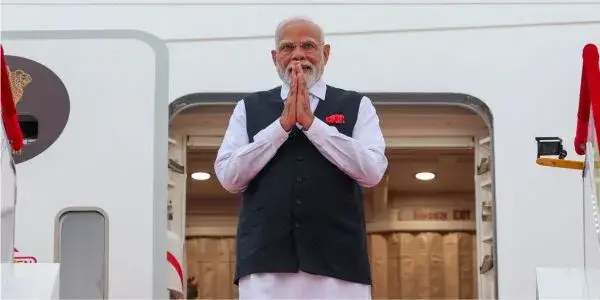
A Landmark Visit After Seven Years
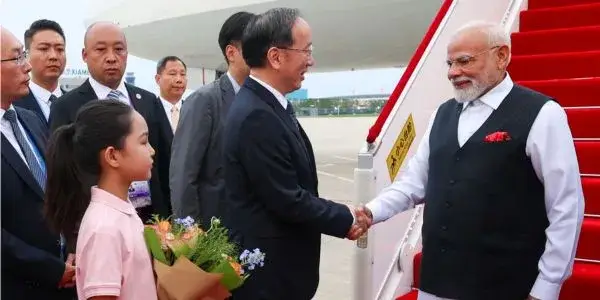
On August 30, 2025, Prime Minister Modi’s arrival in Tianjin marked the first time in seven years that an Indian leader visited China. This visit, scheduled alongside the SCO summit 2025, signals a thaw in India-China relations that have been fraught with tension since the Galwan Valley conflict. Despite lingering border disputes, the visit underscores India’s shift towards stabilizing its ties with China and fostering deeper cooperation through multilateral forums like the Shanghai Cooperation Organisation (SCO).
Must Read: Western Neo-Colonialism: Putin’s Denouncement Ahead of China Visit Signals Geopolitical Shift
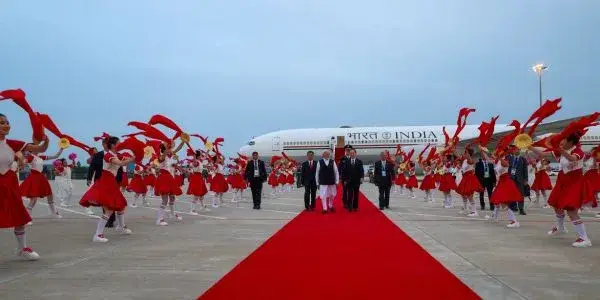
Cultural Diplomacy: A Grand Welcome for Modi in Tianjin
Modi’s arrival was met with a vibrant display of Indian culture, including performances of Bharatnatyam and Indian classical music by Chinese artists. This cultural exchange highlights China’s efforts to foster goodwill and set a positive tone for the bilateral talks between Modi and Chinese President Xi Jinping. As social media buzzed with the Indian diaspora chanting “Vande Mataram,” it became evident that both countries are eager to rekindle their relationship by focusing on cultural diplomacy.
SCO Summit 2025: Key Agendas Shaping India-China Relations
The SCO summit 2025, celebrating the 25th anniversary of the organization, brings together 10 member nations, including India and China, along with Russia, Pakistan, and several Central Asian countries. The summit’s key agendas revolve around:
- Regional Security: Strengthening counter-terrorism measures and ensuring border stability, a critical topic in India-China relations.
- Economic Cooperation: Exploring opportunities to enhance trade and connectivity among SCO members, especially to mitigate the impact of rising global protectionism.
- Global South Solidarity: Developing strategies to counter Western economic pressures, particularly U.S. tariffs on Indian goods.
Modi’s meetings with Xi Jinping and Russian President Vladimir Putin are expected to focus on bilateral trade imbalances, border stability, and regional cooperation in the context of the shifting geopolitical landscape.
Must Read: What is the SCO? Shanghai Cooperation Organisation and 2025 Summit Explained
From Galwan to Diplomacy: India-China Relations Post-2020
The Galwan Valley clashes of 2020 were a turning point in India-China relations, leaving a legacy of distrust and military tension. In the aftermath, both countries began a cautious process of disengagement and dialogue:
- October 2024: The disengagement agreement at Demchok and Depsang along the Line of Actual Control (LAC) marked a significant breakthrough.
- August 19, 2025: Chinese Foreign Minister Wang Yi’s visit to India facilitated the resumption of key trade agreements, including the export of fertilizers and rare earth minerals.
Despite these positive moves, challenges remain, including unresolved issues along the LAC and concerns over China’s military support to Pakistan.
Trade Imbalance: Addressing India’s $99 Billion Deficit with China
One of the most pressing concerns in India-China relations is the $99.2 billion trade deficit. In 2024, bilateral trade reached $118 billion, with India reliant on Chinese imports for critical sectors like electronics, pharmaceuticals, and electric vehicles. Modi is expected to address the trade imbalance by pushing for:
- Increased Chinese investment in India’s manufacturing sector.
- Market access for Indian IT, pharmaceuticals, and agricultural products.
- Collaboration on clean energy and technology to reduce dependency on Chinese imports.
These discussions are essential for shaping the future of economic ties between the two countries, making it a pivotal part of the ongoing diplomacy.
Geopolitical Implications: India’s Role in a Multipolar World
Modi’s visit underscores India’s strategic autonomy in a multipolar world. As India strengthens its ties with both China and Russia, it is positioning itself as a key player in the Global South, balancing its relationships with the West. The SCO summit highlights India’s leadership role in the broader regional order, especially in light of U.S. protectionist policies.
Chinese netizens have dubbed the summit the “elephant-dragon tango,” reflecting the potential for synergy between two of Asia’s largest economies. However, geopolitical tensions remain, particularly with unresolved issues along the LAC and the U.S. concerns about India-China rapprochement.
What’s Next for India-China Relations?
While substantial breakthroughs on the border issue may not occur immediately, Modi’s visit sets the stage for continued dialogue and cooperation in several key areas:
- Border De-escalation: Further talks on buffer zones and disengagement at sensitive LAC points.
- Economic Collaboration: Joint initiatives in technology, clean energy, and trade facilitation.
- Regional Stability: Enhanced SCO cooperation to counter terrorism and promote regional trade.
The success of Modi’s visit will depend on tangible outcomes, including easing trade barriers, restoring direct flights, and fostering stronger economic ties.
Conclusion: A Step Toward Stability
PM Modi’s historic visit to China is a pivotal moment in the trajectory of India-China relations. While the challenges of the past remain, the visit provides an opportunity to rebuild trust, address critical trade imbalances, and strengthen regional security cooperation. As India continues to balance its partnerships with China, Russia, and the West, the world watches closely to see if this diplomatic thaw can usher in a new era of cooperation, or if it will remain a pragmatic response to evolving global pressures.