
TheInterviewTimes.com | February 22, 2026 | 15:18 PM IST | New Delhi
India US trade talks postponed after Supreme Court voids Trump tariffs under IEEPA. New 15% global tariff under Section 122 complicates interim deal prospects. Latest updates explained.

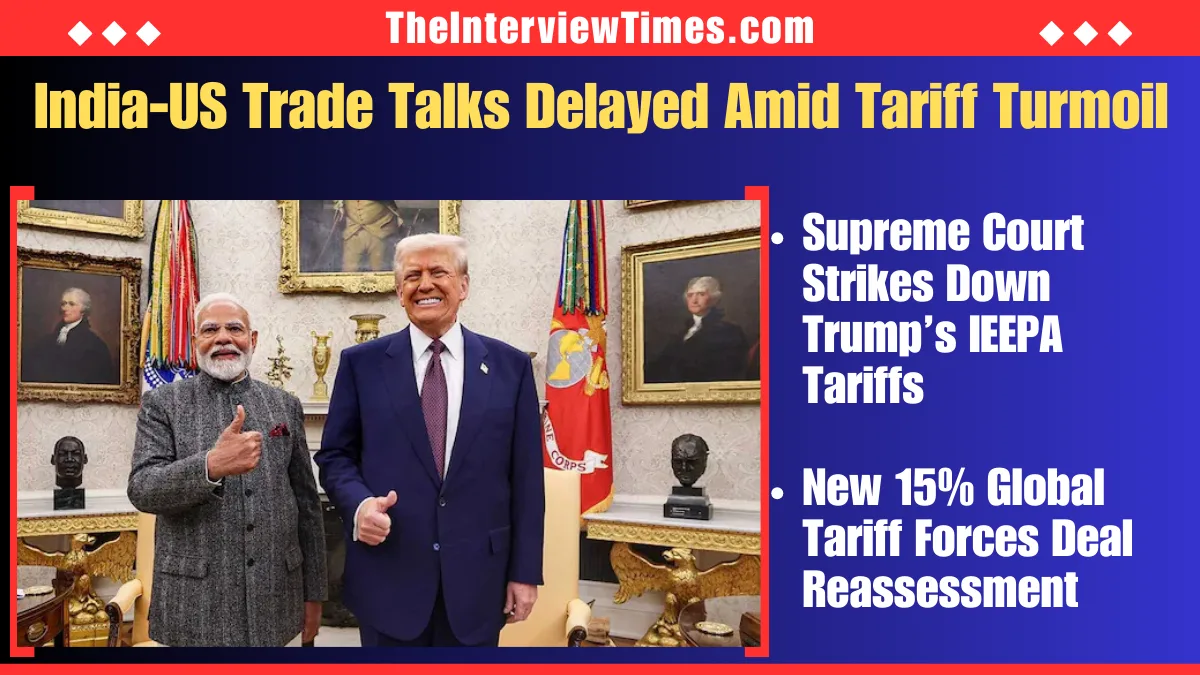
India and the United States have postponed critical trade negotiations originally set for February 23, 2026, in Washington DC, allowing both sides time to evaluate the fallout from a landmark US Supreme Court ruling that invalidated President Donald Trump’s sweeping tariffs. The decision disrupts an interim trade framework announced earlier this month, forcing negotiators to rethink commitments amid shifting tariff landscapes.
Supreme Court Ruling Details
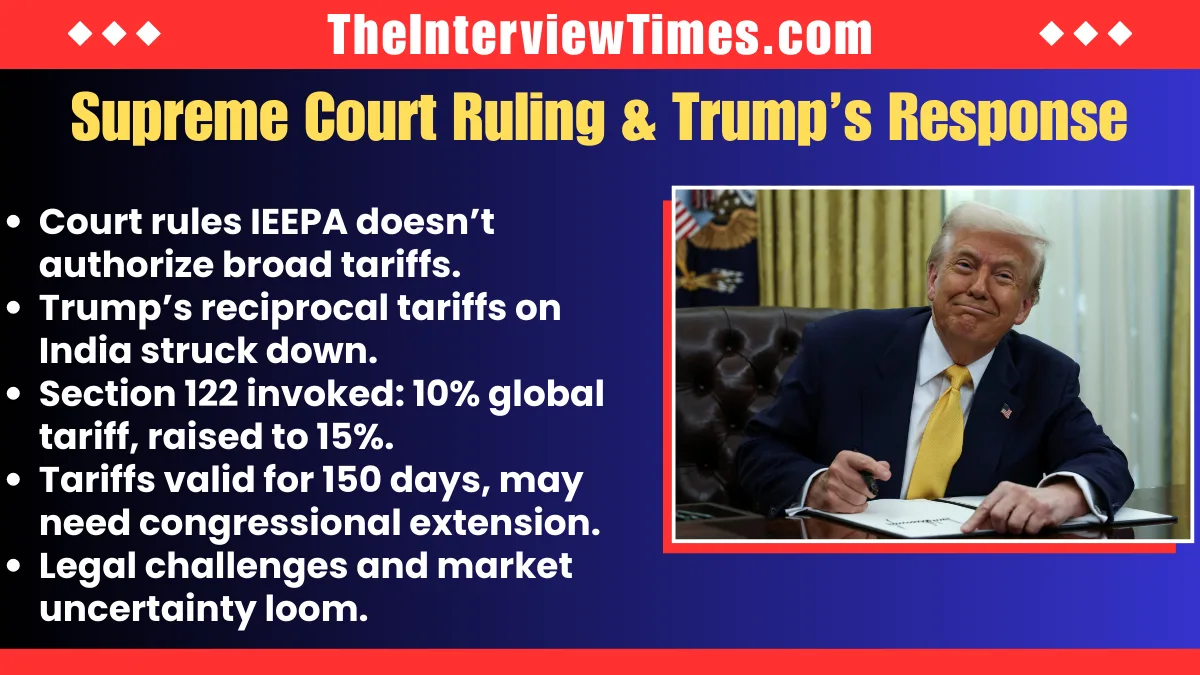
The US Supreme Court issued a 6-3 decision on February 20, 2026, ruling that the International Emergency Economic Powers Act (IEEPA) does not authorize the president to impose broad tariffs, as written by Chief Justice John Roberts. This struck down Trump’s reciprocal tariffs, including higher rates on India previously set at up to 50 percent before reduction to 18 percent in the recent framework. Justices Clarence Thomas, Samuel Alito, and Brett Kavanaugh dissented, arguing alternative authorities could sustain similar measures.
Trump Response and New Tariffs
President Trump quickly pivoted, invoking Section 122 of the Trade Act of 1974 on February 20 to impose a 10 percent global tariff on imports effective February 24, later raising it to 15 percent, the statutory maximum. This provision allows temporary surcharges up to 15 percent for 150 days to address balance-of-payments issues, without needing prior investigations. The move applies uniformly worldwide, nullifying the preferential 18 percent rate India had negotiated.
Background on India-US Trade Framework
The postponement affects talks led by India’s chief negotiator Darpan Jain, Joint Secretary in the Commerce Ministry, who was due to finalize the legal text of an interim pact from February 23 to 25. This followed a February 6 joint statement after talks between Trump and Prime Minister Narendra Modi, where the US removed a 25 percent additional tariff on Indian goods in exchange for India halting Russian oil imports and boosting US purchases. The framework aimed at reciprocal trade leading to a broader bilateral agreement.

Implications for India
India’s Commerce Ministry stated it is studying the ruling’s implications, with sources confirming both nations agreed to reschedule after assessing developments. Exporters note the 15 percent global rate is manageable short-term, but the deal’s loss of preferential access erodes India’s edge over competitors like China and Vietnam. Analysts from Global Trade Research Initiative suggest India use the agreement’s renegotiation clause to pause, delay, or seek better terms, as about 55 percent of exports previously faced higher duties now revert to standard rates.
Expert Views and Future Outlook
Trade bodies like the Federation of Indian Export Organisations view the 18 percent tariff as irrelevant, urging realignment. The 150-day limit on Section 122 tariffs introduces uncertainty, potentially requiring congressional extension and opening doors to legal challenges. As of February 22, 2026, no new meeting date is set, but officials expect prompt rescheduling once positions clarify amid volatile markets and rupee pressures. This ruling reinforces congressional oversight on tariffs, limiting executive overreach in future US-India dealings.
Top News: Yellow Letters Wins Golden Bear at Berlinale 2026 Amid Political Firestorm Over Gaza Silence
