
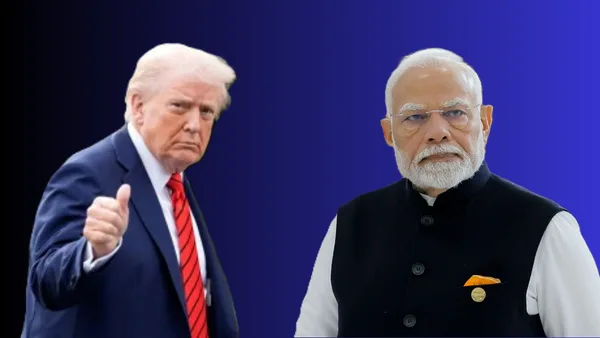
India Pushes for Tariff Rollback as U.S. Considers Lifting Sanctions-Linked Trade Duties
India urges the U.S. for a swift tariff rollback after halting Russian oil imports, aiming to revive exports and finalize a major trade deal.
Key Points
- India seeks a Tariff Rollback from the U.S. after complying with sanctions on Russian oil imports.
- Indian refiners have halted new Russian crude orders amid tightening U.S. sanctions.
- The U.S. imposed an additional 25% tariff on Indian exports, citing Russian oil trade.
- Both nations are advancing talks toward a 2025 trade deal aimed at $500 billion in bilateral trade.
- Experts urge India to ensure tariff parity and stronger energy security post-sanctions.
India’s Push for Tariff Rollback Amid Changing Trade Dynamics
India is intensifying diplomatic efforts to secure a Tariff Rollback from the United States as part of its broader strategy to restore export competitiveness. The move follows New Delhi’s compliance with U.S. sanctions by halting new Russian oil purchases — a significant gesture meant to ease bilateral tensions and pave the way for renewed trade cooperation.
The timing is crucial. As trade negotiations between the world’s two largest democracies progress, officials on both sides are optimistic that a tariff rollback could become a key milestone in reshaping the economic partnership between India and the U.S.
Must Read: Trump Says US-India Trade Deal Is Close, Predicts Major Economic Reset
India’s Suspension of Russian Oil Imports
Major Indian refiners — including Reliance Industries, Bharat Petroleum, Hindustan Petroleum, and Mangalore Refinery — have sharply curtailed or completely suspended new Russian crude orders for December delivery. This marks a policy shift for India, which previously sourced nearly a third of its oil from Russia.
Energy sector insiders confirm that all transactions linked to sanctioned entities such as Rosneft and Lukoil have been either canceled or deferred. The goal is clear: maintain compliance with sanctions and protect India’s access to global financial systems, which are vital for oil payments and trade settlements.
Roots of the Tariff Dispute
The ongoing trade friction stems from tariffs introduced by the U.S. during the Trump administration. Washington imposed an additional 25% duty — termed the “Russian oil” tariff — on top of existing reciprocal duties, raising total tariffs on Indian exports to nearly 50%.
The measure was justified as retaliation against India’s oil trade with Russia, which U.S. policymakers argued indirectly funded Moscow’s war in Ukraine. As a result, Indian exports to the U.S. dropped by 37% between May and September, highlighting the urgency of a Tariff Rollback to revive export flows.
India’s Three-Step Strategy for Tariff Rollback
A report by the Global Trade Research Initiative (GTRI) outlines a three-step roadmap for India’s economic diplomacy:
- Exit from Sanctioned Russian Oil:
With refiners halting new orders, India has already achieved this first step. - Secure Tariff Rollback:
India must press Washington to remove the additional 25% “Russian oil” tariff, lowering total duties from 50% to 25%. A Tariff Rollback could rejuvenate exports in critical sectors such as textiles, jewelry, and pharmaceuticals. - Resume Balanced Trade Talks:
After tariffs are rolled back, India should negotiate tariff parity with key U.S. partners, targeting average duties around 15% and improved duty-free access for strategic products.
Progress on Bilateral Trade Deal
Encouragingly, U.S. President Donald Trump has acknowledged India’s “substantial” reduction in Russian oil imports and indicated that a Tariff Rollback is under serious review. During the swearing-in of Ambassador Sergio Gor, Trump remarked that both countries are “close to doing a deal that is good for everybody.”
Trade officials from New Delhi and Washington are working toward a first-phase trade agreement by the end of 2025, with a long-term goal of doubling bilateral trade to $500 billion by 2030.
Legal and Strategic Considerations
GTRI analysts recommend that India monitor the upcoming U.S. Supreme Court ruling on presidential tariff powers under the International Emergency Economic Powers Act. If the Court limits or overturns this authority, India could gain leverage to negotiate deeper tariff concessions.
Indian policymakers also stress that future trade strategies must integrate energy diversification, export resilience, and technology cooperation with Western markets — ensuring that economic gains are not offset by geopolitical risks.
Outlook: A Path Toward Trade Normalization
India’s rapid compliance with U.S. sanctions and its proactive stance on Tariff Rollback underscore its intent to normalize trade relations. The coordinated approach — reducing dependence on Russian energy while pushing for equitable tariffs — reflects New Delhi’s strategic balancing between energy security and global trade priorities.
If Washington follows through on its pledge to lift the sanctions-linked duties, 2025 could mark a turning point in India-U.S. economic relations. The momentum behind the Tariff Rollback may not only restore export competitiveness but also usher in a new era of economic collaboration between two of the world’s most dynamic democracies.