
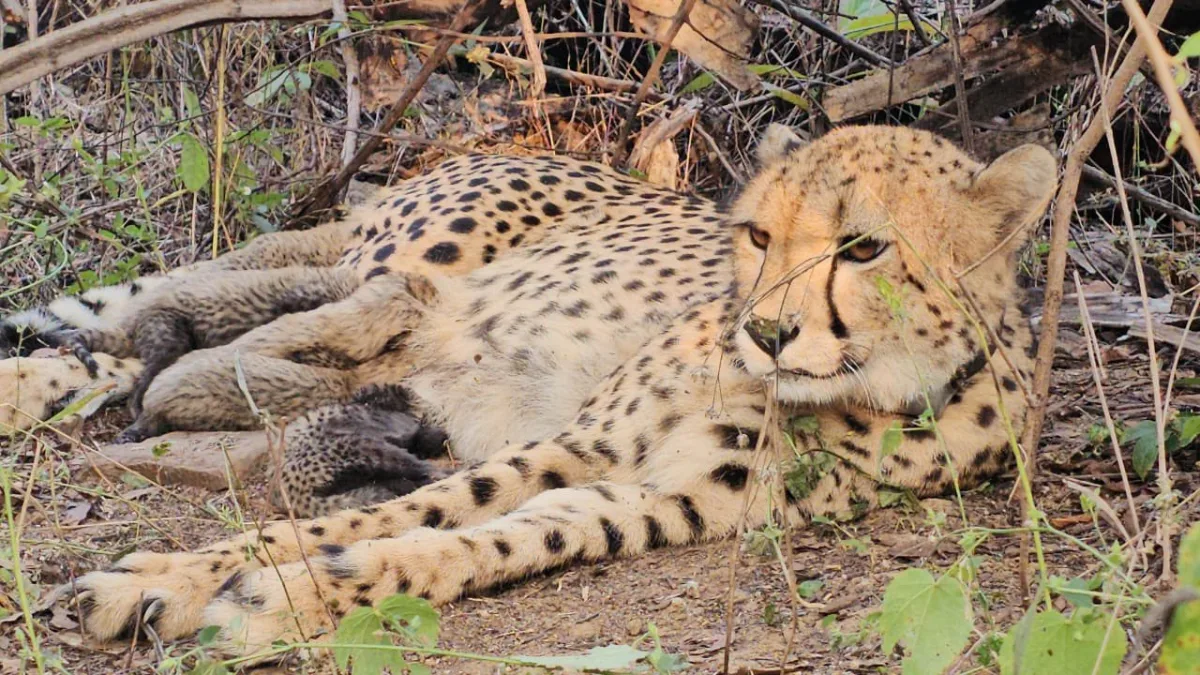
India’s wildlife program received a major boost as Mukhi, the first Indian-born female cheetah, delivered five cubs at Kuno National Park. The birth strengthens India’s long-term conservation vision and aligns with rising leopard numbers across key states, marking a wider revival of the nation’s big cat ecosystems.
Kuno Milestone: Indian-Born Cheetah Mukhi Adds Five Cubs to India’s Revival Effort
TheInterviewTimes.com | November 20, 2025: India’s efforts to rebuild its wildlife heritage achieved a significant milestone as Mukhi, the first Indian-born female cheetah, gave birth to five cubs at Kuno National Park in Madhya Pradesh. Union Environment Minister Bhupender Yadav announced the news on X, calling it a “delightful breakthrough” for the country’s long-term conservation strategy.
Mukhi is the first cheetah born on Indian soil to successfully raise a litter, marking a promising moment for the ongoing reintroduction project. Her healthy cubs confirm that the species is adapting well to Indian landscapes after being absent for more than seven decades.
Historic milestone: Indian-born cheetah Mukhi gives birth to 5 cubs 🐾 🐾
— Bhupender Yadav (@byadavbjp) November 20, 2025
In a delightful breakthrough for India’s cheetah reintroduction initiative, Mukhi — the first Indian-born female cheetah, aged 33 months — has given birth to five cubs. This is the first time in recent… pic.twitter.com/aw4oGTLAfY
A Turning Point for India’s Reintroduction Programme
The reintroduction initiative began in 2022 when individuals from Namibia and South Africa were relocated to Kuno. Mukhi, born to one of the introduced pairs, represents the second generation of this ambitious effort. The arrival of her cubs demonstrates progress toward building a wild, stable population that can thrive without repeated imports.
Wildlife biologists believe this development strengthens the program’s overall viability. The survival of Mukhi’s cubs will help widen the genetic pool and reduce long-term dependency on external breeding support. Experts say the birth also reflects improved habitat readiness, close monitoring, and investment in grassroots management.
Must Read: Botswana Gifts 8 Cheetahs to India as ‘Project Cheetah India’ Enters New Phase
Leopard Population Growth Highlights Wider Conservation Success
While the birth at Kuno grabbed national attention, the country’s broader big cat landscape has also shown encouraging signs. India’s leopard population stood at 13,874 as per the 2022 assessment—an 8% increase from 2018. This rise is attributed to extensive camera-trap surveys, effective forest management, and strengthened anti-poaching operations.
State-wise distribution includes:
- Madhya Pradesh: 3,907
- Maharashtra: 1,985
- Karnataka: 1,879
- Tamil Nadu: 1,070
Central India and the Eastern Ghats have experienced steady annual growth, supported by robust tiger conservation spillovers. In contrast, the Shivalik Hills and Gangetic Plains registered a decline due to fragmentation and development pressures.
Recent field studies also note the species’ adaptability in suburban edges, particularly around Indore, Jabalpur and Bengaluru. While this flexibility reflects ecological resilience, it also underscores the need for focused conflict-prevention measures.
Must Read: GST Collections Hit Historic High in November, Cross ₹2 Trillion for First Time
Evolving Predator Dynamics Demand Better Corridor Planning
The progress seen with Mukhi’s litter brings renewed attention to India’s evolving predator landscape. Expanding populations of different large carnivores will require better management of shared habitats, stronger ecological corridors and timely intervention in sensitive zones.
Although India has made measurable progress, challenges persist. Imported individuals involved in the reintroduction effort have faced territorial conflicts, health issues and climatic stress. Additionally, leopard deaths from illegal hunting remain a concern, with 1,485 incidents recorded over the last decade.
Conservationists emphasise that continued success will depend on scaling up investments in habitat expansion, real-time monitoring, community partnerships and preventive actions against wildlife crime.
National Pride and a Renewed Conservation Vision
Yadav’s announcement, accompanied by visuals of the newborn cubs, drew widespread appreciation from wildlife researchers and citizens. The development aligns with India’s conservation ethos and further strengthens the country’s reputation as a leader in restoring endangered species.
Prime Minister Narendra Modi has previously highlighted the importance of ecological revival, describing the growth of predator populations as a reflection of India’s commitment to protecting natural heritage.
As preparations continue to expand the reintroduction programme to additional landscapes in Rajasthan and Gujarat, Mukhi’s cubs represent hope, progress and the promise of a restored ecological balance.
Key Takeaways
- Mukhi, the first Indian-born female cheetah, has given birth to five cubs, marking a major conservation success.
- The event strengthens India’s long-term plan to rebuild a sustainable population.
- Leopard numbers have risen to 13,874, reflecting strong ecological recovery across key states.
- Habitat protection, corridor planning and anti-poaching efforts remain essential.
- India continues to emerge as a global model for big cat restoration and wildlife management.