

Affordable EVs in India, priced under ₹20 lakh, are fueling mass adoption in 2025. Discover how EVs are reshaping mobility at The Interview Times.
New Delhi, July 11, 2025 – India’s electric vehicle (EV) revolution is gaining speed as affordable EVs priced between ₹10-20 lakh hit the market, making green mobility accessible to millions. With government subsidies, innovative models from automakers like Tata Motors and Mahindra, and growing charging networks, 2025 is shaping up as the year EVs go mainstream in India. This shift is not just about cleaner transport—it’s about transforming how Indians travel and live.
Affordable EVs for the Middle Class
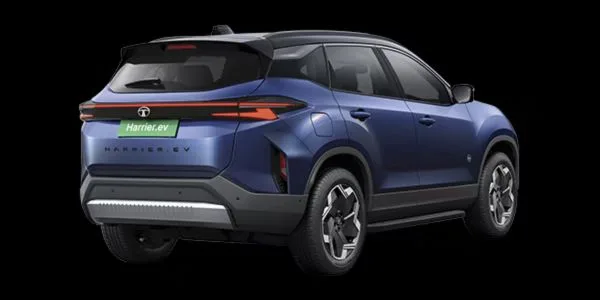
The Indian EV market is booming, with sales crossing 1.8 million units in FY2025, a 30% jump from last year. Affordable EVs are driving this growth, thanks to models like the Tata Punch EV, Mahindra XUV 3XO Electric, and JSW MG Motor’s upcoming ₹10-lakh EV. These vehicles offer ranges of 200–400 km, modern features like touchscreen infotainment, and lower running costs compared to petrol or diesel cars.
The PM E-Drive Scheme plays a big role, offering subsidies of up to ₹1.5 lakh for electric cars and two-wheelers. This has slashed prices, making EVs competitive with traditional vehicles. For instance, the Tata Punch EV starts at ₹10.99 lakh, while the Mahindra XUV 3XO Electric is priced around ₹15 lakh. “Affordable EVs are no longer a luxury; they’re a practical choice for families,” said Rohan Mehta, an auto industry analyst. “With fuel prices rising, EVs save ₹50,000–80,000 annually on running costs.”
The government’s focus on localization has also helped. Over 60% of EV components are now made in India, reducing costs. Companies like Tata and Mahindra are investing in local battery production, with sodium-ion batteries showing promise as a cheaper alternative to lithium-ion.
Must Read: Astral Systems’ First Commercial Tritium Production Breakthrough for Fusion Energy
Charging Infrastructure Keeps Up
A major concern for EV buyers has been charging availability. In 2025, India has over 26,000 charging stations, up from 12,000 in 2023, with companies like ChargeZone and NTPC expanding networks. Urban areas like Delhi, Bengaluru, and Mumbai lead, but rural charging hubs are growing too, supported by solar-powered stations. The government aims to install 100,000 stations by 2030, ensuring EVs are practical even in smaller towns.
For buyers like Priya Sharma, a Delhi-based teacher, this makes EVs appealing. “I bought a Tata Nexon EV because there’s a charging station near my home and workplace. It’s cheaper than my old petrol car, and I feel good about reducing pollution,” she said.
Challenges on the Road Ahead
Despite the progress, hurdles remain. Battery costs, though falling, still make EVs pricier upfront than conventional cars. For example, a Tata Punch EV costs ₹2-3 lakh more than its petrol version. Limited fast-charging stations on highways also deter long-distance travel. “We need more high-speed chargers for EVs to fully replace traditional cars,” said Anil Kumar, a logistics firm owner.
Supply chain issues, like China’s restrictions on rare earth magnets, could raise costs. India is countering this by boosting domestic production and exploring alternatives like iron-based batteries. The government is also offering tax breaks and low-interest loans to encourage EV manufacturing and adoption.
The Bigger Picture
Affordable EVs are reshaping India’s auto industry and environment. EVs now hold a 2.3% market share, slightly ahead of hybrids at 2.2%, and are expected to reach 10% by 2030. This shift supports India’s goal of cutting carbon emissions by 45% by 2030 and achieving net-zero by 2070. With transport accounting for 14% of India’s emissions, EVs are critical to cleaner air and energy independence, as 85% of India’s fuel is imported.
The rise of affordable EVs also creates jobs. The sector has added 50,000 jobs in 2025 alone, from manufacturing to charging station maintenance. Women are playing a bigger role too, with engineers and entrepreneurs leading startups in battery recycling and EV design.
Must Read: Tesla India Showroom Opens in Mumbai: Revolutionizing EVs in India
What’s Next?
As automakers launch more models and charging networks expand, affordable EVs are set to dominate India’s roads. The government’s ₹10,000-crore investment in the PM E-Drive Scheme signals strong support. With global eyes on India’s EV success, the country could become a hub for affordable electric mobility.