
TheInterviewTimes.com | March 09, 2026 | 08:23 PM IST | New Delhi
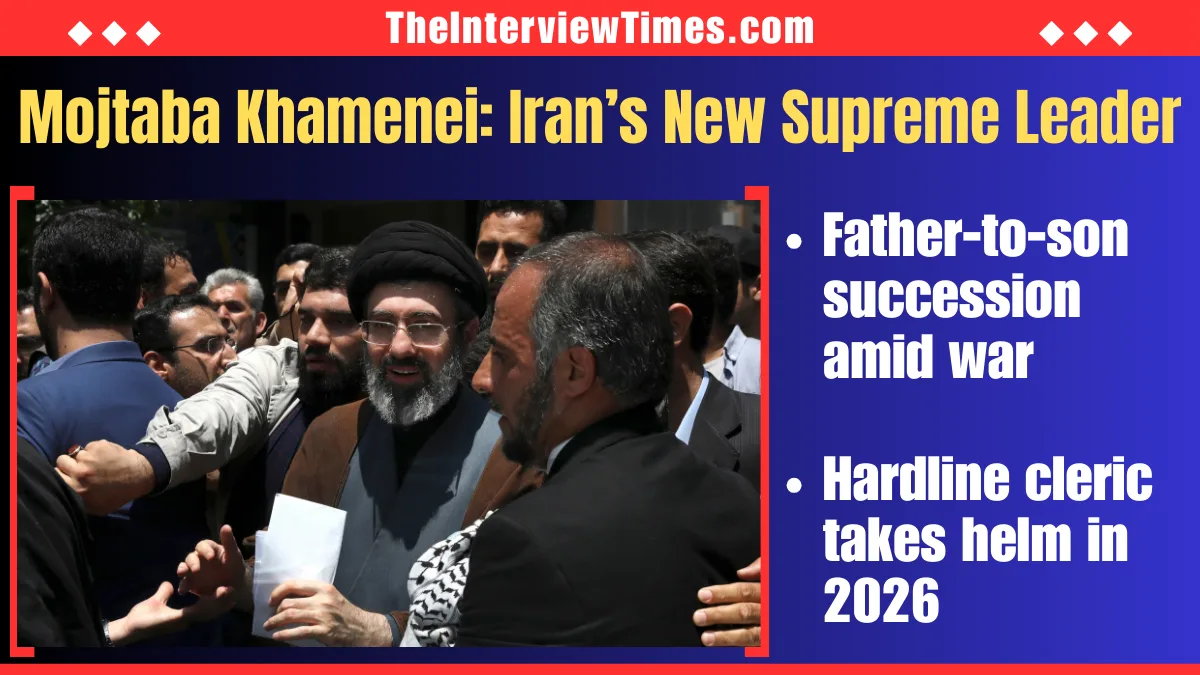
Discover who Mojtaba Khamenei is, the newly appointed Supreme Leader of Iran succeeding his father Ayatollah Ali Khamenei in March 2026. Learn about his background, hardline stance, and role in the current US-Israel conflict.
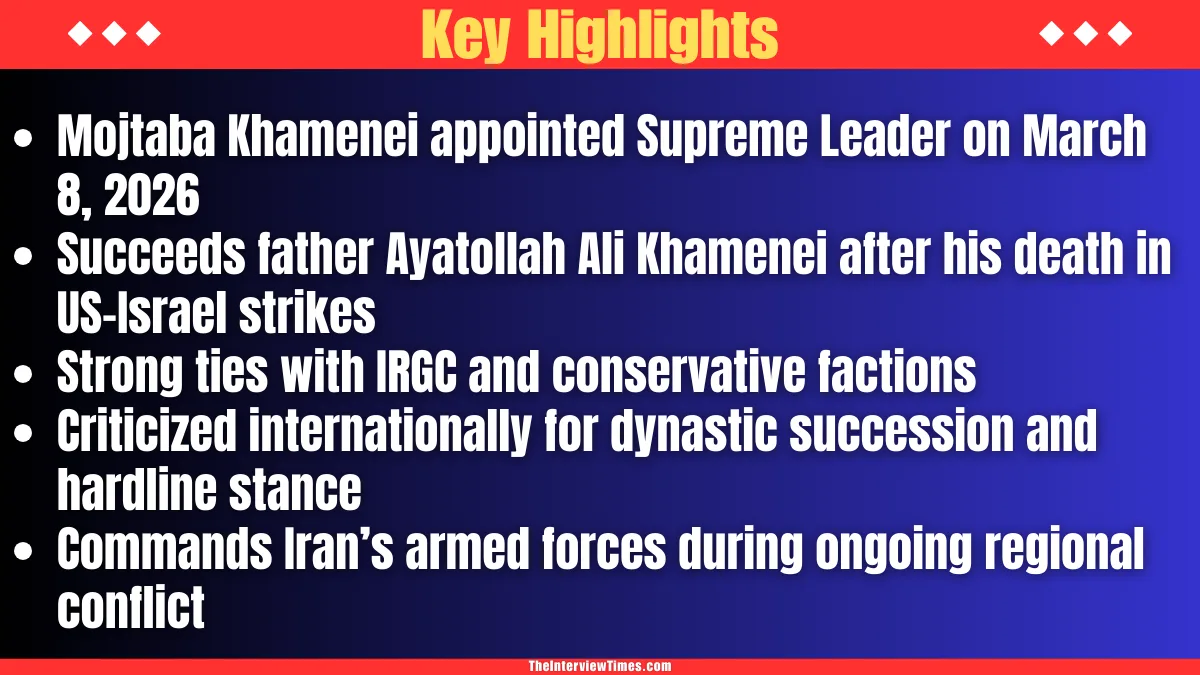
Mojtaba Khamenei became Iran’s third Supreme Leader on March 8, 2026, following the death of his father, Ayatollah Ali Khamenei, in US-Israeli airstrikes that sparked the ongoing regional war. The Assembly of Experts, Iran’s clerical body responsible for selecting the Supreme Leader, chose him in a decisive vote amid intense military pressure and conflict. This father-to-son transition marks a significant shift in the Islamic Republic’s 47-year history, drawing both domestic support from hardliners and international criticism.
مجلس خبرگان رهبری … مطابق وظیفه شرعی و اعتقاد به حضور در محضر خداوند متعال، در اجلاسیه فوقالعاده امروز آیتالله سیدمجتبی حسینی خامنهای (حفظه الله) را بر اساس رٱی قاطع نمایندگان محترم مجلس خبرگان رهبری به عنوان سومین رهبر نظام مقدس جمهوری اسلامی ایران، تعیین و معرفی مینماید. pic.twitter.com/73BzovwY4o
— KHAMENEI.IR | فارسی (@Khamenei_fa) March 8, 2026
Early Life and Family Background
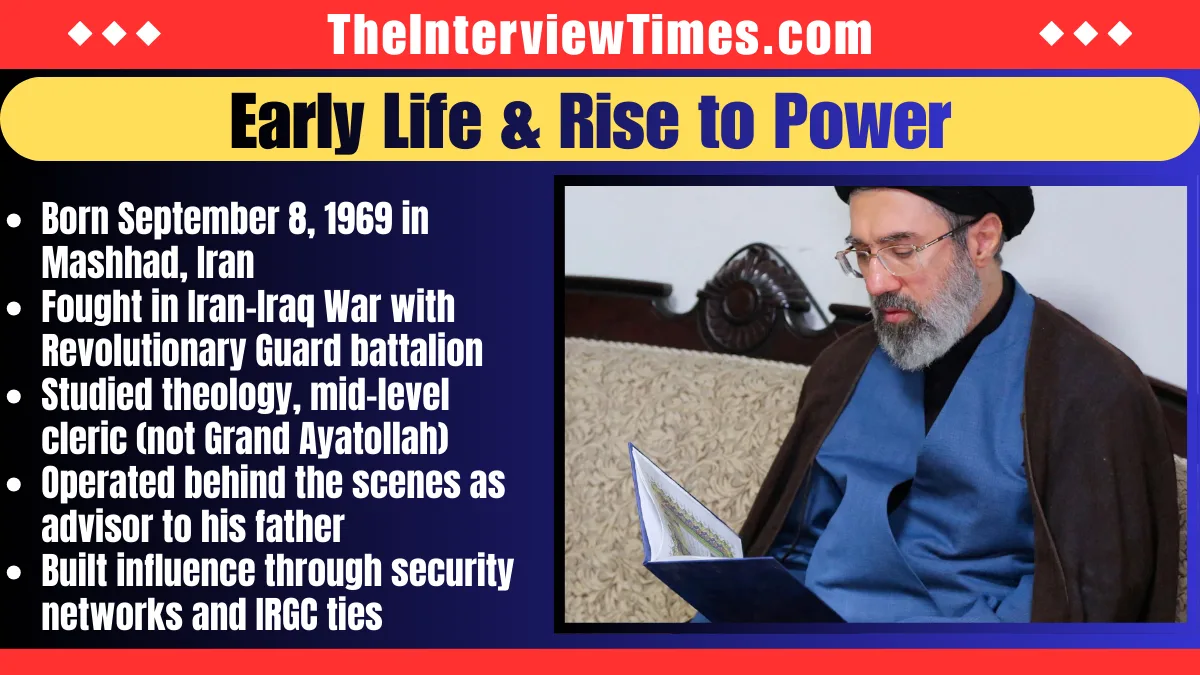
Mojtaba Hosseini Khamenei was born on September 8, 1969, in Mashhad, Iran, making him 56 years old in 2026. He is the second of six children born to Ayatollah Ali Khamenei and his wife. Coming from a prominent clerical family with Azerbaijani-Persian roots, Mojtaba grew up during the early years of the Islamic Revolution. He fought in the Iran-Iraq War in the 1980s as part of a Revolutionary Guard battalion, which helped him build strong connections within the Islamic Revolutionary Guard Corps (IRGC).
Education and Clerical Status
Mojtaba Khamenei studied theology and follows Ja’fari jurisprudence and Usuli creed in Shia Islam. He holds the rank of a mid-level cleric but has not attained the status of Grand Ayatollah. Unlike many Iranian leaders, he has avoided public speeches, interviews, or elected offices, maintaining a low public profile for decades.
Rise to Power and Behind-the-Scenes Influence
For years, Mojtaba operated from the shadows within the Office of the Supreme Leader, acting as a key advisor and gatekeeper to his father. He coordinated political, security, intelligence, and military matters while forging deep ties with the IRGC and regime institutions. Analysts describe him as a hardliner aligned with conservative factions, accused by critics of involvement in suppressing protests and dissent. His influence grew through security networks rather than overt clerical authority.
Appointment as Supreme Leader
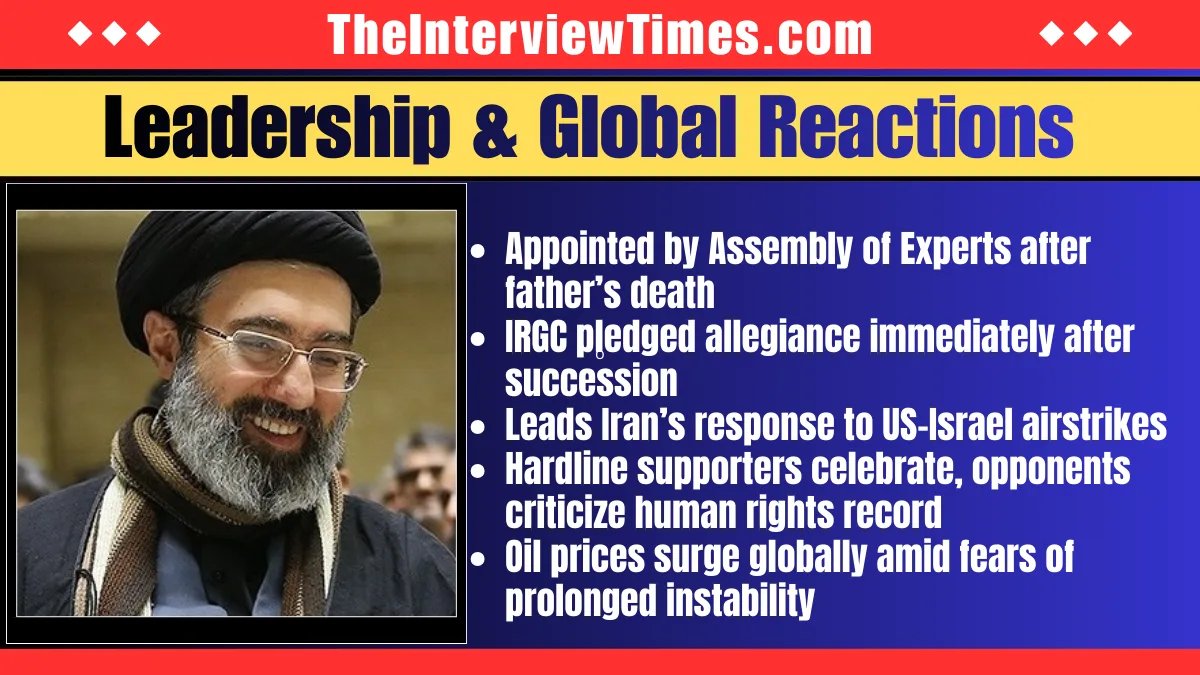
After Ayatollah Ali Khamenei was killed in the initial strikes of the US-Israel war on Iran, the Assembly of Experts selected Mojtaba as successor shortly thereafter. Iranian state media reported the decision, and the IRGC quickly pledged allegiance. This move signals continuity of hardline policies despite criticism that it resembles dynastic rule, contrary to the 1979 Revolution’s principles. Mojtaba now commands Iran’s armed forces and holds ultimate authority over key decisions, including the nuclear program, during the escalating conflict.
Top News: India Canada Uranium Deal 2026: Modi and Carney Seal $2.6 Billion Pact in New Delhi
Current Role and Reactions
As Supreme Leader in March 2026, Mojtaba Khamenei leads Iran’s response to ongoing airstrikes and regional warfare. Reports indicate he survived initial attacks, though family members were affected. Domestically, hardline supporters celebrate the choice, while opponents express dismay over his hardline reputation and alleged human rights record. Internationally, figures like US President Trump have called him unacceptable, warning of further confrontation. Oil prices have surged in response, reflecting global concerns over prolonged instability.
Mojtaba Khamenei’s leadership underscores the IRGC’s dominant role in Iran’s power structure amid crisis, with his tenure likely to emphasize defiance and continuity of the theocratic system.
Top News: Plant-Based Diet Lowers Chronic Disease Risk: Latest 2026 Research Insights
