

Nepal Gen Z Protests, sparked by a social media ban, forced PM Oli to resign. This uprising marks a generational shift as youth demand accountability, free expression, and new leadership, with global parallels from Hong Kong to Chile.
Nepal Gen Z Protest: A Generation Takes to the Streets
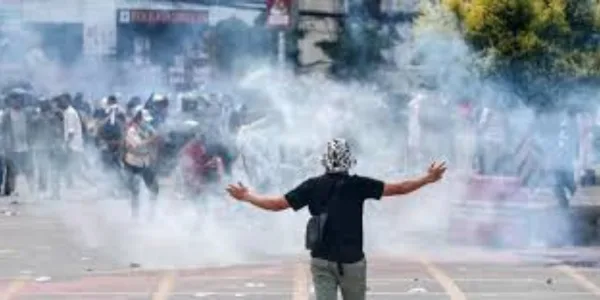
KATHMANDU – Nepal’s fragile democracy is facing its toughest test in years as tens of thousands of young Nepalis pour onto the streets, demanding an end to corruption, authoritarian tendencies, and elite control. The recent Gen Z-led protests, which erupted after the government’s temporary ban on social media platforms, have quickly grown into a broader political movement—one that forced Prime Minister K.P. Sharma Oli to resign on September 9, 2025, after 19 people were killed in clashes with security forces.
For a country where the median age is just 24, these protests are more than an outburst of frustration. They mark a generational rebellion against decades of misrule by the same political figures who have rotated in and out of power since the monarchy fell in 2008.
Must Read: From Rapper to Reformist: Could Balen Shah Be Nepal’s Next Prime Minister?
Nepal Gen Z Protest: Why Gen Z Is Angry
Unlike previous protest waves in Nepal, this one is driven by the young, urban, and digitally connected. Their demands are clear:
- End to corruption at every level of government.
- Accountability for police brutality during recent crackdowns.
- Freedom of expression and opposition to any attempt to curb digital spaces.
- New leadership, untainted by the compromises and scandals of established parties.
The social media blackout was the breaking point. Platforms like Facebook, TikTok, and X are not only spaces for entertainment but also vital tools for communication, activism, and entrepreneurship. By cutting off these lifelines, the government underestimated the depth of youth frustration. Instead of silencing dissent, the blackout mobilized an entire generation.
The Face of Change: Balen Shah
No figure embodies this generational shift more than Balendra “Balen” Shah, the independent Mayor of Kathmandu and a former rapper. Shah’s rise—from hip-hop battles to city hall—represents the very anti-establishment ethos Gen Z is demanding.
Although constitutional rules prevent him from directly stepping into the Prime Minister’s chair without parliamentary backing, Shah has become the symbol of a New Nepal. Viral hashtags like #BalenForPM show how quickly youth movements can rally behind outsider leaders when the traditional political class fails to deliver.
Must Read: Nepal Gen Z Protest: Protests, Bloodshed, and the Cost of a Digital Ban
Digital Mobilization: The New Protest Playbook
What makes this uprising distinct is the way it was organized and sustained:
- Memes, short videos, and hashtags spread faster than traditional political slogans.
- Even with the temporary ban, young activists used VPNs, proxy servers, and offline networks to coordinate demonstrations.
- Livestreams and citizen journalism bypassed official media narratives, ensuring the world saw events unfold in real time.
This digital-first approach echoes global movements where social media became both the rallying ground and the frontline.
Nepal Gen Z Protest: Nepal in a Global Context
Nepal’s Gen Z uprising is not an isolated event. Around the world, young people have challenged entrenched systems in strikingly similar ways:
- Hong Kong (2019–2020): Students led protests against Beijing’s tightening grip, using encrypted apps and online forums to outmaneuver police.
- Chile (2019): A hike in metro fares sparked massive youth-led demonstrations, eventually leading to a new constitution-drafting process.
Like these movements, Nepal’s youth are not simply reacting to a single issue. They are demanding structural change, a more inclusive democracy, and a break from corrupt politics.
Nepal Gen Z Protest: Establishment Under Pressure
For Nepal’s political elite, the message is clear: business as usual will no longer work. The resignation of Oli is seen as only the beginning. Unless parties adapt to the aspirations of young voters, they risk becoming irrelevant in a nation where digital-savvy youth now hold the political center of gravity.
The protests also raise questions about how Nepal’s neighbors—India and China—will respond to a more unpredictable, youth-driven democracy. Both have deep economic and strategic stakes in Nepal and will be watching closely.
Nepal Gen Z Protest: The Road Ahead
It is uncertain whether this movement will crystallize into a lasting political force or fade like previous protest waves. Yet one thing is undeniable: Nepal’s democracy has been redefined.
For the first time, a digitally empowered generation has shown it can bring down a Prime Minister, challenge authoritarian impulses, and demand a seat at the table. Whether through figures like Balen Shah or new political platforms, Gen Z has made it clear—they are not the future of Nepal’s democracy; they are its present.