
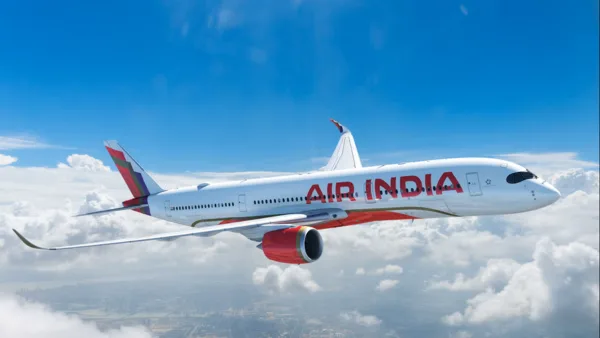
Pakistan Airspace Ban leads to ₹4,000 crore loss for Air India as flights to Europe and North America face reroutes, delays, and higher fuel costs.
Pakistan Airspace Ban Deepens Aviation Crisis
The Pakistan Airspace Ban has cost Air India nearly ₹4,000 crore after Islamabad shut its airspace to Indian carriers in response to the April 2025 Pahalgam terror attack. The ban has forced Indian airlines to take longer routes over the Arabian Sea and Iran for flights to Europe and North America, adding major operational and financial burdens.
Because of the Pakistan Airspace Ban, average flight durations have increased by 60 to 90 minutes, causing higher fuel consumption, crew expenses, and longer aircraft turnaround times. Speaking at an aviation conference in New Delhi, Air India CEO Campbell Wilson described the ongoing restrictions as “a major operational challenge” for the Tata Group-owned carrier.
Must Read: US-India Deal: Trump Eyes Major Trade Pact After $350 Billion South Korea Agreement
How the Pakistan Airspace Ban Impacts Flights
The Pakistan Airspace Ban affects around 800 weekly flights operated by Air India, IndiGo, and SpiceJet, disrupting key routes to London, Frankfurt, Chicago, and New York. Pakistan first imposed the closure on April 24, 2025, following the terror incident, and India retaliated with a reciprocal closure on April 30.
Both countries have repeatedly extended the Pakistan Airspace Ban through Notices to Airmen (NOTAMs), the latest valid until October 24, 2025. The detours have forced aircraft to fly thousands of extra kilometers, inflating operational costs and creating scheduling bottlenecks across the Indian aviation sector.
Economic Toll of the Pakistan Airspace Ban
Industry experts estimate that the Pakistan Airspace Ban could cost Indian airlines a collective ₹7,000 crore annually if it persists. Air India, with its vast long-haul network, is bearing the brunt, projecting losses of over ₹5,000 crore if the ban continues through 2026.
Meanwhile, Pakistan is also losing significant overflight revenue — estimated at $15 million between April and June 2025. The Pak Airspace Ban thus represents a rare instance of mutual economic loss stemming from regional tensions, illustrating how geopolitics directly affects global commerce.
Air India has sought government assistance to mitigate the financial strain caused by the Pakistan Airspace Ban, including potential fuel subsidies and route relief measures.
Must Read: India-China LAC Talk 2025: Renewed Dialogue Aims to Reinforce Peace Along the Border
Geopolitical Context: From Pahalgam Attack to Airspace Standoff
The Pakistan Airspace Ban originated in the aftermath of the Pahalgam terror attack, which killed 26 people, including government officials and tourists. The attack triggered diplomatic escalations between New Delhi and Islamabad.
Amid these heightened tensions, Pakistan has issued additional airspace restrictions ahead of India’s large-scale military exercises in Rajasthan and Gujarat (October 30 – November 11, 2025). Analysts say this signals no near-term resolution to the ongoing Pakistan Airspace Ban, keeping regional skies uncertain for both civilian and cargo operations.
Operational Challenges for Air India
Despite the Pakistan Airspace Ban, Air India continues operating its global routes, but with increased costs and logistical complexity. CEO Campbell Wilson noted that the airline is optimizing alternate flight paths and fuel efficiency strategies to reduce losses.
However, experts warn that the Pak Airspace Ban could slow Air India’s international expansion and delay its Vistara merger integration and fleet modernization plans. The ban also hampers India’s broader aviation growth, impacting trade, tourism, and connectivity with Europe and the U.S.
Industry-Wide Repercussions
The Pakistan Airspace Ban has exposed how geopolitical conflicts can disrupt global aviation supply chains. The longer routes increase carbon emissions, complicate crew scheduling, and drive up ticket prices for passengers. Airlines like Emirates, Qatar Airways, and Lufthansa have also reported scheduling constraints due to rerouted Indian traffic congesting alternate corridors.
Industry analysts believe that unless India and Pakistan reopen dialogue to resolve the airspace issue, the Pakistan Airspace Ban will continue to challenge airlines, airports, and passengers across Asia and beyond.
At a Glance: Key Data Points
- Focus Keyword: Pakistan Airspace Ban
- Air India’s estimated loss: ₹4,000 crore (April–October 2025)
- Total Indian airline losses: ₹7,000 crore annually (projected)
- Pakistan’s overflight revenue loss: $15 million (April–June 2025)
- Flight delays: 60–90 minutes longer per route
- Affected flights: ~800 per week
- Current NOTAM validity: Through October 24, 2025
- Primary cause: Pahalgam terror attack, April 2025
Conclusion: The Cost of the Pakistan Airspace Ban
The Pakistan Airspace Ban has turned regional diplomacy into a costly aviation crisis, pushing Air India and other Indian carriers into deep financial turbulence. With losses already exceeding ₹4,000 crore, the ban underscores the urgent need for diplomatic negotiations to reopen critical air corridors between India and Pakistan.
Until then, the Pakistan Airspace Ban remains one of South Asia’s most visible reminders of how political standoffs can upend commercial and global connectivity.