
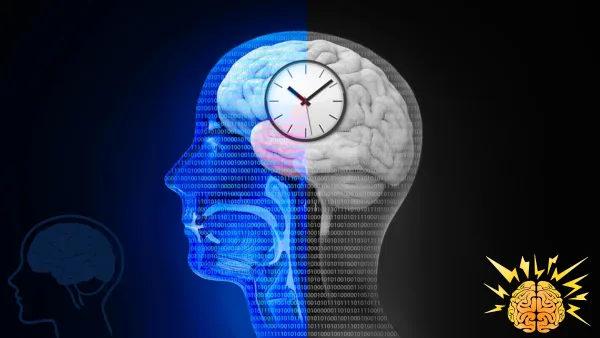
New research reveals that resetting the body’s rhythm could protect the brain from Alzheimer’s by boosting NAD⁺ levels and reducing tau buildup.
How Resetting the Body’s Rhythm May Shield the Brain
A groundbreaking study from Washington University School of Medicine has found that resetting the body’s rhythm might be the key to protecting the brain from Alzheimer’s disease. The research, published in Nature Aging and highlighted by ScienceDaily, shows that manipulating a specific circadian clock protein in mice can reduce harmful tau protein buildup — a major cause of neurodegeneration in Alzheimer’s.
The Science Behind Circadian Rhythm and Brain Health
Our body’s circadian rhythm — the internal clock that regulates sleep, metabolism, and energy — also plays a critical role in brain repair and cellular maintenance. When this rhythm is disrupted, brain cells lose their ability to recycle proteins efficiently, increasing the risk of cognitive decline.
In this new study, scientists focused on a protein called REV-ERBα, which helps control daily biological cycles. By inhibiting this protein in mice, researchers discovered a surprising benefit: higher levels of nicotinamide adenine dinucleotide (NAD⁺), a vital molecule for cell repair and energy metabolism.
Must Read: The Science of Sleep Cycles: How Your Brain Restores Itself Every Night
Key Findings: NAD⁺ and Tau Protein Reduction
The study revealed that when REV-ERBα was deleted — either throughout the body or specifically in brain-supporting astrocytes — NAD⁺ levels rose significantly. This increase was directly associated with a reduction in toxic tau accumulation, which damages neurons in Alzheimer’s disease.
Moreover, the researchers tested a drug-based REV-ERBα blocker, which mimicked the genetic effect and provided similar neuroprotective results. In other words, resetting the body’s rhythm pharmacologically showed measurable protection against tau-related brain damage in mice.
Why This Matters: A New Frontier in Alzheimer’s Prevention
Alzheimer’s disease affects more than 55 million people globally, with no definitive cure. Current drugs only manage symptoms or slow decline. This study’s findings point toward a preventive and restorative approach: by re-aligning the body’s natural rhythm, it may be possible to maintain healthy NAD⁺ levels and delay neurodegeneration.
Lead author Dr. Erik Musiek of Washington University explained that targeting the circadian system offers “a new way to support brain metabolism and resilience against age-related diseases.”
Resetting the Body’s Rhythm: Broader Implications for Human Health
Although the experiments were conducted in mice, the implications extend to humans. Lifestyle factors that strengthen circadian rhythm — such as consistent sleep schedules, morning light exposure, timed meals, and regular exercise — could reinforce the same metabolic pathways highlighted in the study.
Additionally, compounds that naturally boost NAD⁺, like nicotinamide riboside (NR) or nicotinamide mononucleotide (NMN), are being tested for brain and longevity benefits. The new findings could accelerate research into NAD⁺-based therapies for Alzheimer’s and other neurodegenerative disorders.
Must Read: Digital Nomads: Lifestyle and Career Tips for a Borderless Future
Resetting the Body’s Rhythm: Limitations and Next Steps
While promising, the results are not yet proven in humans. Manipulating the body’s circadian proteins could have side effects, as they influence multiple organs and hormonal systems. The next phase of research will involve:
- Human trials to assess whether REV-ERBα inhibitors are safe and effective.
- Long-term monitoring of NAD⁺ levels and cognitive performance in humans.
- Studies exploring how shift work, sleep deprivation, or jet lag may influence Alzheimer’s risk through circadian disruption.
The Takeaway: Protecting the Brain by Honoring the Clock
The message from this research is clear: our body’s rhythm matters for our brain’s future. Maintaining stable daily cycles of sleep, diet, and light exposure might not only improve mental clarity but could also form part of an effective Alzheimer’s prevention plan.
As science continues to uncover the intricate ties between circadian rhythm and neurodegeneration, resetting the body’s rhythm may evolve from a lifestyle recommendation into a therapeutic strategy — one capable of protecting millions from dementia in the decades ahead.
Source: Washington University School of Medicine in St. Louis.
Journal: Nature Aging, November 2025.