
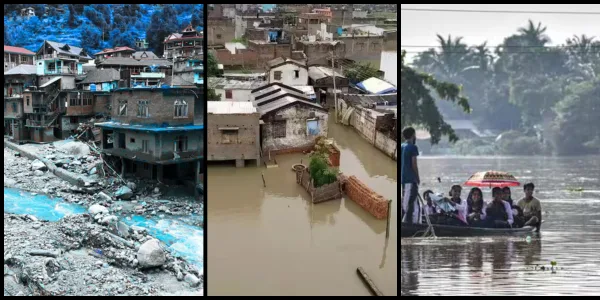
Explore how climate change is escalating flood risks in India. Updated 2025 data reveals causes, impacts, and urgent solutions for a resilient future.
Environmental crises in South Asia have steadily shifted from isolated events to recurring, chronic threats, with India emerging as one of the most vulnerable countries to climate-driven disasters. In a nation where monsoons have long shaped life and livelihoods, climate change is rewriting the rules. The interplay of rising temperatures, erratic rainfall, and human vulnerabilities is amplifying flood risks in India, turning seasonal rains into catastrophic deluges. This article examines the current realities, key drivers, and urgent solutions.
Understanding Flood Risks in India
Floods are woven into India’s hydrological fabric, but their frequency and intensity are surging. In 2024, extreme weather struck on 93% of days in the first nine months, with heavy rains, floods, and landslides claiming over 3,238 lives and affecting millions, according to the India Meteorological Department (IMD).
India’s diverse terrain—from Himalayan glacial lake outbursts to Indo-Gangetic riverine overflows and coastal storm surges—creates widespread vulnerability. States like Assam, Bihar, Uttar Pradesh, and West Bengal remain high-risk, while urban centers such as Delhi, Bengaluru, and Mumbai now grapple with urban flooding in India. A 2025 study on Himalayan hazards further warned that successive disasters, like the 2023 Sikkim flood, are becoming the new normal.
MUST READ: Every Year, 10M Hectares of Forests Vanish-Halting Deforestation Is Our Only Hope
Recent Flood Events and Rising Flood Risks in India
The year 2025 has been particularly brutal. Punjab’s districts were submerged, Delhi NCR was waterlogged, and Himalayan regions collapsed under extreme rainfall—a deadly mix of climate change, glacial melt, and policy shortfalls.
Early 2025 floods across India and neighboring Pakistan killed hundreds and displaced millions, underscoring how the region is at the frontline of the climate crisis. Globally, Asia recorded 167 disasters in 2024, with India at the epicenter.
The 2025 Climate Risk Index ranks India among the most vulnerable nations, noting that floods affected more than half of disaster-hit populations from 1993 to 2022. Economic losses are staggering: single flood events now routinely cause damages exceeding USD 1 billion, with Hyderabad and Chennai witnessing record-breaking monsoon flood impacts.
How Climate Change Fuels Flood Risks in India
Anthropogenic climate change is the strongest driver of rising disasters. Global temperatures exceeded 1.5°C above pre-industrial levels in 2024, intensifying erratic monsoons. Studies show Indian monsoons are now 10–15% more intense, as warmer air holds more moisture, causing heavier downpours.
Pluvial floods—caused by extreme rainfall rather than river overflow—are on the rise, especially after prolonged heatwaves that dry and crack soil, worsening runoff during sudden rain. Coastal cities like Mumbai, Kolkata, and Chennai face a double blow: rising seas and storm surges. Projections suggest that by 2050, sea-level rise could displace millions in these megacities.
Even dams, once key to flood control, are losing efficiency. Sedimentation reduces storage capacity annually, and in 2024, reservoirs like Krishna Raja Sagar stayed at peak levels for a record 172 days, limiting their ability to absorb floodwaters. Illegal mining, deforestation, and poor waste management have further destabilized slopes, aggravating landslide-linked flood risks in India.
MUST READ: Air Pollution Kills Over 18,000 Daily – Clean Air Day Calls for Action
Projections and Future Scenarios
Climate models predict a sharp rise in widespread riverine and pluvial floods under warming scenarios. The IPCC’s latest assessment warns that what were once “100-year floods” may soon recur every 10–15 years.
By mid-century, heatwave-linked pluvial floods could impact millions more, while coastal inundation driven by rising seas will compound the threat. The 2025 Climate Risk Index emphasizes that climate change is transforming rare extremes into annual norms, placing India among the highest globally for flood-related fatalities and displacements.
MUST READ: Earth’s Freshwater Crisis: A Dire Threat to Billions in 2025
Mitigation and Adaptation Strategies for India
Experts argue that mitigating flood risks in India requires integrated strategies combining infrastructure, policy, and community resilience:
- Early Warning Systems: Expand digital and satellite-based flood forecasting for rural and urban populations.
- Sustainable Urban Planning: Relocate infrastructure from floodplains, revive wetlands, and integrate green stormwater systems to absorb runoff.
- Traditional Knowledge: Revive rainwater harvesting and local water management practices that worked for centuries in India’s villages.
- Policy and Global Support: Strengthen the National Disaster Management Authority’s programs with climate projections, while leveraging international mechanisms like the Loss and Damage Fund.
- Climate Resilience Investments: India must increase adaptation funding and partner with global institutions such as the World Bank and UNDP for large-scale resilience projects.
Conclusion
The escalating flood risks in India are a clarion call for urgent action. Climate change is transforming natural hazards into recurring disasters, with lives, livelihoods, and billions in assets at stake. The next decade will decide whether India manages these risks with resilience and foresight – or faces an unrelenting cycle of devastation. This crisis demands innovation, collective will, and global solidarity. For India, the time to act is now – before the next deluge overwhelms us
By Mahendra Singh, Founder, Sardar Patel Yuva Kendra | sardarpatelyuvakendra.org