
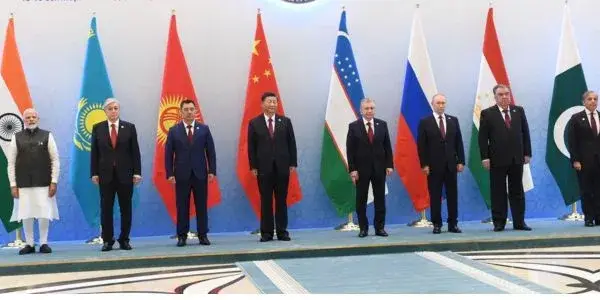
The Shanghai Cooperation Organisation (SCO) is a pivotal Eurasian intergovernmental body fostering regional cooperation in politics, security, economy, and culture. Established in 2001, the SCO has grown into a significant platform for addressing global and regional challenges, with the 2025 Tianjin Summit set to further its influence. This article explores the SCO’s history, structure, objectives, key activities, and the upcoming 2025 summit.
SCO Overview: Purpose and Principles
- Definition: The SCO is a regional organization promoting mutual trust, stability, and prosperity among member states.
- Core Principles: The “Shanghai Spirit” emphasizes mutual respect, sovereignty, non-aggression, and equality.
- Objectives: Combat terrorism, separatism, and extremism; enhance economic integration and cultural exchanges.
- Global Impact: Represents over 40% of the world’s population and 23% of global GDP, influencing Eurasian security and trade.
Historical Foundations
The SCO originated from the 1996 Shanghai Five, formed by China, Kazakhstan, Kyrgyzstan, Russia, and Tajikistan to address border security post-Soviet Union. Key milestones include:
- 1996–1997: Treaties on military trust and force reduction in border regions.
- 1998–2000: Summits in Almaty, Bishkek, and Dushanbe expanded economic and security discussions.
- 2001: Uzbekistan joined, and the SCO was formally established in Shanghai.
- 2002–2003: The SCO Charter was adopted, codifying its principles.
The organization evolved from a border-security forum into a multifaceted entity, reflecting the geopolitical ambitions of China and Russia.
Must Read: Western Neo-Colonialism: Putin’s Denouncement Ahead of China Visit Signals Geopolitical Shift
Member States and Structure
As of 2025, the SCO comprises ten members: China, Kazakhstan, Kyrgyzstan, Russia, Tajikistan, Uzbekistan, India, Pakistan (2017), Iran (2023), and Belarus (2024). It also includes:
- Observer States: Afghanistan (inactive since 2021) and Mongolia.
- Dialogue Partners: Armenia, Azerbaijan, Bahrain, Cambodia, Egypt, Kuwait, Maldives, Myanmar, Nepal, Qatar, Saudi Arabia, Sri Lanka, Turkey, UAE.
- Guest Attendees: Turkmenistan, maintaining neutrality.
The SCO’s structure includes:
- Council of Heads of State (CHS): Annual strategic meetings.
- Council of Heads of Government: Focuses on economic and budgetary issues.
- Secretariat: Beijing-based, led by Nurlan Yermekbayev (2025).
- Regional Anti-Terrorist Structure (RATS): Tashkent-based, led by Ularbek Sharsheev (2025).
Despite rivalries (e.g., India-Pakistan, India-China), the SCO remains a key non-Western cooperation platform.
Objectives and Activities
The SCO focuses on security, economic, and cultural cooperation:
- Security: RATS coordinates counter-terrorism, thwarting over 600 plots by 2017, and conducts “Peace Mission” drills.
- Economy: Promotes trade, connectivity, and BRI projects; China’s SCO trade reached $295.58 billion in 2025 (January–July).
- Culture: Supports youth forums, educational exchanges, and the SCO University network.
India opposes BRI due to sovereignty concerns over the China-Pakistan Economic Corridor.
SCO Summit 2025: Tianjin, China
The 2025 Tianjin Summit (August 31–September 1) is the 25th CHS meeting, hosted by President Xi Jinping. Key details:
- Participants: Over a dozen leaders, including Modi, Putin, Sharif, and Min Aung Hlaing.
- Agenda: Tianjin Declaration, 2035 Development Strategy, renewable energy, AI, poverty reduction, counter-terrorism.
- SCO Plus: Includes observers and partners like ASEAN’s Dr. Kao Kim Hourn.
- Context: Follows the 2024 Astana Summit (25 agreements) and 2023 India-hosted summit (SECURE SCO theme).
Bilateral talks, such as Modi-Xi on border issues, and U.S. tariff impacts are expected to dominate discussions.
Relations and Global Significance
The SCO collaborates with the UN, ASEAN, and the Eurasian Economic Union, promoting multipolarity. It serves:
- China: A BRI platform.
- Russia: A counter to Western sanctions.
- India: Access to Central Asia, despite BRI reservations.
Covering 65% of Eurasia, the SCO shapes energy, trade, and security policies.
Must Read: China Lifts Export Curbs on Fertilizers, Rare Earths & Tunnel Boring Machines to India in 2025
Criticisms and Challenges
Critics view the SCO as authoritarian-leaning, with limited transparency. Internal rivalries and expansion dilute focus, while U.S. sanctions pose external challenges.
Future Outlook
Under China’s 2024–2025 presidency, the SCO emphasizes sustainability and digital cooperation. The 2025 Tianjin Summit aims to set a 2035 roadmap, strengthening its multipolar role amid global shifts.
Conclusion
The SCO exemplifies Eurasian solidarity, balancing security and economic goals. The 2025 Tianjin Summit will likely reinforce its position as a counterbalance to Western influence, navigating complexities with a shared vision.