
New Delhi | January 30, 2026, 09:12 a.m. IST
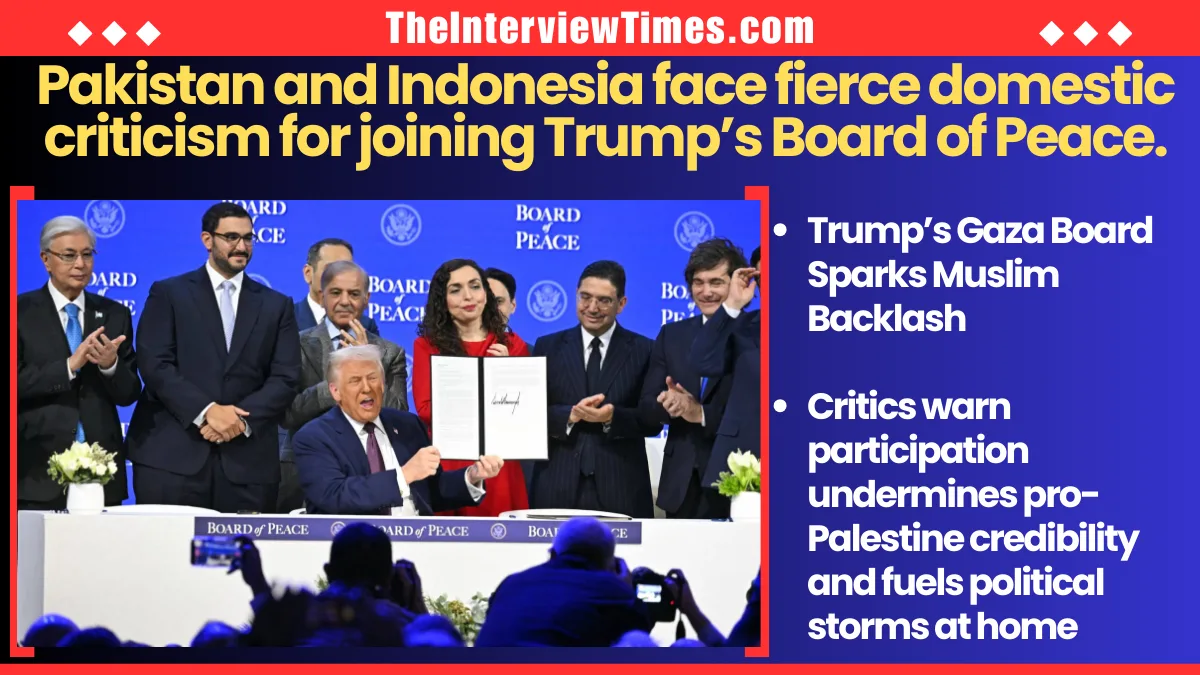
Trump Board of Peace faces strong backlash in Pakistan and Indonesia as critics warn participation undermines pro-Palestine stance and Gaza diplomacy.
Muslim-majority nations are grappling with mounting political backlash after joining U.S. President Donald Trump’s controversial Board of Peace, an initiative linked to Gaza’s post-war future. Pakistan and Indonesia, both long vocal supporters of Palestinian rights, now face fierce domestic opposition as critics accuse their governments of compromising principles for diplomatic pragmatism.
The controversy highlights a growing tension across the Islamic world between humanitarian engagement and public support for Palestine, especially as Gaza remains devastated after months of conflict.
What Is Trump’s Board of Peace?
President Trump launched the Trump Board of Peace in late 2025 as part of phase two of his Gaza strategy, following a fragile ceasefire between Israel and Hamas. The board is chaired by Trump and includes senior U.S. figures such as Secretary of State Marco Rubio, Trump’s son-in-law Jared Kushner, and former British Prime Minister Tony Blair.
The initiative also involves representatives from select Arab nations and United Nations envoy Nickolay Mladenov. While the White House describes the board as a humanitarian and reconstruction platform, critics see it as an extension of Washington’s unilateral diplomacy in the Middle East.
Pakistan’s Prime Minister Shehbaz Sharif accepted the invitation during a visit to Davos, while Indonesian President Prabowo Subianto confirmed participation on the sidelines of the World Economic Forum. Their decisions immediately triggered political storms back home.
Pakistan Engulfed by Political Firestorm
In Pakistan, opposition parties reacted swiftly and harshly. Jamiat Ulema-e-Islam Fazl chief Maulana Fazlur Rehman condemned the Trump Board of Peace as a “deception,” questioning how Islamabad could align with Trump while Israeli strikes continued in Gaza under Prime Minister Benjamin Netanyahu.
Pakistan Tehreek-e-Insaf, led by jailed former Prime Minister Imran Khan, demanded an immediate withdrawal from the board unless parliament approves the decision. The party described the move as hasty, opaque, and disconnected from public sentiment.
Jamaat-e-Islami leader Hafiz Naeem Ur Rehman went further, calling the initiative a form of “new colonialism” that undermines Muslim sovereignty. Former UN ambassador Maleeha Lodhi warned that participation could legitimize unilateral U.S. actions and weaken international multilateralism beyond Gaza.
Responding to the backlash, Pakistan’s Foreign Ministry clarified that Islamabad’s involvement is limited to humanitarian aid and reconstruction for Gaza. Officials stressed that joining the board does not imply normalization with Israel under the Abraham Accords or any shift in Pakistan’s longstanding Palestine policy.
Top News: Ancient Origins of Kissing: Scientists Reveal This Intimate Act Evolved 21.5 Million Years Ago
Indonesia Faces Diplomatic and Moral Pushback
Indonesia is witnessing a similar rupture between state diplomacy and public opinion. Prominent academics described the decision to join the Trump Board of Peace as a fatal diplomatic error. Professor Nur Rachmat Yuliantoro of Universitas Gadjah Mada argued that the move contradicts Indonesia’s anti-colonial constitution and weakens its moral leadership on Palestinian independence.
The Indonesian Council of Ulamas declared the board fundamentally flawed, urging Jakarta not to grant moral legitimacy to any framework that sidelines Palestinian self-determination. Human rights groups echoed the criticism.
Amnesty International Indonesia director Usman Hamid accused the government of blindly following Trump’s agenda, warning that it could damage Indonesia’s credibility at the UN Human Rights Council.
President Prabowo’s office defended the decision as a tactical move aimed at preserving regional stability. Officials cited concerns such as security in the North Natuna Sea and the declining effectiveness of multilateral institutions as reasons for pragmatic engagement.
Muslim Nations Draw Red Lines
Amid rising criticism, eight Muslim-majority countries, Saudi Arabia, Turkey, Egypt, Jordan, Indonesia, Pakistan, Qatar, and the United Arab Emirates, issued a joint statement that carefully narrowed the scope of their engagement.
The statement emphasized a permanent ceasefire, Gaza reconstruction, and Palestinian self-determination under UN Security Council Resolution 2803. Notably, it avoided endorsing Trump’s broader global peacemaking ambitions.
Pakistan’s spokesperson reiterated that Islamabad has made no commitments beyond Gaza, reflecting a broader regional effort to contain political damage while maintaining humanitarian involvement.
Across both Pakistan and Indonesia, critics warn that participation in the Trump Board of Peace risks eroding public trust and weakening pro-Palestine credibility. Governments, however, continue to frame their involvement as principled humanitarian diplomacy operating within UN parameters.
Top News: Iran Rejects US Talks as Military Buildup Raises Fears of Regional War
