
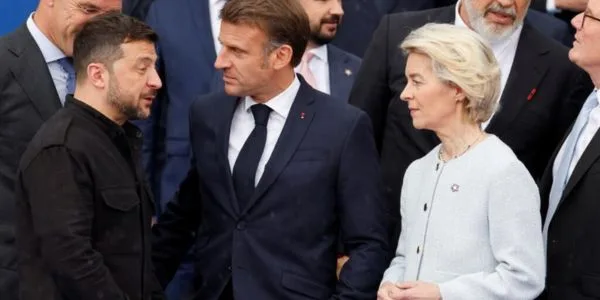
European leaders join President Zelensky at the White House for high-stakes talks with Donald Trump on the Ukraine peace deal after his summit with Putin.
News Delhi- In a bold show of transatlantic solidarity, top European leaders will join Ukrainian President Volodymyr Zelensky at the White House on Monday for a decisive meeting with U.S. President Donald Trump on a potential Ukraine peace deal. The unprecedented move follows Trump’s Alaska summit with Russian President Vladimir Putin, where Ukraine was excluded and fears of territorial concessions grew.
Scheduled for August 18, 2025, the meeting comes as Western allies worry Trump may pressure Zelensky into ceding Donetsk and Luhansk—regions partially occupied by Russia since the 2022 invasion.
Highlights at a Glance: Ukraine Peace Deal Talks
- High-Stakes Meeting: European leaders join President Zelensky at the White House on August 18, 2025, for talks with Donald Trump on a Ukraine peace deal.
- Backdrop: Comes after Trump’s Alaska summit with Putin, where Kyiv was excluded and territorial concessions were discussed.
- European Delegation: Includes Macron, Merz, Starmer, Meloni, Stubb, von der Leyen, and NATO chief Rutte.
- Zelensky’s Stand: Rejects any territorial concessions, citing Ukraine’s constitution and public opposition.
- Global Stakes: Over 500,000 casualties in the war; outcome of talks could reshape European security and NATO’s role.
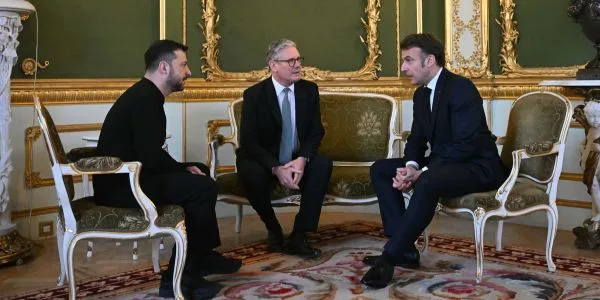
European Leaders Back Zelensky in Peace Deal Talks
The European delegation is a heavyweight lineup: European Commission President Ursula von der Leyen, French President Emmanuel Macron, German Chancellor Friedrich Merz, British Prime Minister Keir Starmer, Italian Prime Minister Giorgia Meloni, Finnish President Alexander Stubb, and NATO Secretary-General Mark Rutte.
Von der Leyen confirmed her attendance on X (formerly Twitter), saying she was joining “at the request of President Zelensky” to ensure Europe’s voice is heard in the Ukraine peace deal negotiations.
The show of unity was prepared in a “Coalition of the Willing” video conference on Sunday, co-hosted by Macron, Starmer, and Merz with over 30 nations participating. Discussions centered on post-conflict troop deployments, sanctions, and security guarantees for Ukraine.
Zelensky, rejecting any territorial concessions, stressed that “nothing about Ukraine should be decided without the Ukrainians.” His stance reflects both public sentiment and Ukraine’s constitution, which prohibits ceding land.
Must Read: BRICS: A Global Force Facing U.S. Pressure and Shifting Ties with India and Brazil
Concerns After Trump-Putin Alaska Summit
The European push follows Trump’s Alaska summit with Putin on August 15, where he reportedly entertained a Russian proposal granting Moscow control over Donetsk in exchange for freezing battle lines in Zaporizhzhia and Kherson—terms Kyiv has called unacceptable.
Trump said after the meeting, “It’s really up to President Zelensky to get it done,” fueling fears in Europe that Washington might sideline allies in pursuit of a quick Ukraine peace deal.
This concern is amplified by a February 2025 Oval Office clash between Trump, Vice President JD Vance, and Zelensky, which ended in a shouting match and a temporary freeze in U.S. aid. European leaders now fear a repeat of that confrontation.
Stakes for Ukraine, Europe, and Global Security
The White House talks could reshape the trajectory of the Russia-Ukraine war, now in its fourth year with over half a million casualties. Europe—bearing the brunt of the refugee crisis and energy disruptions—insists on sanctions and long-term military support to prevent further Russian aggression.
German officials have framed the negotiations around “security guarantees, territorial issues, and future support for Ukraine.” Analysts warn that a rushed deal could embolden Putin and undermine NATO credibility.
Finnish President Stubb, seen as a bridge-builder with Trump, noted that the U.S. leader’s influence with Putin “could be critical if directed toward genuine peace.”
Must Read:Economist Jeffrey Sachs Blasts ‘Stupid’ Trump India Tariffs, Warns of Global Fallout
What to Watch on August 18
Key questions loom over Monday’s meeting:
- Will European unity sway Trump on the terms of a Ukraine peace deal?
- Could NATO commit to deeper involvement, including air support or peacekeeping?
- Will this set the stage for a Trump-Zelensky-Putin trilateral summit?
Ongoing drone strikes and Russia’s reluctance to commit to a ceasefire underline the fragility of the moment. As Zelensky said on X: “The path to peace for Ukraine must be determined together.”
For Ukraine, it’s about survival. For Europe, it’s security. For the world, it’s about averting a wider conflict.
Must Read: How US Global Dominance in 2025 Is Redefining World Sovereignty
Frequently Asked Questions (FAQ) on Ukraine Peace Deal Talks
Q1. What is the purpose of the Trump-Zelensky meeting at the White House?
The August 18, 2025 meeting aims to discuss a possible Ukraine peace deal following Trump’s Alaska summit with Vladimir Putin. European leaders are joining to ensure Ukraine’s interests are protected and no concessions are made to Russia without Kyiv’s approval.
Q2. Which European leaders are attending the White House meeting?
The delegation includes French President Emmanuel Macron, German Chancellor Friedrich Merz, British Prime Minister Keir Starmer, Italian Prime Minister Giorgia Meloni, Finnish President Alexander Stubb, European Commission President Ursula von der Leyen, and NATO Secretary-General Mark Rutte.
Q3. Why are European countries worried about Trump’s approach to Ukraine?
Many European capitals fear Trump could pressure Ukraine into ceding territories such as Donetsk or Luhansk in order to quickly finalize a Ukraine peace deal with Russia. This would undermine Europe’s long-term security and reward Russian aggression.
Q4. What is President Zelensky’s position on the peace talks?
Zelensky has repeatedly rejected any territorial concessions, citing Ukraine’s constitution and the will of the Ukrainian people. He insists that “nothing about Ukraine should be decided without Ukrainians.”
Q5. What are the possible outcomes of the White House meeting?
Potential outcomes include new U.S. security commitments, NATO involvement in peacekeeping, or preparations for a Trump-Zelensky-Putin trilateral summit. However, ongoing fighting and Russia’s reluctance to agree to a ceasefire make the path to peace uncertain.