
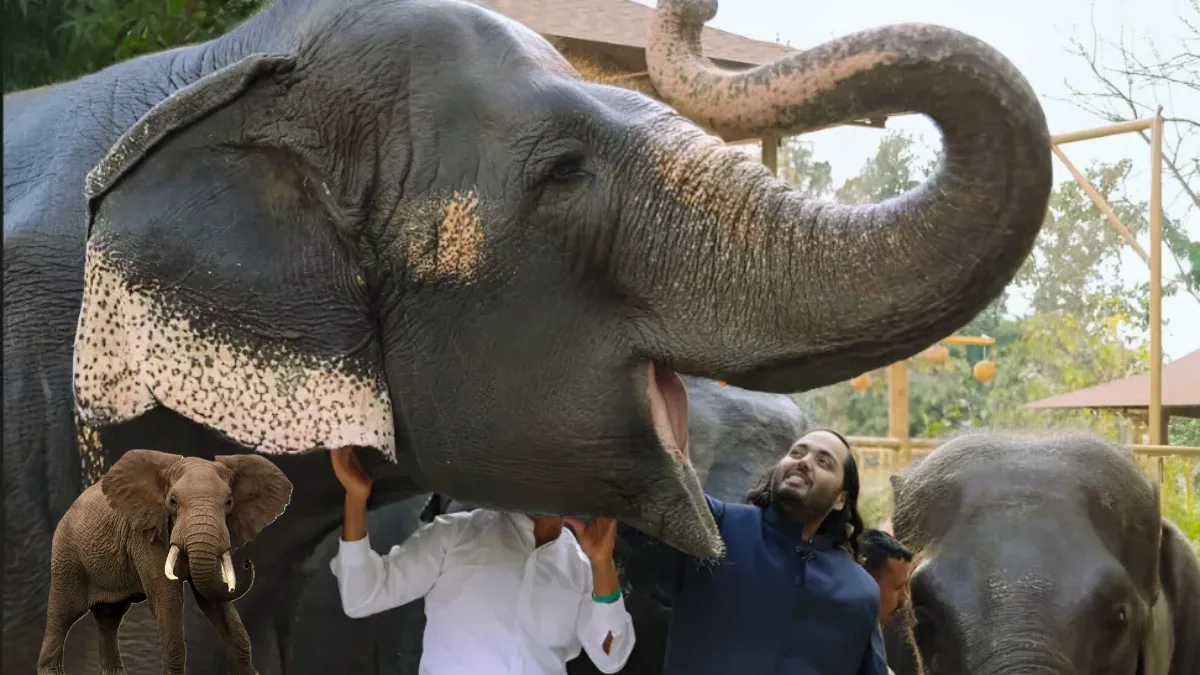
The UN wildlife body CITES has withdrawn its earlier import restrictions on India after a rigorous on-site inspection of Anant Ambani’s Vantara Zoo in Jamnagar. The review found world-class veterinary standards, improved import verification protocols and no violations under India’s wildlife regulations.
TheInterviewTimes.com | November 25, 2025: The United Nations’ wildlife trade authority has given India a major regulatory victory by withdrawing its earlier recommendation on restricting wildlife imports after completing an extensive inspection of Vantara Zoo, the large-scale private animal rescue and rehabilitation centre created by Anant Ambani. The decision follows months of global scrutiny and marks a turning point in India’s wildlife compliance narrative.
CITES Reverses Course After 48-Hour Inspection
The Standing Committee of the Convention on International Trade in Endangered Species of Wild Fauna and Flora (CITES), meeting in Geneva on 23 November, unanimously agreed to withdraw its 4 November 2025 recommendation advising member countries to halt acceptance of export permits for certain endangered species destined for India.
This reversal came after a four-member CITES technical mission visited Vantara Zoo in Jamnagar, conducting a surprise 48-hour assessment of its enclosures, disease-control systems, security protocols and documentation procedures. The confidential report, partially shared with member states, praised the facility’s standards as “among the highest observed globally.”
Officials from the US, UK, South Africa, Japan, Kenya and Switzerland endorsed the findings, reinforcing confidence in India’s revised import verification systems.
Must Read: UK VISA: UK Enforces Mandatory ETA for 85 Visa-Exempt Countries From February 2026
Why Vantara Zoo Became the Centre of a Global Debate
Earlier this month, CITES raised concerns regarding the origin and documentation of certain high-profile wildlife imports — including white rhinos, African elephants, and big cats — brought to Vantara Zoo, a sprawling 3,500-acre rescue campus built inside the Reliance refinery complex.
Questions emerged from European and South African wildlife groups who suspected some animals might have been sourced from the wild under captive-bred tags. German authorities had even flagged irregularities in a shipment of reptiles originating from South America.
India responded sharply. The Ministry of Environment, Forest and Climate Change called the recommendation “unwarranted and disproportionate”, citing a prior Supreme Court-appointed inquiry that cleared Vantara Zoo of any legal violations.
India’s Wildlife Systems Pass International Scrutiny
CITES officials said the on-site mission observed:
- Highly detailed animal-tracking and quarantine records
- A fully digitised import-verification framework
- Strengthened post-import monitoring and inspection protocols
- Modern veterinary infrastructure, including a 24-bed hospital with CT scanners
These findings directly addressed concerns that triggered the initial recommendation.
The final communiqué stated: “Management authorities in India have implemented rigorous new protocols… The Standing Committee therefore withdraws the recommendation with immediate effect.”
Tom De Meulenaer, Chief of the CITES Scientific Services Team, clarified that the process was “compliance-oriented, not punitive,” noting India’s transparency and rapid corrective steps.
Must Read: India e-Arrival Card and eVisa 2025: Full Digital Entry Guide for Foreign Travellers
Inside Vantara Zoo — India’s Largest Private Rescue Centre
Founded by Anant Ambani and operational since February 2025, Vantara Zoo houses:
- More than 2,100 animals
- 210 species
- A workforce of 2,800, including 140 veterinarians
- Rehabilitation units for trafficked, rescued and injured wildlife
With an investment exceeding ₹1,200 crore (USD 140 million), Vantara Zoo is now one of the world’s most resource-intensive private conservation efforts.
Ambani, who was present during the CITES inspection, welcomed the decision: “Vantara’s mission is rescue, rehabilitation and lifelong ethical care. We are grateful to the global community for acknowledging our standards.”
What the Decision Means for India and Global Conservation
Lifting the recommendation restores normal trade flows for CITES-listed species into Indian zoos and rescue facilities. It also strengthens India’s credibility in the global conservation system.
However, environmentalists remain divided:
- Some NGOs applaud the international review for strengthening India’s wildlife governance.
- Others warn against over-reliance on private mega-zoos for endangered species conservation.
With the restrictions gone, Vantara Zoo emerges from controversy into renewed global visibility — now backed by the world’s top wildlife trade authority.
Must Read: Mountain Gorillas Face New Climate Threat as Population Recovery Hangs in Balance
Key Takeaways
- CITES has withdrawn import restrictions on India after inspecting Vantara Zoo.
- The 48-hour on-site mission found world-class veterinary and record-keeping standards.
- India strengthened verification systems for wildlife imports, addressing earlier concerns.
- Vantara Zoo houses 2,100+ animals across 210 species with advanced medical facilities.
- The decision restores India’s ability to import CITES-listed wildlife for legitimate conservation purposes.