

New Delhi | January 3, 2026, 1:20 pm (IST)
Weight loss isn’t about willpower alone. Copenhagen researchers reveal obesity memory, explaining why most people regain weight despite dieting.
For decades, weight loss has been framed as a test of discipline – eat less, move more, and stay committed. However, new findings from researchers at the University of Copenhagen challenge this deeply rooted belief, revealing that biology, not willpower, is the dominant force behind long-term weight regain.
In a 2025 scientific review published in the journal Cell, Professor Christoffer Clemmensen and PhD fellow Valdemar Brimnes Ingemann Johansen explain that the human body retains a powerful “obesity memory” that actively resists sustained weight loss.
This biological response explains why 80–95% of people regain weight after dieting, regardless of motivation or effort.
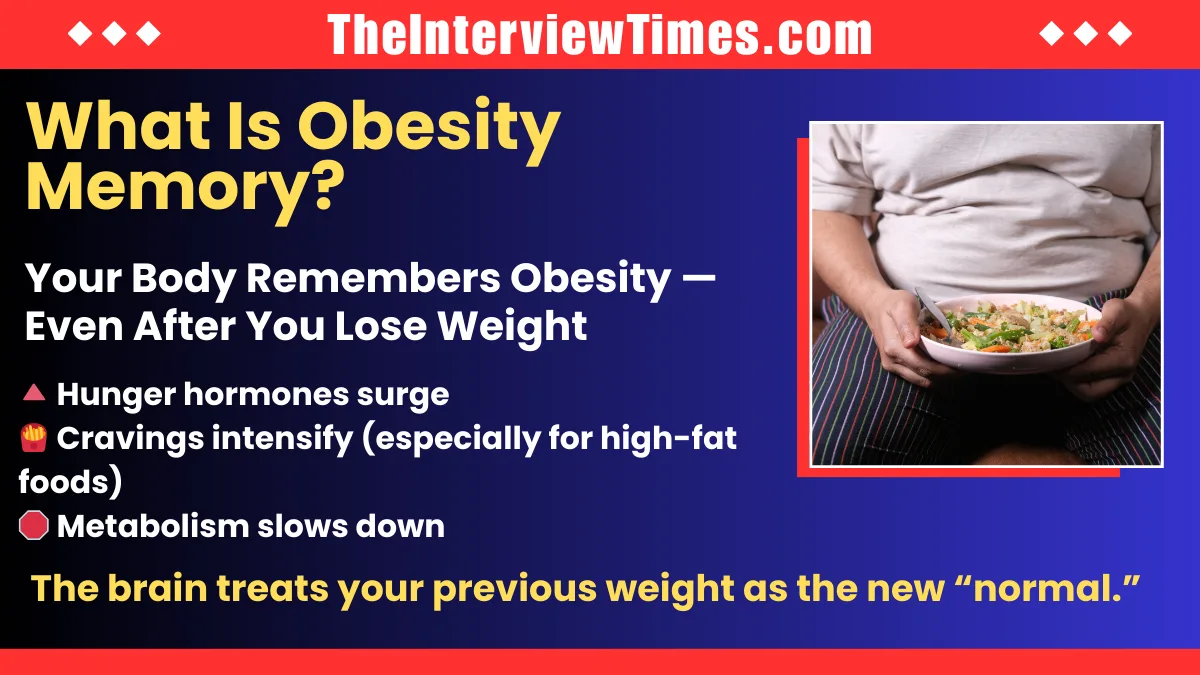
What Is Obesity Memory?
According to the researchers, after significant weight loss, the body behaves as if it is facing starvation. The brain activates survival mechanisms shaped by human evolution, designed to restore lost fat as quickly as possible.
These mechanisms include:
- Increased release of hunger-stimulating hormones
- Stronger food cravings, especially for high-fat foods
- Reduced resting metabolism to conserve energy
The brain begins treating the previous higher body weight as the new “normal”, making weight regain biologically encouraged rather than accidental.
Clemmensen explains that this response evolved when food scarcity was common. In today’s world of constant food availability, the same survival system becomes a liability.
Why Dieting Fails in the Long Term
The traditional advice of “eat less and exercise more” does create a calorie deficit in the short term. However, the researchers argue that long-term calorie restriction is biologically unsustainable.
“Anyone can lose weight in a restrictive environment,” Clemmensen notes, “but you can’t maintain a negative energy balance in the free world.”
Genetics, environment, and biology work together to overpower conscious dietary control. This explains why repeated dieting often leads to cycles of weight loss and regain rather than permanent change.
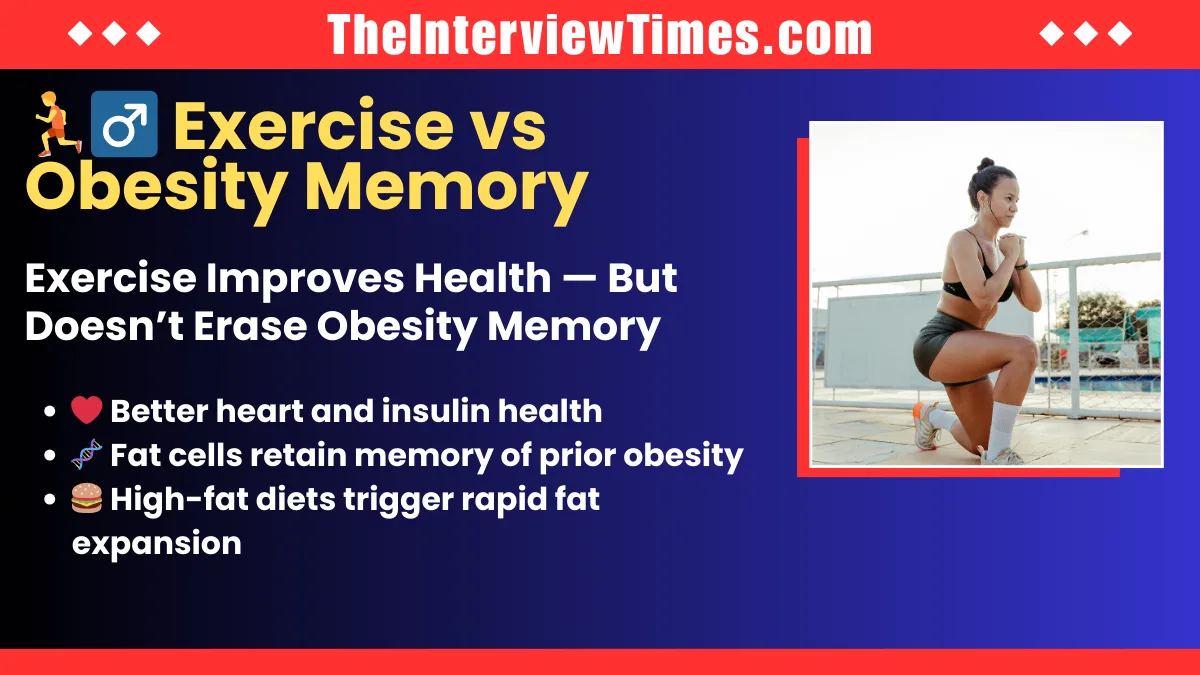
Exercise Helps Health — But Not Obesity Memory
The review emphasizes that while exercise improves cardiovascular health, blood pressure, and insulin sensitivity, it shows very little evidence of overriding obesity memory on its own.
Similarly, research indicates that:
- Macronutrient quality affects hunger hormones more than total calorie count
- Fat cells retain epigenetic changes from prior obesity
- These altered fat cells can rapidly expand again, especially on high-fat diets
Mouse studies cited in the review show that even after weight loss, fat tissue remains biologically primed for regain.
Weight-Loss Drugs and Their Limits
Medications such as Ozempic and other GLP-1 receptor agonists have shown strong results in achieving initial weight loss. However, the review warns that weight regain is common once medication is stopped.
Combining medication with exercise may help preserve muscle mass and improve weight maintenance, but drugs alone do not erase obesity memory.
Researchers stress that pharmacology should be seen as a management tool, not a cure.

A Call for Prevention and Environmental Change
Clemmensen and Johansen argue that prevention is the most effective strategy, particularly during early childhood when obesity memory may first form.
They recommend large-scale societal interventions, including:
- Walkable cities and active urban design
- Access to nutrient-dense, minimally processed foods
- Restrictions on junk food marketing to children
- Special focus on early childhood (ages 0–7)
Obesity, they note, is a chronic relapsing disease, not a personal failure.
Must Read: Childhood Obesity in India Up 127%: Fast Food and Screen Time Blamed
Why This Matters Globally
Obesity is linked to 3.7 million deaths worldwide in 2021, driven by heart disease, diabetes, and related conditions. As energy-dense foods become cheaper and more accessible, biology increasingly clashes with modern environments.
Johansen emphasizes that genetic predisposition plays a major role, often beyond individual control.
“Willpower alone cannot defeat evolution,” he states.

The Future of Obesity Treatment
Clemmensen’s lab is now working to identify the precise biological signals behind obesity memory, with the long-term goal of physiologically weakening or erasing it.
Experts conclude that future solutions must combine:
- Medical therapy
- Public policy
- Early-life intervention
- Environmental redesign
Only by addressing biology and environment together can societies create obesity-resistant systems.
Must Read: Obesity: A Ticking Time Bomb for India’s Economy
