
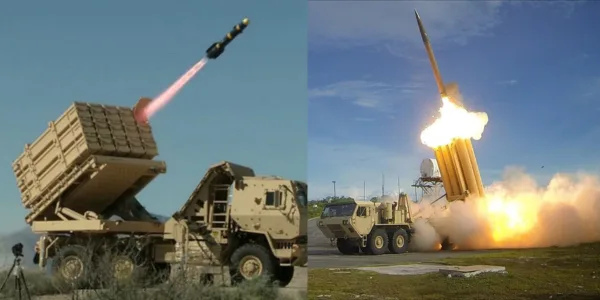
The Indian Army has cleared a ₹30,000 crore tender to BEL for Anant Shastra, an indigenous quick-reaction missile system. Here’s what makes it a game-changer.
Anant Shastra at a Glance
- Meaning: Sanskrit for “Infinite Weapon”
- Type: Quick Reaction Surface-to-Air Missile (QRSAM) system
- Deal Value: ₹30,000 crore Army tender awarded to BEL (Sept 2025)
- Range: 25–30 km (low-to-medium altitude threats)
- Speed: Supersonic (Mach 2+)
- Guidance: Active radar homing + AI-driven tracking
- Launch Platform: 6×6 mobile truck with canisterized missiles
- Radar: 360° multifunction phased-array radar
- Targets: Aircraft, drones, helicopters, cruise missiles (up to 4 at once)
- Special Feature: “Shoot-and-Scoot” mobility for battlefield survival
- Indigenous Content: 80% (developed by DRDO, produced by BEL)
In a landmark decision, the Indian Army has cleared a ₹30,000 crore tender to Bharat Electronics Limited (BEL) for the large-scale production of Anant Shastra, an indigenous defence system developed in India.
This is not just one of the biggest defence contracts in recent years—it is a defining moment in India’s Atmanirbhar Bharat push in defence technology. But what makes Anant Shastra so special that the Army has invested such a massive sum in its production?
Must Read: India’s S-400 Missile Defense System: A Game-Changer in Regional Security
Current Context: The Big Defence Deal
- On September 26, 2025, the Ministry of Defence approved the deal with BEL for the supply of multiple regiments of Anant Shastra.
- This is being seen as a strategic leap for indigenous capability and a direct response to border threats from China and Pakistan.
- Defence experts have called the deal a “game-changer” for India’s battlefield readiness, particularly after lessons learned during Operation Sindoor (May 2025), which exposed gaps in quick-response systems.
What is Anant Shastra?
- Anant Shastra, meaning “Infinite Weapon” in Sanskrit, is an advanced quick-reaction surface-to-air missile (QRSAM) system designed to protect mobile formations from aerial threats.
- Developed by the Defence Research and Development Organisation (DRDO), it has been built with over 80% indigenous components.
- Unlike older systems, Anant Shastra is highly mobile, AI-enabled, and battle-tested in multiple terrains, from deserts to high-altitude regions.
Key Features That Make It Special
- Range & Speed: Can intercept enemy aircraft, drones, and missiles within a range of 25–30 km at supersonic speeds.
- High Accuracy: Uses active radar homing and AI-assisted tracking for precision targeting.
- Shoot-and-Scoot: Mounted on mobile trucks, it can relocate immediately after firing to avoid detection.
- 360° Coverage: Equipped with a multifunction phased-array radar for all-round surveillance.
- Multi-Target Capability: Can engage up to four threats simultaneously—fighter jets, drones, or cruise missiles.
- Electronic Warfare Resistant: Designed to operate even under heavy jamming and enemy countermeasures.
Why the Army Invested ₹30,000 Crore
- Strategic Necessity: India faces rising drone incursions and low-flying aerial threats across its borders. Anant Shastra provides a credible shield.
- Indigenous Push: Reduces reliance on costly imports like the Russian S-400 and strengthens India’s domestic defence ecosystem.
- Operational Flexibility: Can be deployed quickly across diverse terrains—from Ladakh’s mountains to Rajasthan’s deserts.
- Economic Impact: The BEL contract will boost jobs, research, and private-sector participation in defence manufacturing.
Strategic Significance
- Anant Shastra fills a critical gap in India’s layered air defence system, complementing the Akash and S-400 missiles.
- Its mobility ensures frontline troops are protected in real-time battlefield conditions.
- Globally, the system enhances India’s potential as a defence exporter to friendly nations in Asia and Africa.
Must Read: How Do Missile Defense Systems Work Against Ballistic Missiles?
Conclusion
The Army’s ₹30,000 crore deal with BEL for Anant Shastra marks a decisive step in India’s journey towards self-reliance in defence. It is more than just a missile system—it is a symbol of India’s technological confidence and strategic autonomy. With its speed, accuracy, and indigenous design, Anant Shastra stands out as a true game-changer for India’s defence doctrine.