
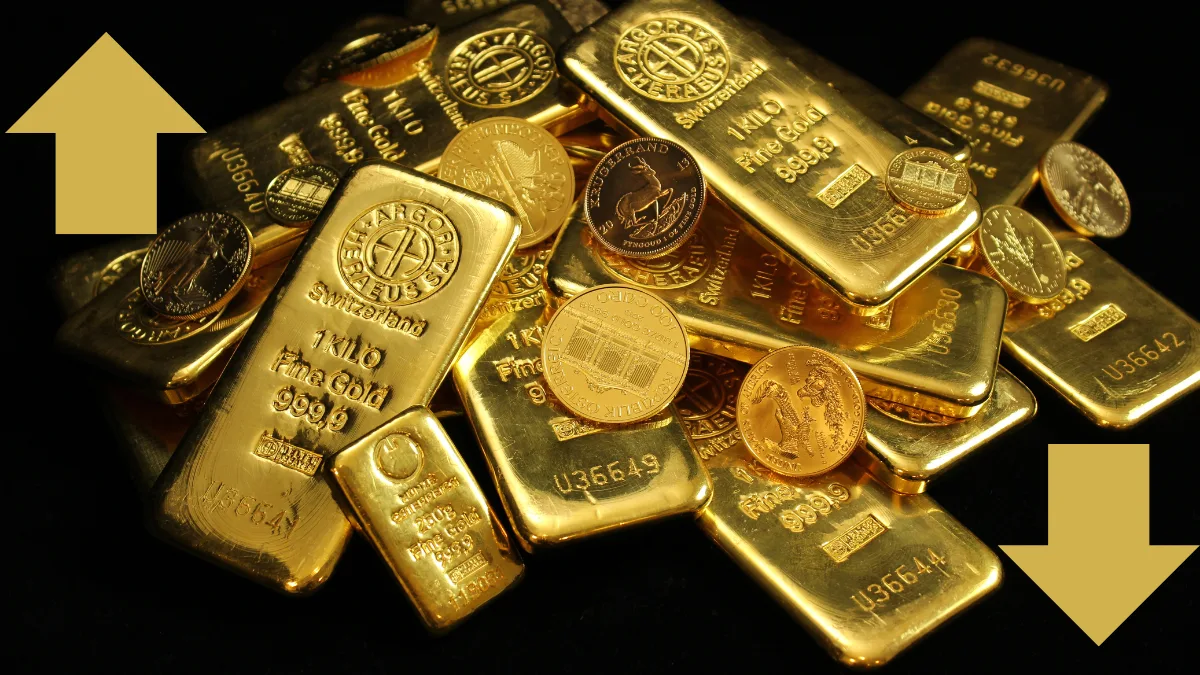
Gold prices rise and fall due to global economic conditions, inflation trends, central bank policies, currency fluctuations, geopolitical tensions, and investment demand. This in-depth explainer breaks down why gold prices change and how global markets, consumers, and governments influence this precious metal.
TheInterviewTimes.com | November 19, 2025: Gold remains one of the world’s most trusted assets, especially during global uncertainty. But gold prices never stay still. They rise rapidly during crises, fall sharply during economic stability, and fluctuate with every shift in global finance.
Understanding Gold Prices is crucial for investors, consumers, and policy makers across India, the US, Europe, and emerging markets.
This detailed explainer breaks down the global mechanics behind gold’s price swings, why the metal behaves differently from other commodities, and how international factors shape every fluctuation.
Must Read: Gold Prices Crash in India: Key Reasons Behind the Sharp ₹3,900 Drop
Why Gold Is So Sensitive to Global Economic Conditions
Gold is commonly referred to as a “safe-haven asset.” This means it gains value when the world becomes unpredictable. When the economy slows or markets crash, investors move money into gold to protect their wealth.
1. Economic Slowdowns Push Gold Prices Up
When global growth is weak, stock markets fall and currency values fluctuate. Investors shift towards gold, raising demand and pushing its price higher.
Periods like the 2008 financial crisis or the COVID-19 pandemic saw gold hitting record highs.
2. Strong Economies Often Push Gold Prices Down
When stock markets boom, investors prefer high-return assets like equities or real estate. This lowers demand for gold, causing its price to fall.
A stable economic environment usually keeps gold price growth moderate.
How Inflation and Interest Rates Impact Gold Prices
Inflation and interest rates—controlled by central banks—are among the most powerful forces influencing gold.
1. Rising Inflation Makes Gold More Attractive
When inflation rises, currency purchasing power falls. People then turn to gold to protect long-term value.
This increases demand and raises prices.
2. High Interest Rates Push Gold Prices Down
Gold does not generate income like bonds or bank deposits.
When interest rates rise:
- Bonds become more attractive
- Investors reduce gold holdings
- Gold prices often decline
Major central banks like the US Federal Reserve, European Central Bank, and RBI influence gold’s movement with every policy announcement.
Must Read: Sanctioning Russia Act of 2025: Trump Backs Tariffs Up to 500% on Nations Trading With Moscow
Geopolitical Tensions and Global Crises Boost Gold Demand
From wars to political instability, geopolitical events often trigger sharp rallies in gold prices.
Examples that usually lift gold prices:
- Wars or military conflicts
- Border tensions
- Sanctions and energy crises
- Global recession fears
- Major elections in the US, India, or Europe
During such events, investors seek safety—and gold historically performs strongly.
The Role of the US Dollar in Gold Price Movements
Global gold prices are fixed in US dollars. This means:
- When the dollar strengthens, gold becomes expensive in other currencies → demand falls → prices drop.
- When the dollar weakens, gold becomes cheaper globally → demand rises → prices increase.
Thus, every shift in the US dollar index directly impacts international gold markets.
Central Bank Buying and Selling Are Major Influencers
Countries store gold as part of their foreign exchange reserves.
When central banks—such as those in China, India, Turkey, Russia, or Europe—start buying large amounts of gold, global prices rise because demand increases.
When they sell, prices may fall due to increased supply.
In recent years, central banks worldwide have been net buyers, boosting gold prices significantly.
Supply-Side Factors: Mining, Production, and Recycling
Gold supply depends on mining, processing, and global distribution.
Must Read: Kerala Tourist Destinations 2025–2026: The Ultimate Guide for Foreign Travelers
Factors that can tighten supply and raise prices:
- Mining disruptions
- Labor strikes
- Higher extraction costs
- Environmental regulations
- Declining ore quality
- Restrictions in major mining countries like China, Australia, and South Africa
Gold recycling also affects supply. When recycling increases, supply rises and prices may stabilize.
Global Investment Trends and ETF Movements
Gold Exchange-Traded Funds (ETFs) are a major source of investment demand.
When global funds buy more gold-backed ETFs, prices jump.
Similarly, when ETFs reduce holdings, prices fall sharply.
Large investment funds in the US, UK, Japan, and the Middle East heavily influence these trends.
Must Read: India e-Arrival Card and eVisa 2025: Full Digital Entry Guide for Foreign Travellers
Indian Market Influence: Festivals, Weddings, and Import Duties
India is one of the world’s largest consumers of gold.
Gold prices rise in India due to:
- Festive demand (Dhanteras, Diwali)
- Wedding season purchases
- Rupee depreciation
- Higher import duty imposed by the government
Thus, domestic events significantly affect local gold prices.
Key Takeaways
- Gold Prices rise during global crises, inflation, and economic slowdowns.
- A strong US dollar and high interest rates often push prices downward.
- Central banks, ETFs, and geopolitical events shape global price trends.
- Supply issues in mining regions also impact long-term pricing.
- India’s festive and wedding demand plays a major role in domestic price movements.