

New Delhi | January 3, 2026, 12:18 PM IST
India’s Mumbai-Ahmedabad Bullet Train project eyes August 2027 launch with the first phase from Surat to Bilimora, as overall costs nearly double to ₹1.98 lakh crore.
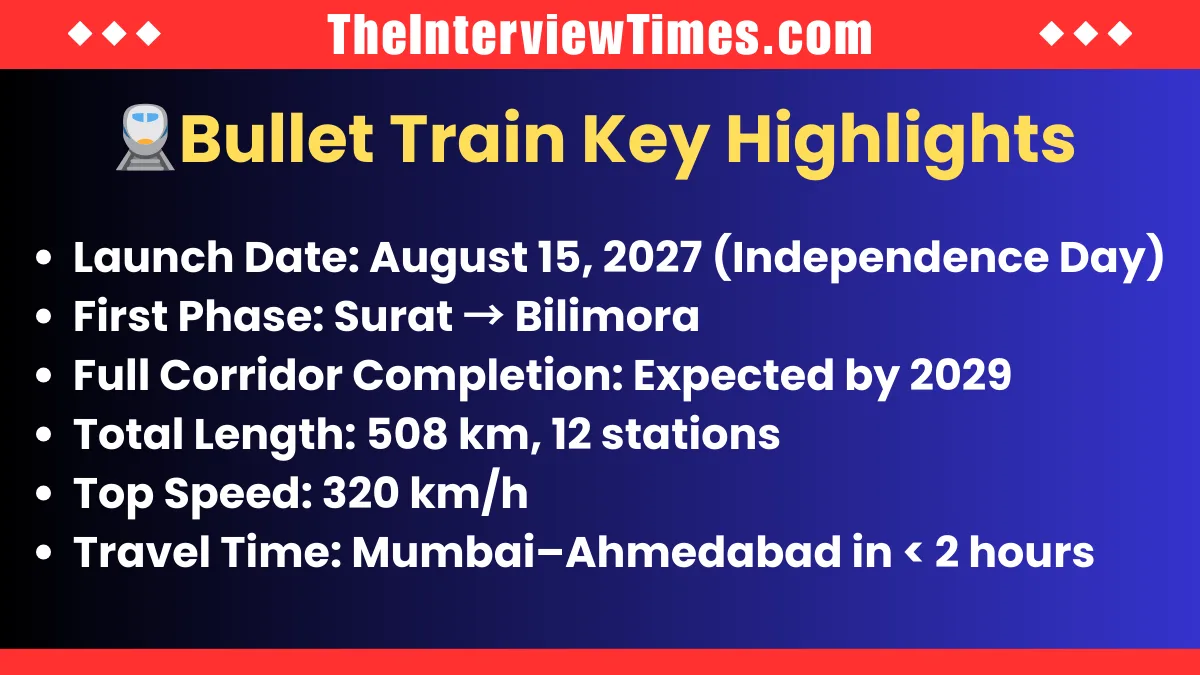
In a major development for India’s first high-speed rail project, the ambitious Mumbai-Ahmedabad Bullet Train Corridor is now targeted for operational launch on August 15, 2027, with the inaugural section between Surat and Bilimora slated to open on Independence Day. However, the project’s overall cost has surged almost twofold, sparking renewed debate over its financial sustainability and implementation pace.
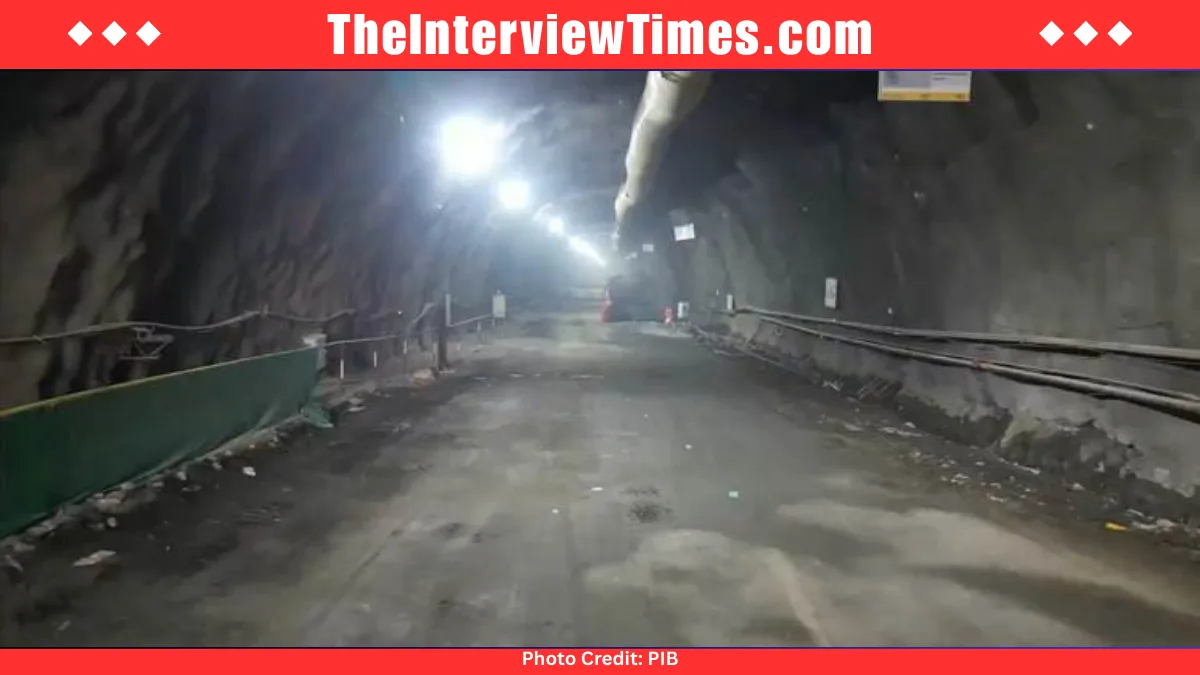
Railway Minister Ashwini Vaishnaw, who virtually participated in the breakthrough ceremony of the project’s first mountain tunnel in Maharashtra’s Palghar district, shared the updated progress and revised schedule on Friday. The tunnel, 1.5 kilometers long, forms part of the 508-kilometer rail corridor that aims to connect Mumbai and Ahmedabad with trains capable of reaching 320 kilometers per hour.
🇮🇳 Bharat Ka Garv: Bullet Train Project, achieves a major milestone with the breakthrough of Mountain Tunnel-5.
— Ashwini Vaishnaw (@AshwiniVaishnaw) January 2, 2026
📍Saphale, Palghar pic.twitter.com/4wtQUUIAvX
Costs Surge as Launch Date Nears
According to Satish Kumar, Chairman and CEO of the Railway Board, the project’s estimated cost has now soared to ₹1.98 lakh crore, nearly double the earlier figure of ₹1.08 lakh crore. The revised proposal has been submitted for Cabinet approval, expected in the coming two months.
Officials clarified that while the Japan International Cooperation Agency (JICA) will continue to finance the majority of the project under the original loan agreement, it will not provide additional funding to cover the cost overrun. The extra financial burden will instead be shouldered by the Indian government.
Delays stemming from land acquisition complexities, environmental clearances, and the COVID-19 pandemic pushed back the initial target from 2022 to the current timeline, with full corridor completion now expected by 2029.
Must Read: Iran Faces Widespread Protests Amid Severe Economic Crisis
Phased Rollout Strategy
Vaishnaw confirmed a phased commissioning plan to expedite operations and begin passenger services sooner. The Surat–Bilimora stretch will be the first to become operational in August 2027, followed by the Vapi–Surat, Vapi–Ahmedabad, and Thane–Ahmedabad sections. The entire Mumbai–Ahmedabad route is expected to be fully operational within two years of the initial launch.
The corridor spans 508 kilometers, passing through 12 key stations-Mumbai, Thane, Virar, Boisar, Vapi, Bilimora, Surat, Bharuch, Vadodara, Anand, Ahmedabad, and Sabarmati. Once operational, the bullet train will reduce travel time between Mumbai and Ahmedabad to under two hours, transforming inter-city connectivity in western India.
Construction and Technological Progress
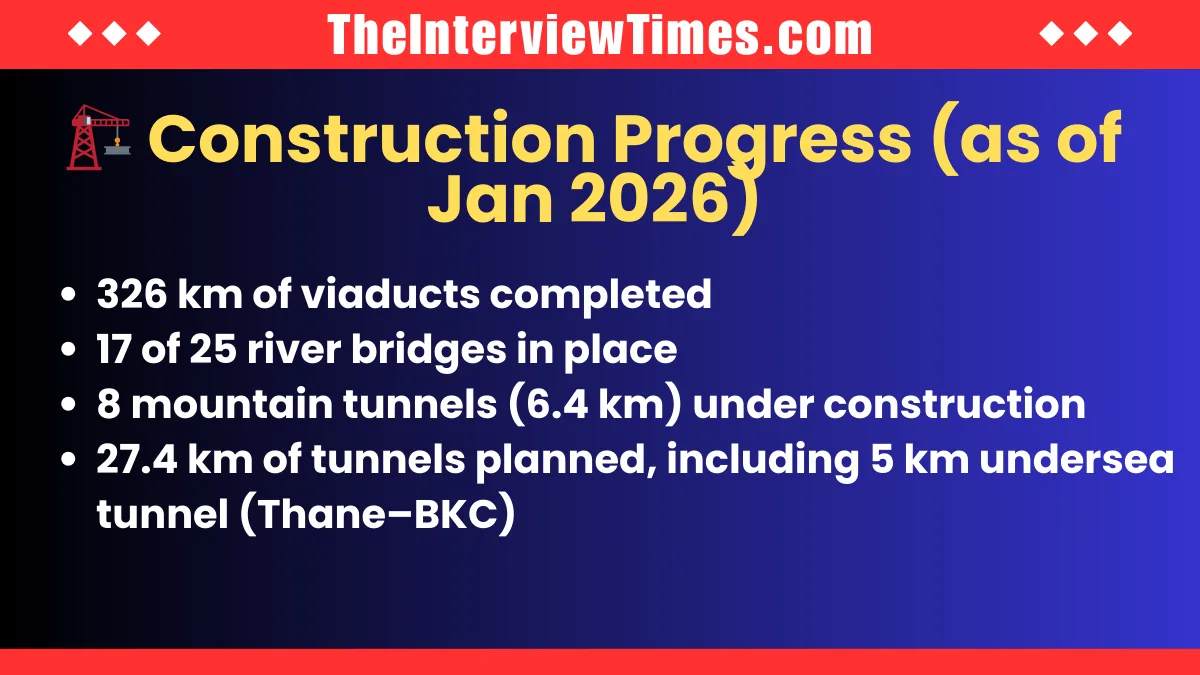
Significant strides have already been made in construction. As of early 2026:
- 326 kilometers of viaducts have been completed.
- 17 of 25 river bridges are in place.
- Eight mountain tunnels, totaling 6.4 kilometers, are under construction across Maharashtra and Gujarat.
- The corridor will include 27.4 kilometers of tunnels, of which 21 kilometers are underground, including a 5-kilometer undersea tunnel between Thane and the Bandra-Kurla Complex (BKC).
The project adopts Japanese Shinkansen (bullet train) technology, with components sourced under strict safety and precision standards. India’s engineers are collaborating with Japanese experts on civil engineering, signaling, and rolling stock systems to ensure world-class reliability and safety.
A Landmark in India’s Transport Evolution
Launched in September 2017 by Prime Ministers Narendra Modi and Shinzo Abe, the Mumbai-Ahmedabad Bullet Train signifies a pivotal leap for India’s transport infrastructure. Despite the cost escalation, the government maintains that the project will yield long-term benefits- boosting regional development, creating thousands of jobs, and inspiring future high-speed corridors nationwide.
With the August 2027 deadline drawing closer, India’s rail modernization drive stands at a crucial juncture- balancing ambition with fiscal prudence, and aspirations of world-class connectivity with the realities of execution on home soil.
