

New Delhi, January 6, 2026, 2:04 p.m. IST: At the world’s biggest technology show, CES 2026, chipmaking giants Nvidia and AMD unveiled their most advanced processors yet. These new chips are designed not only for faster gaming but also for powering artificial intelligence (AI) and smart machines. The announcements mark a new chapter in the competition to lead the future of computing.
Nvidia Launches Vera Rubin AI Platform
Nvidia’s CEO Jensen Huang introduced the company’s latest AI platform called Vera Rubin, which replaces the earlier Blackwell architecture. Huang explained that Vera Rubin can deliver five times better AI performance while using far fewer GPUs for training complex models.
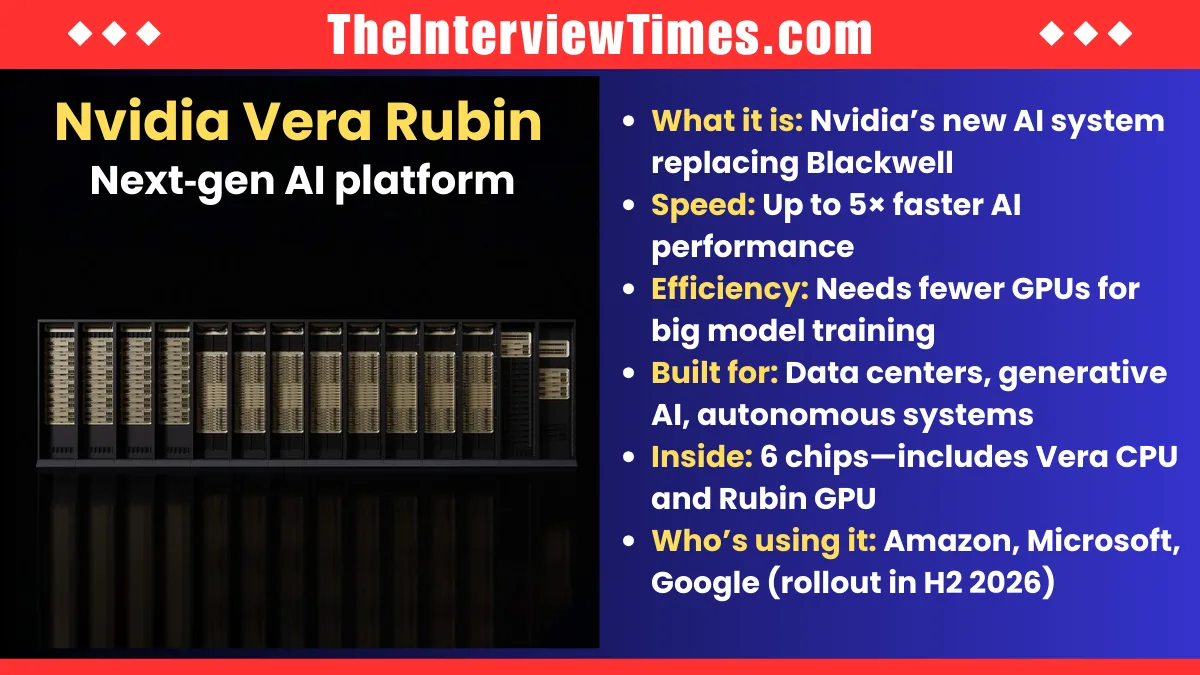
The platform combines six different chips, including a CPU and GPU, and is built to handle large-scale AI projects.
Tech giants like Amazon, Microsoft, and Google are already preparing to use Vera Rubin in their cloud services, with a full rollout expected later in 2026.
Nvidia says the new design is not only faster but also more energy-efficient, making it ideal for next-generation AI applications such as self-driving systems and advanced data centers.
Vera Rubin is in full production.
— NVIDIA (@nvidia) January 6, 2026
We just kicked off the next generation of AI infrastructure with the NVIDIA Rubin platform, bringing together six new chips to deliver one AI supercomputer built for AI at scale.
Here are the top 5 things to know 🧵 pic.twitter.com/TiQKUK4eY3
Must Read: Lucknow AI Hub: India’s First Dedicated AI Center with ₹10,732 Crore Investment
AMD Unveils Ryzen 7 9850X3D and AI Embedded Processors
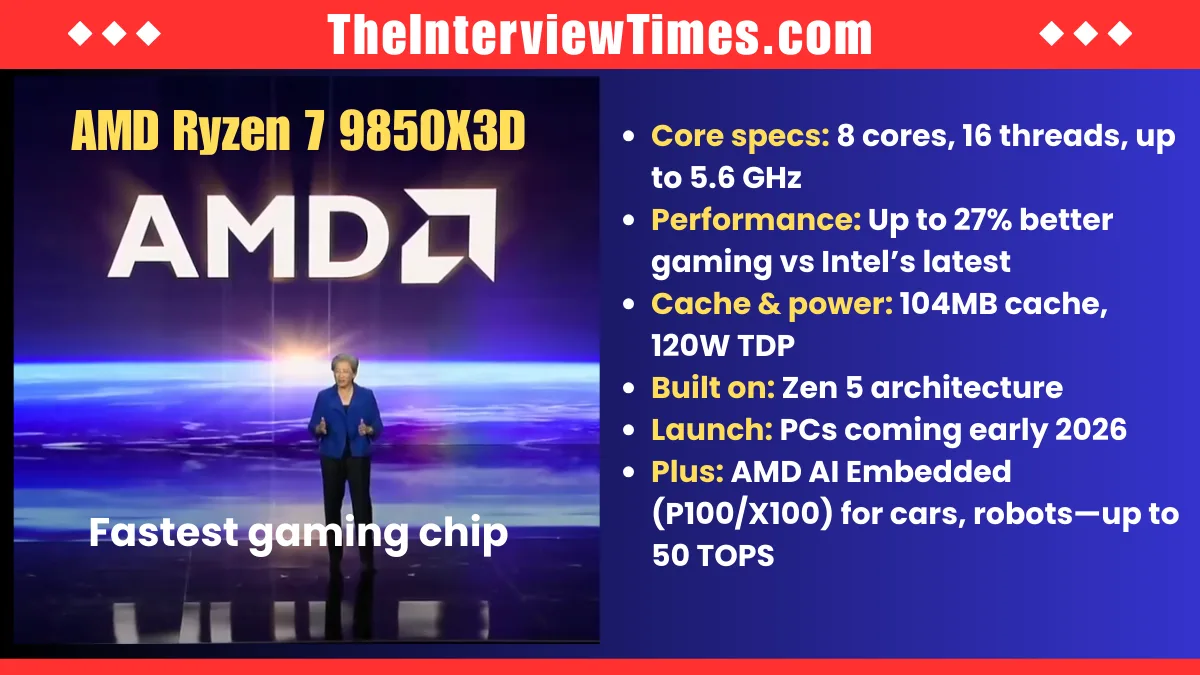
Meanwhile, AMD made headlines with the launch of its Ryzen 7 9850X3D, which it calls the fastest gaming processor available today. Built on AMD’s Zen 5 architecture, the chip offers eight cores, sixteen threads, and speeds up to 5.6 GHz, making it significantly faster than its predecessor.
AMD claims the processor delivers up to 27 percent better gaming performance compared to Intel’s latest rival chip. Computers powered by the Ryzen 7 9850X3D are expected to hit the market in early 2026.
AMD also expanded into AI-focused chips for industries like automotive and robotics. Its new Ryzen AI Embedded P100 and X100 Series are capable of performing up to 50 trillion operations per second, combining powerful CPU cores, advanced graphics, and specialized AI units. These chips are already being tested with select partners, with mass production planned for mid-2026.
AMD at CES 2026 https://t.co/zJ6csqDF1k
— AMD Ryzen (@AMDRyzen) January 6, 2026
In addition, AMD introduced the Ryzen AI 400 Series for laptops, which will support Microsoft’s upcoming Copilot+ PCs. Brands such as Acer, ASUS, Dell, HP, and Lenovo are expected to release devices using these processors in the first quarter of the year.
Not to be left behind, Intel also showcased its new Panther Lake processors, the first to use its advanced 18A manufacturing process. This move positions Intel directly against Nvidia and AMD in the race for high-performance, AI-ready computing.
The message from CES 2026 was clear: chips are no longer just about raw speed. They are becoming smarter, more efficient, and deeply integrated with AI. From powering immersive gaming experiences to driving automation and content creation, these new processors are set to shape the future of technology in everyday life.
