
New Delhi, January 9, 2026, 3:03 p.m. IST
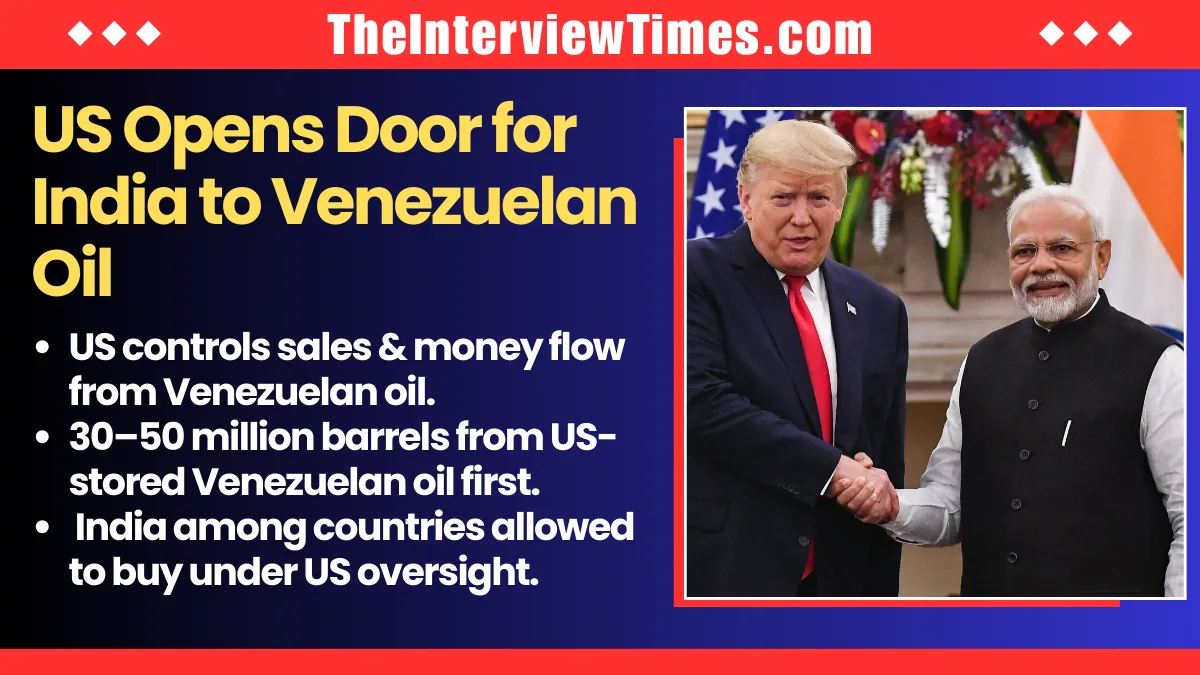
The United States has said it will allow India to buy oil from Venezuela under strict new rules where America controls the sales and money. This could bring back cheaper heavy oil for Indian refineries like Reliance, helping keep petrol and diesel prices stable for common people.
Why This Deal Happened Now
US forces captured Venezuela’s President Nicolas Maduro on January 3, 2026, leading to a quick agreement between Washington and Venezuela’s new leaders. US Energy Secretary Christopher Wright announced plans to sell 30-50 million barrels of stored Venezuelan oil first, then more from future output, to almost all countries including India. The US will handle marketing, deposit earnings in its accounts, and send money back to help ordinary Venezuelans, not corrupt leaders.
Venezuela has the world’s biggest oil reserves but makes only about 800,000 barrels per day now due to old sanctions and problems. India used to buy a lot from them before 2019 sanctions stopped it.
How India Benefits from Venezuelan Oil
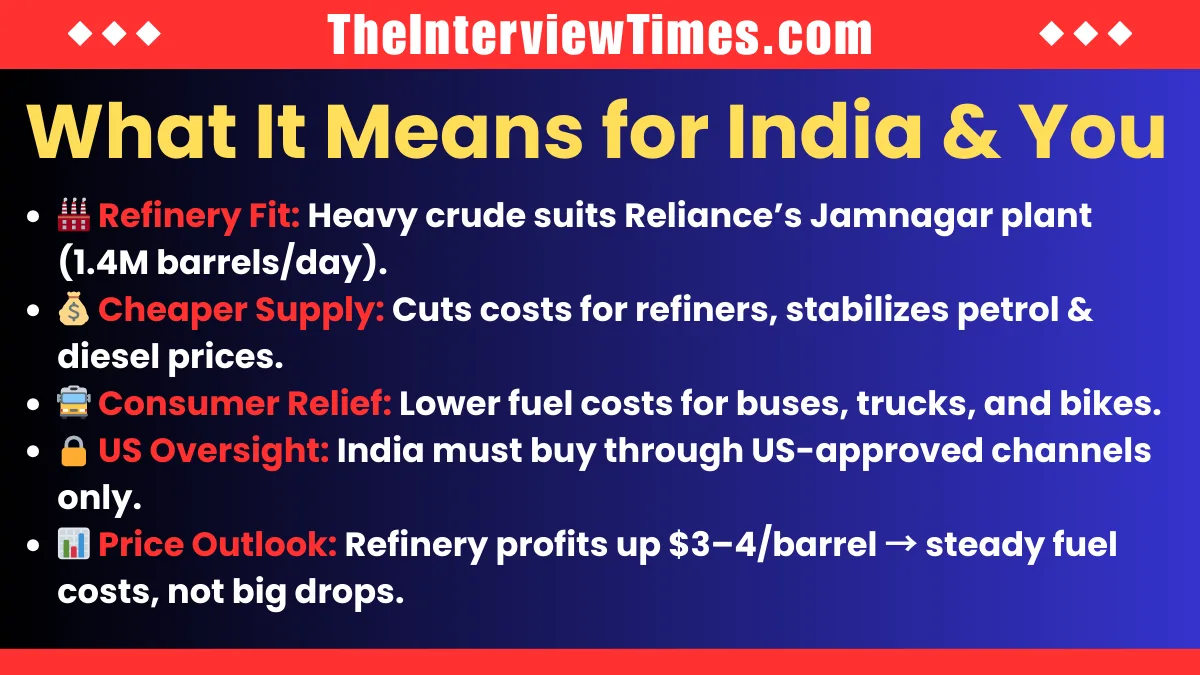
India needs huge amounts of oil daily as one of the world’s top importers, and Venezuelan heavy crude fits perfectly in big refineries. Reliance Industries, with its giant Jamnagar plant processing 1.4 million barrels a day, said it will buy if rules allow and it’s legal. They stopped Russian oil recently due to Western pressure and want alternatives.
This oil is often cheaper, which could save money for refiners and keep fuel prices lower for buses, trucks, and your bike. Other firms like Indian Oil and Hindustan Petroleum might join too.
US Keeps Tight Control on Sales
Nothing happens without US okay; they seized tankers recently to stop illegal trades. India can’t buy freely; sales go through US channels to avoid breaking rules. This setup helps US reshape Venezuela’s oil while letting countries like India get supplies.
Must Read: How Compound Interest Really Works: The Hidden Math That Can Make You Rich or Poor
What It Means for Oil Prices in India
Cheaper heavy oil could boost refinery profits by $3-4 per barrel, passing some savings to consumers amid high global demand. But Venezuela’s low output limits big floods in market, so no huge price drops soon. For you, it means steady fuel costs as India cuts Russian buys and finds new sources.
India was once Venezuela’s top Asian buyer, supplying 6-7% of our oil needs before sanctions. This could restart that smart trade safely.
