

TheInterviewTimes.com, New Delhi | January 22, 2026, 07:46 p.m. IST
Trump Greenland push triggered global market chaos, record gold prices, US stock selloff, and trade tensions before a surprise Davos framework deal eased fears.
Key Highlights
- Trump Greenland acquisition push sparks sharp global market selloff
- US stock indices record worst single-day fall since October
- Gold crosses $4,800 per ounce amid flight to safe assets
- Ray Dalio warns of capital wars linked to trade conflicts
- Surprise Davos framework deal halts February tariff threat
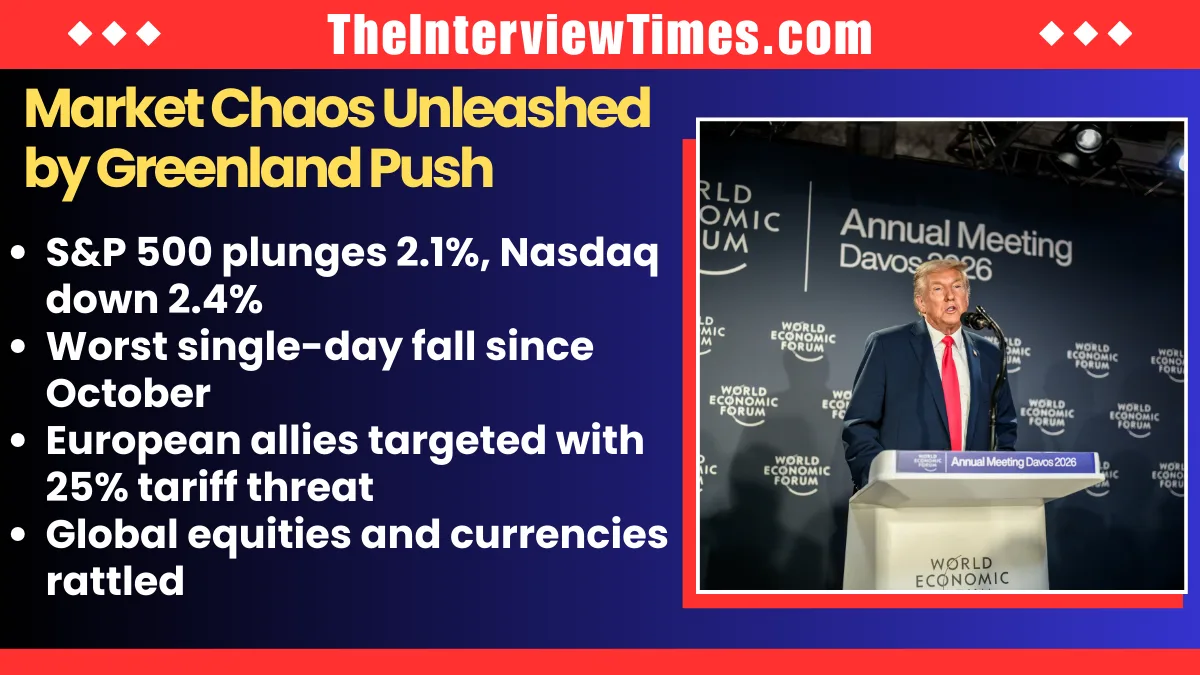
President Donald Trump’s renewed push to acquire Greenland sent shockwaves through global financial markets this week, triggering sharp selloffs, record gains in safe-haven assets, and renewed fears of a transatlantic trade war.
The crisis reached its peak just ahead of the World Economic Forum in Davos before a last-minute framework agreement helped calm investors and stabilize markets.
The episode has exposed deep fractures in US-Europe relations and highlighted how geopolitical rhetoric can rapidly translate into financial volatility.
Trump Greenland Push Sparks Global Market Turmoil
The turmoil began after President Trump publicly threatened to impose 25 percent tariffs on eight European NATO allies that opposed US control over Greenland. The countries included Denmark, Norway, Sweden, France, Germany, the United Kingdom, the Netherlands, and Finland.
When markets reopened on January 20 following the Martin Luther King Jr. holiday, investors reacted sharply. The S&P 500 fell 2.1 percent, the Dow Jones Industrial Average declined 1.8 percent, and the Nasdaq Composite slid 2.4 percent. According to market data, this marked the steepest single-day decline for major US indices since October.
Analysts described the move as a classic risk-off reaction driven by fears of unpredictable US trade and foreign policy decisions. The sudden escalation rattled global equities and currency markets alike.
President Donald J. Trump meets with @SecGenNATO Mark Rutte in Davos.
— The White House (@WhiteHouse) January 21, 2026
"I just want to thank the Secretary General for being with us… We'll be talking about Greenland… Tomorrow, we're doing something else having to do with the Board of Peace. We’re getting tremendous… pic.twitter.com/c8P9p6MTRO
Safe-Haven Assets Surge as Investors Exit Risk
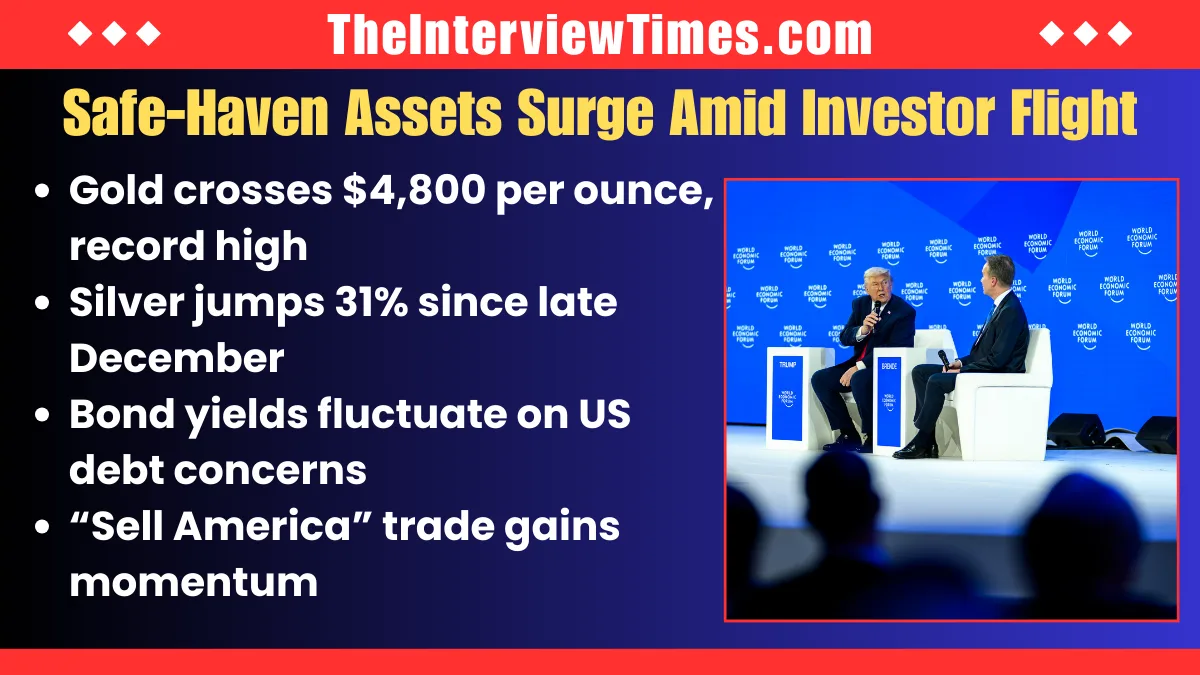
As equities plunged, investors rushed into traditional safe-haven assets. Gold prices surged to record highs above $4,800 per ounce, while silver climbed more than 31 percent since late December. Bond yields fluctuated as traders reassessed demand for US debt.
Market strategists pointed to a growing “Sell America” trade, reflecting concerns that aggressive tariff threats and territorial disputes could weaken investor confidence in US financial stability. The Greenland dispute quickly became a symbol of broader uncertainty surrounding global trade and capital flows.
Ray Dalio Warns of Capital Wars at Davos
Concerns deepened at the World Economic Forum in Davos, where Bridgewater Associates founder Ray Dalio issued a stark warning about the long-term implications of trade conflicts.
Speaking to CNBC, Dalio said that trade wars often evolve into capital wars, where countries begin to restrict or withdraw investments rather than just goods. He cautioned that persistent deficits and political confrontation could reduce global willingness to buy US debt, creating structural risks for financial markets.
His remarks gained added significance as Denmark took concrete action shortly afterward.
Top News: Theia: New Breakthrough Study Reveals Inner Solar System Origin of the Planet That Formed the Moon
Denmark Signals Divestment From US Treasuries
Denmark-based pension fund AkademikerPension announced plans to divest approximately $100 million worth of US Treasury holdings by the end of the month. The fund cited concerns over US fiscal discipline and rising geopolitical tensions linked to the Greenland dispute.
Investment Director Anders Schelde said the conflict did not simplify their decision-making process and highlighted the need to reassess exposure to US assets. While the divestment amount was relatively small in global terms, it sent a strong symbolic signal to markets.
US Treasury Secretary Scott Bessent dismissed the move, stating that Denmark’s holdings were not significant enough to affect broader debt markets. However, investors viewed the decision as a warning sign of potential future capital reallocation.
Davos Framework Deal Halts Tariff Threats
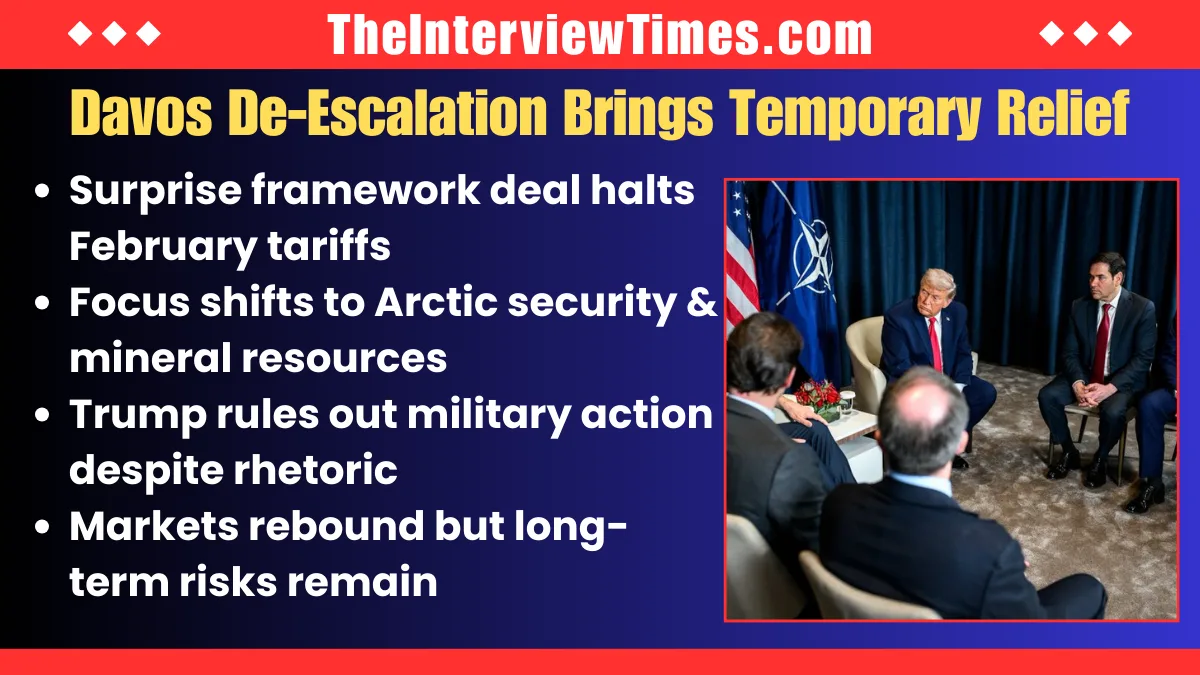
Market sentiment shifted on January 21 after President Trump announced a surprise breakthrough following talks with NATO Secretary General Mark Rutte. In a Truth Social post, Trump confirmed that no tariffs would be imposed on February 1 and outlined a framework for continued dialogue.
The discussions will focus on Arctic security, Greenland’s critical mineral resources, and Trump’s proposed “Golden Dome” missile defense initiative. While the framework lacked detailed commitments, it was enough to pause immediate escalation.
NATO officials stressed that no sovereignty concessions were involved. Danish Foreign Minister Lars Løkke Rasmussen welcomed the renewed dialogue, emphasizing cooperation on security rather than territorial changes.
At Davos, Trump explicitly ruled out military action, stating that force was not under consideration despite earlier rhetoric.
Markets Rebound but Uncertainty Remains
US stock markets rebounded sharply following the announcement, recovering a significant portion of earlier losses. Investors welcomed the de-escalation but remained cautious about the durability of the agreement.
Ole Wæver of the University of Copenhagen told Al Jazeera that NATO does not have the authority to broker territorial arrangements, suggesting that negotiations could revert to slow bureaucratic processes involving Denmark and Greenland directly.
The episode has underscored rising competition over Arctic resources as climate change opens new shipping routes and access to minerals. For investors, the Greenland crisis serves as a reminder that geopolitical risks can quickly spill into financial markets.
As attention turns to concrete follow-up actions, markets will closely monitor whether diplomacy can hold or if renewed tensions will once again test global stability.
Top News: Chabahar Port Project Explained: Why India Is Determined to Stay Despite US Sanctions Pressure
