
Discover how vaccines are developed, tested, and approved, and learn how they train the immune system to fight infections. This explainer covers vaccine types, the development process, and why they are vital for global health.
Vaccines are among the most powerful tools in modern medicine, credited with saving millions of lives every year. They protect individuals and communities by preparing the body’s immune system to fight off dangerous pathogens without causing the disease itself. Understanding how vaccines are developed and how they trigger immunity helps explain why they remain central to global health strategies.
The Basics of Immunity
The human body is constantly exposed to viruses, bacteria, and other harmful organisms. Our immune system acts as a defence mechanism, recognising and neutralising these invaders. When a pathogen enters the body for the first time, the immune system may take days or weeks to mount a full response. During this period, the infection can cause serious illness.
Vaccines solve this problem by training the immune system in advance. They introduce harmless components of a pathogen—such as proteins or genetic material—that stimulate the body to produce antibodies. These antibodies remain in the system, creating what is known as immune memory. If the real pathogen appears later, the immune system responds quickly and effectively.
Top News: AI in Healthcare: How Artificial Intelligence Is Redefining Diagnosis and Treatment
Types of Vaccines
Different technologies are used to develop vaccines, each with its own advantages:
- Live attenuated vaccines: Contain weakened forms of the pathogen. Examples include measles and polio vaccines.
- Inactivated vaccines: Use killed pathogens, safe for people with weaker immune systems.
- Subunit vaccines: Include only specific parts of the pathogen, such as proteins.
- mRNA vaccines: Teach cells to produce a harmless piece of the pathogen’s protein, triggering immunity. COVID-19 vaccines from Pfizer and Moderna are examples.
- Vector vaccines: Use a harmless virus to deliver genetic instructions for producing pathogen proteins.
These approaches all aim to achieve the same outcome: safe exposure that builds immunity without causing illness.
The Development Process
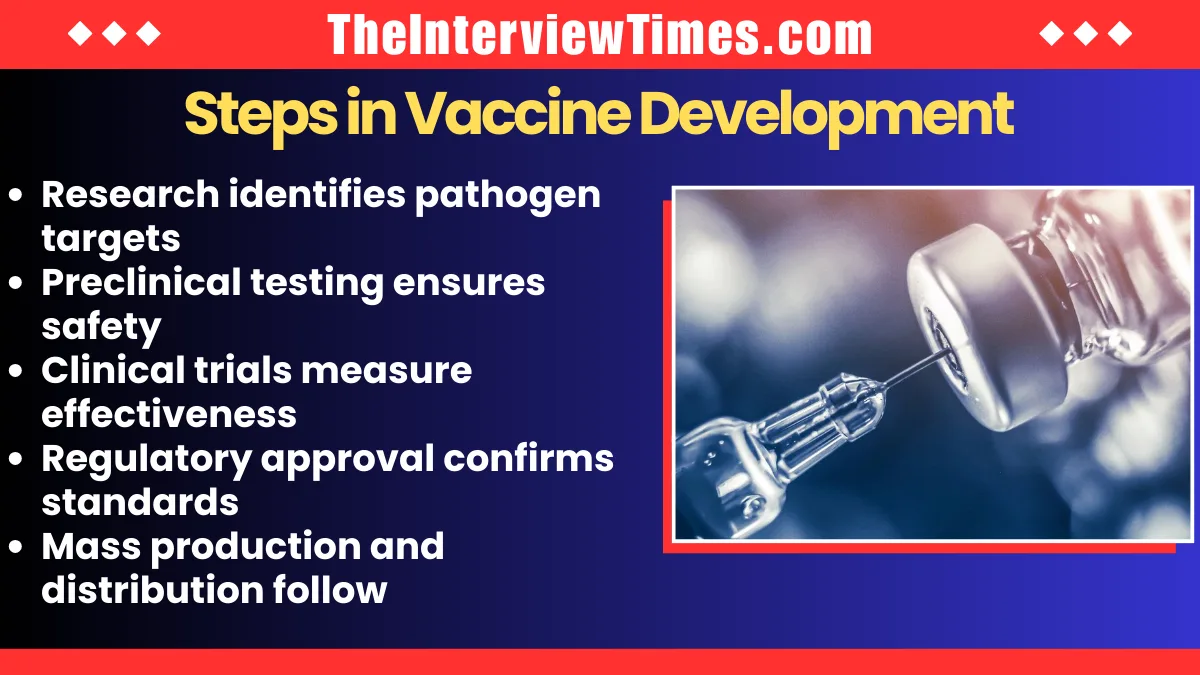
Creating a vaccine is a rigorous, multi-stage process:
- Research and Discovery Scientists identify which part of a pathogen can trigger a protective immune response.
- Preclinical Testing Candidate vaccines are tested in laboratories and on animals to evaluate safety and effectiveness.
- Clinical Trials
- Phase 1: Small groups of volunteers test safety.
- Phase 2: Hundreds of participants assess dosage and immune response.
- Phase 3: Thousands of people confirm effectiveness and monitor side effects.
- Regulatory Approval Health authorities review trial data before granting approval.
- Manufacturing and Distribution Vaccines are produced at scale, with strict quality controls, and distributed globally.
This process can take years, although emergency situations like the COVID-19 pandemic have shown that accelerated timelines are possible when global collaboration and funding are prioritized.
Top News: 7000 Steps Offer Major Health Benefits, New Study Finds – Challenging 10,000-Step Myth
How Immunity Is Achieved
Once vaccinated, the body undergoes a series of immune responses:
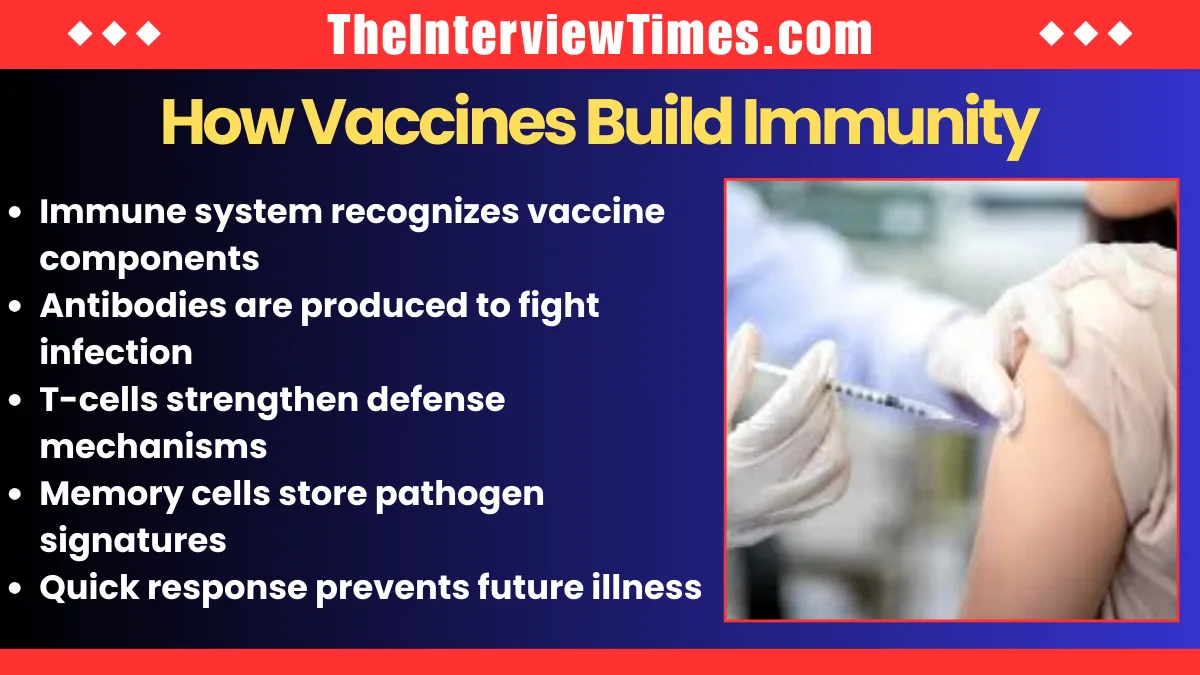
- Recognition: The immune system identifies the vaccine’s components as foreign.
- Response: White blood cells produce antibodies and activate T-cells to fight the perceived threat.
- Memory Formation: Specialized cells remember the pathogen’s signature.
- Protection: If the real pathogen enters later, the immune system responds immediately, often preventing illness altogether.
This process explains why vaccines are often given in multiple doses. Booster shots help reinforce immune memory and extend protection.
Top News: Breakthrough Discovery: MRAP2 Brain Protein Could Quiet Hunger and Transform Obesity Treatment
Why Vaccines Matter
Vaccines not only protect individuals but also contribute to herd immunity. When a large portion of a population is vaccinated, the spread of disease slows, protecting those who cannot be vaccinated due to medical conditions. This collective protection has led to the near-eradication of diseases such as smallpox and dramatic reductions in measles and polio cases worldwide.
Addressing Concerns
Some people worry about side effects. Most vaccine reactions are mild, such as soreness or fatigue, and they usually resolve within a day or two. Serious side effects are extremely rare and are closely monitored by health agencies. Importantly, the risks of infection far outweigh the risks of vaccination.
Conclusion
Vaccines represent a triumph of science and public health. From their careful development to the immunity they provide, they remain essential in preventing disease and saving lives. As pathogens evolve and new threats emerge, continued investment in vaccine research and equitable distribution will be critical to safeguarding global health.
Top News: India’s Diabetes Crisis Deepens as Millennials and Gen Z Face Rising Health Risks
Top News: Obesity-Linked Cancer Deaths in the U.S. Tripled Since 1999, New Study Warns of Health Crisis
