
TheInterviewTimes.com | March 14, 2026 | 05:03 PM IST | New Delhi
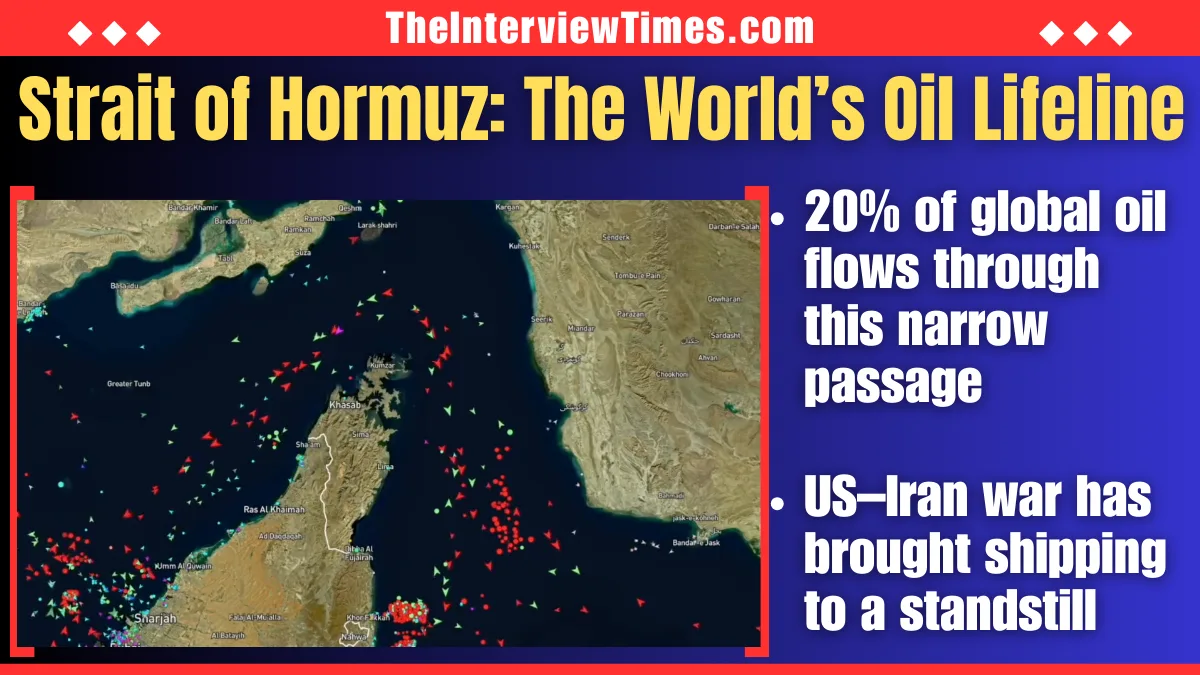
Strait of Hormuz explained: why this narrow waterway carries nearly 20% of global oil and how the 2026 US-Iran war has disrupted global energy supply routes.
Key Highlights
- The Strait of Hormuz carries about 20% of the world’s oil and LNG shipments.
- The ongoing US-Iran conflict has effectively halted most shipping traffic through the strait.
- More than 150 vessels have anchored outside the waterway waiting for safe passage.
- Iran has allowed limited transit for certain countries, including India.
- The crisis is already pushing global oil prices and shipping costs sharply higher.
What Is the Strait of Hormuz?
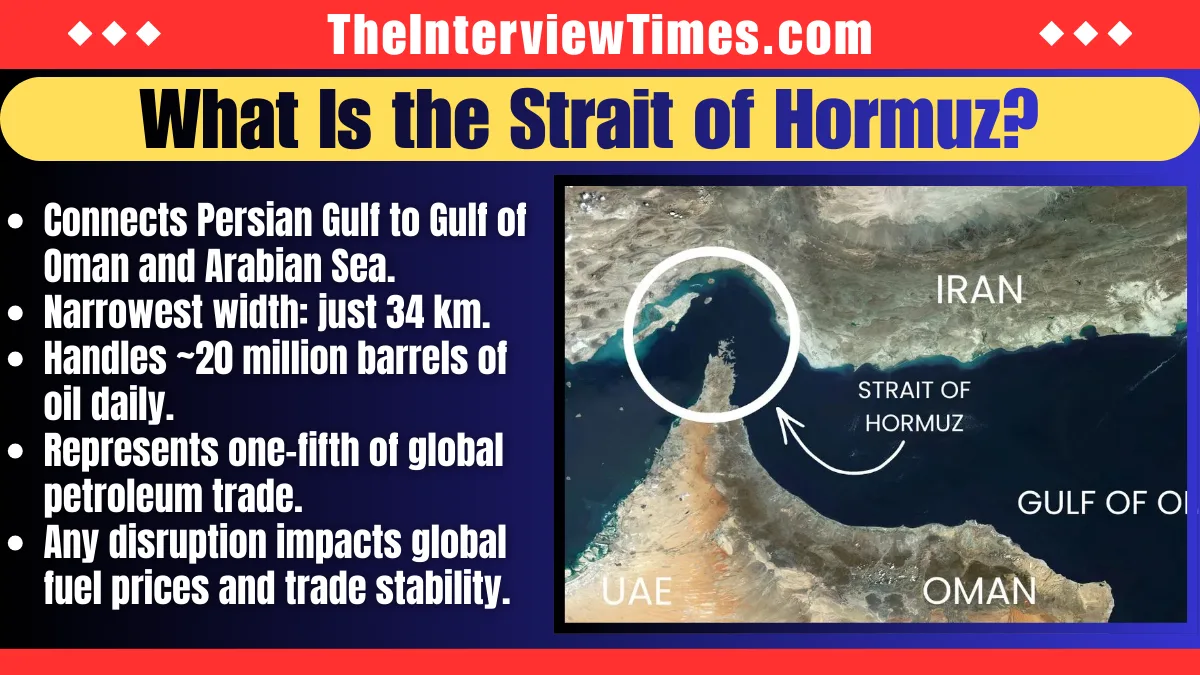
The Strait of Hormuz is one of the most important maritime corridors on the planet. This narrow waterway connects the Persian Gulf to the Gulf of Oman and the Arabian Sea, allowing oil and liquefied natural gas shipments from the Middle East to reach global markets.
At its narrowest point, the strait is only about 34 kilometers wide, making it both strategically vital and extremely vulnerable. Despite its small size, the strait handles around 20 million barrels of oil per day, representing roughly one-fifth of global petroleum trade.
Because of this enormous energy flow, any disruption in the Strait of Hormuz can quickly affect fuel prices, global trade, and economic stability worldwide.
Top News: Why Kharg Island Matters: The Oil Hub at the Center of the US-Iran Crisis
The 2026 Strait of Hormuz Crisis
The current crisis began after US and Israeli strikes on Iranian military targets in late February 2026.
In response, Iran issued warnings that ships attempting to pass through the strait could be targeted. This created a security environment so dangerous that most shipping companies immediately halted transit.
Ship-tracking data shows that tanker traffic dropped by about 70 percent initially, before falling close to zero as the conflict escalated.
Several vessels have already been attacked in the region, and at least 16 ships have been damaged since early March, dramatically increasing risks for commercial shipping.
As a result, the Strait of Hormuz is widely described by analysts as “effectively closed” even without a formal blockade.
Shipping Traffic Has Nearly Collapsed
Before the crisis, dozens of oil tankers passed through the Strait of Hormuz every day.
Today, the situation is dramatically different. Hundreds of ships are now anchored outside the Persian Gulf, waiting for security conditions to improve before entering the strait.
Many major shipping companies and oil traders have suspended operations entirely, citing war-risk insurance costs and missile threats.
Maritime intelligence reports show that on some days only one or two vessels attempted to transit the waterway, a tiny fraction of normal traffic.
This collapse in shipping activity has triggered one of the largest disruptions to global energy supply since the 1970s oil crisis.
Top News: US Strikes Kharg Island: Precision Airstrikes Hit Iran Military Sites Amid Rising Gulf Tensions
Limited Transit: Why Some Ships Are Still Passing
Despite the disruption, the strait is not completely sealed. Iran has allowed select vessels to pass under special arrangements, particularly those linked to friendly countries.
For example, Iranian officials confirmed that Indian LPG tankers were granted safe passage through the strait, with at least one vessel escorted by naval forces.
Tehran’s envoy to New Delhi said the exemption was granted because “India is our friend.”
However, these exceptions remain rare and tightly controlled. Most international shipping companies continue to avoid the waterway entirely due to the extreme security risks.
Why the Strait of Hormuz Is the World’s Most Critical Oil Chokepoint
The strategic importance of the Strait of Hormuz comes from its role as the primary export route for Middle Eastern oil producers.
Countries that depend on the strait include:
- Saudi Arabia
- Iraq
- Kuwait
- United Arab Emirates
- Iran
- Qatar (for LNG exports)
Much of this energy supply flows to Asia, particularly China, India, Japan, and South Korea.
Because alternative routes cannot fully replace this shipping corridor, even temporary disruptions can shake global energy markets.
Global Impact: Oil Prices and Energy Security
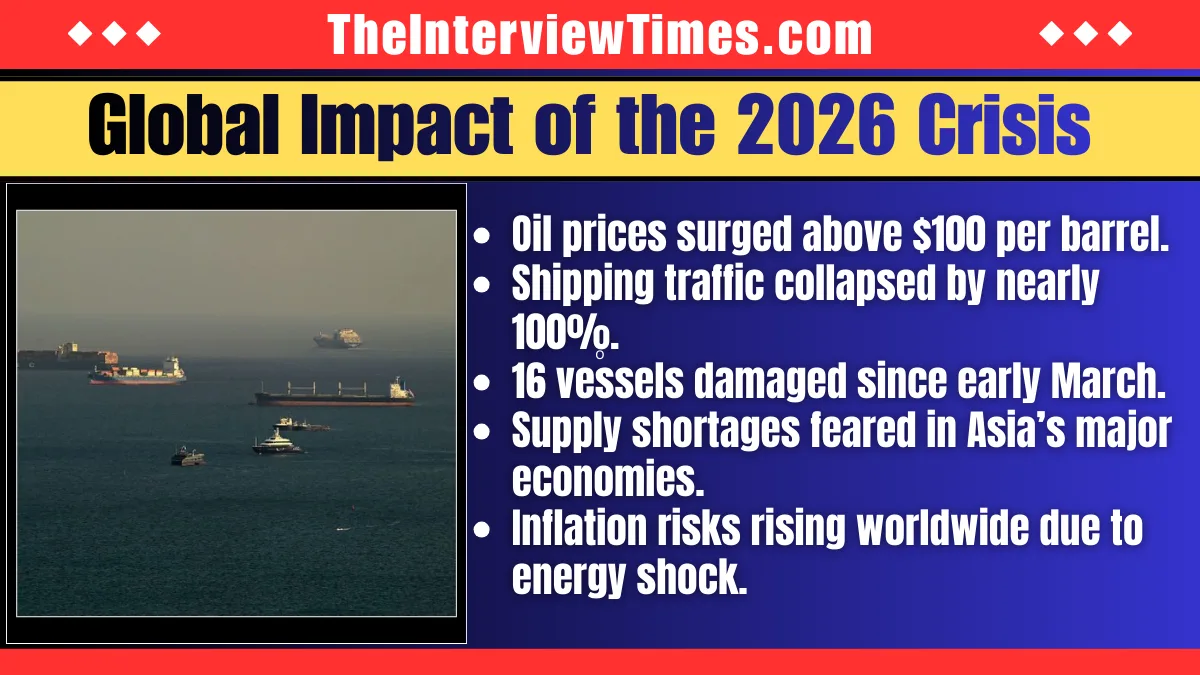
The disruption in the Strait of Hormuz has already caused major shocks in global energy markets.
Oil prices surged above $100 per barrel after the conflict began, reaching their highest levels in years.
Energy traders fear that a prolonged shutdown could trigger:
- Higher global fuel prices
- Supply shortages in energy-importing countries
- Increased inflation in major economies
For countries heavily dependent on imported oil, such as India, China, and Japan, the stability of the Strait of Hormuz is critical for economic security.
A Narrow Waterway With Global Consequences
Few geographic locations influence the global economy as much as the Strait of Hormuz.
A narrow channel in the Persian Gulf carries about one-fifth of the world’s energy supply and connects some of the planet’s largest oil producers to international markets.
Today, amid rising tensions between the United States and Iran, the waterway has become the center of a major geopolitical crisis.
Until the conflict is resolved, the future of global energy markets will remain closely tied to the fate of the Strait of Hormuz.
Top News: What Is International Law During War and Who Enforces It Globally?
