
TheInterviewTimes.com | March 16, 2026 | 1:45 PM IST
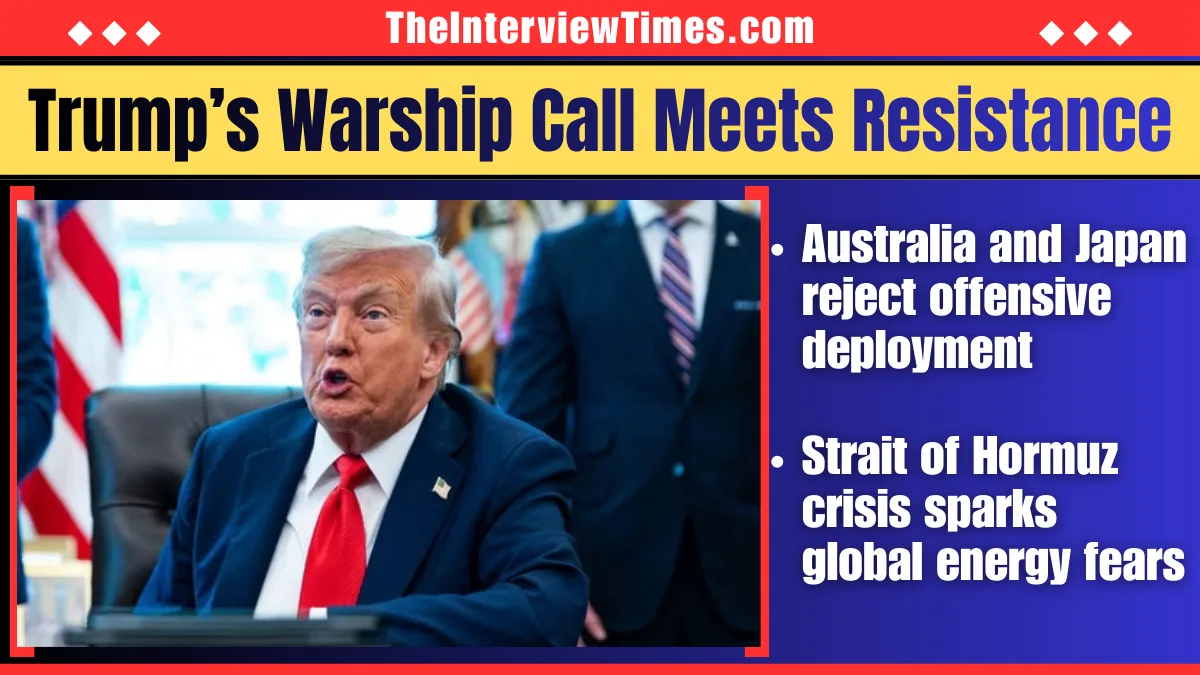
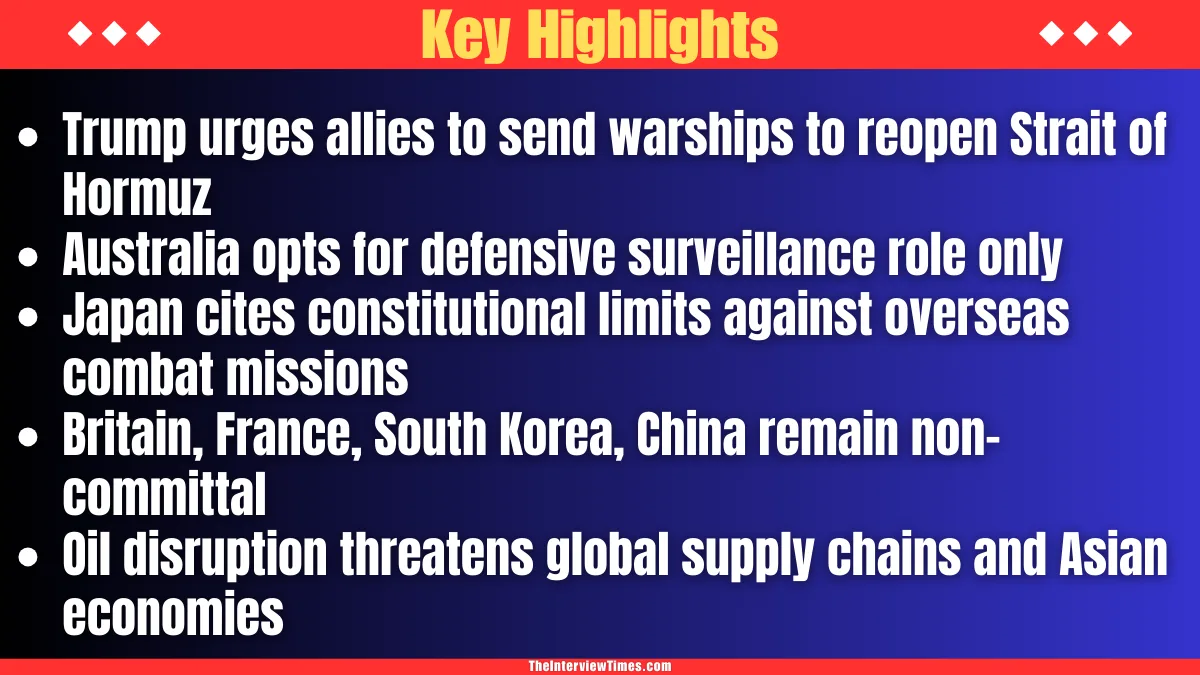
US President Donald Trump urges allies like Australia and Japan to send warships to secure Strait of Hormuz amid Iran crisis, but both nations opt for defensive roles only. Explore global responses and oil impacts.
Crisis Background
The Strait of Hormuz crisis erupted on February 28, 2026, after joint US-Israeli strikes on Iran killed Supreme Leader Ali Khamenei, prompting Iranian missile and drone attacks on US bases, Israel, and Gulf states.
Iran’s Islamic Revolutionary Guard Corps warned against vessel passage, halting most commercial tanker traffic through the strait, which handles about 20% of global oil. This disruption has anchored tankers, strained refineries, and triggered warnings of a severe energy supply shock.
Trump’s Push for Coalition
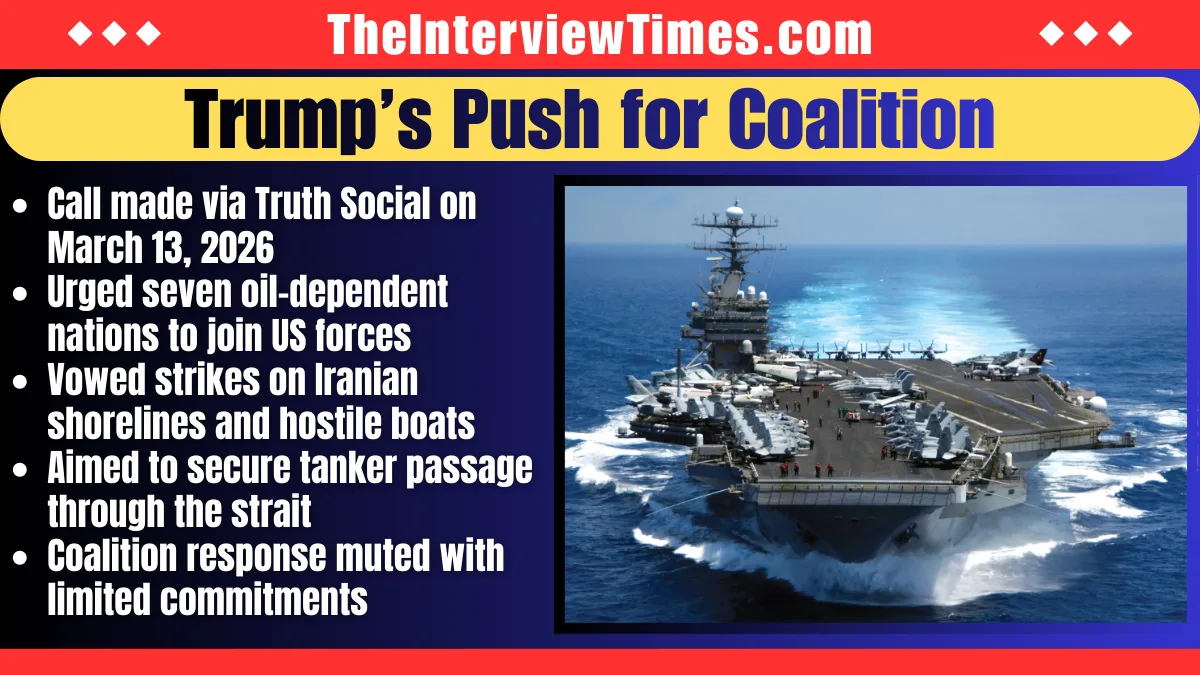
On March 13, 2026, President Donald Trump posted on Truth Social, calling on China, France, Japan, South Korea, the UK, and others to send warships to reopen the strait for nations reliant on Gulf oil. He vowed US forces would bomb Iranian shorelines and sink hostile boats to ensure safe passage. Trump later claimed he demanded participation from about seven oil-dependent countries while aboard Air Force One.
Australia’s Defensive Stance
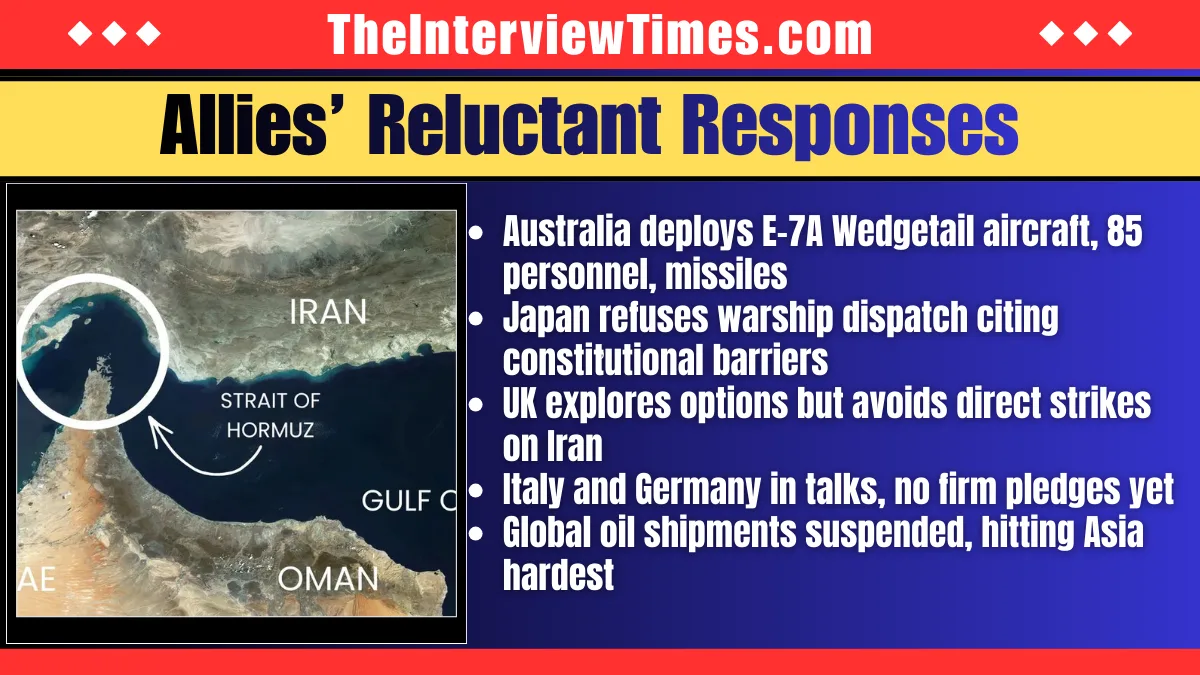
Australia rejected sending navy ships, with Transport Minister Catherine King stating on March 16 that no such request was received and no contribution planned. Instead, Australia deployed an E-7A Wedgetail surveillance aircraft, 85 personnel, and air-to-air missiles to the UAE for defensive support to protect citizens in the region. This mirrors Australia’s 2023 Red Sea refusal due to lacking suitable anti-drone vessels.
Japan’s Constitutional Limits
Japanese Prime Minister Sanae Takaichi told parliament on March 16 there are no plans to dispatch Self-Defense Force escort ships, citing the war-renouncing constitution’s high legal barriers.
Japan continues assessing independent actions within legal bounds ahead of Takaichi’s Washington visit with Trump. The response highlights Tokyo’s reluctance for offensive overseas operations.
Top News: What Is International Law During War and Who Enforces It Globally?
Other Allies’ Positions
Britain is discussing options with allies like Italy and Germany to support commercial shipping through the strait but has not committed warships. Prime Minister Keir Starmer avoided initial strikes on Iran, prioritizing UK interests.
No confirmations emerged from France, South Korea, or China, muting the coalition response overall.
Global Energy Fallout
The strait’s effective closure has suspended crude, fuel, and LNG shipments, hitting Asian economies hardest due to heavy reliance on Gulf imports. Oil majors and traders halted operations post-Iran’s navigation closure declaration, filling storage tanks and cutting producer output. Iranian officials insist the strait remains open to non-hostile traffic despite control claims.
Must Read: Strait of Hormuz Explained: Why This Narrow Waterway Controls the World’s Oil Supply
