
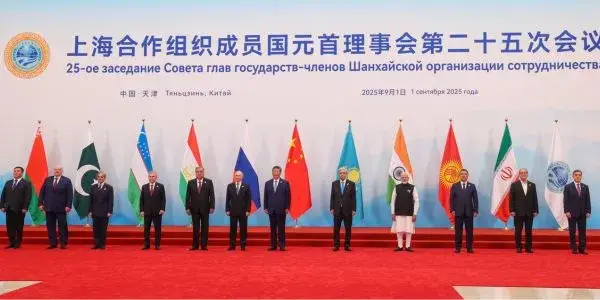
The Tianjin Declaration from the SCO Summit 2025 in Tianjin, China, outlines a vision for multipolarity, security, and sustainable development. Condemning terrorism, including the Pahalgam attack, it strengthens India’s anti-terror stance while offering economic opportunities via connectivity projects. Explore its implications for India and global governance.
The 25th Shanghai Cooperation Organization (SCO) Summit, held in Tianjin, China, from August 31 to September 1, 2025, culminated in the adoption of the Tianjin Declaration—a comprehensive document outlining the organization’s vision for the next decade. Hosted under the theme “Promoting the Shanghai Spirit: SCO in Action,” the summit convened leaders from member states, including Chinese President Xi Jinping, Indian Prime Minister Narendra Modi, Russian President Vladimir Putin, and representatives from observer nations and international organizations. As the largest gathering in SCO history, with over 20 countries and 10 international bodies participating, the declaration addresses escalating global challenges, emphasizing multipolarity, security, and sustainable development.
This article explores the key provisions of the Tianjin Declaration, its geopolitical significance, and its implications for India, a founding member navigating complex regional dynamics.
Overview of the SCO Summit and the Tianjin Declaration’s Context
The SCO, established in 2001, has evolved from a regional security forum into a platform addressing terrorism, economic cooperation, and cultural ties. The 2025 summit marked the organization’s 25th anniversary and Belarus’s first participation as a full member, expanding the group to 10 nations: Belarus, China, India, Iran, Kazakhstan, Kyrgyzstan, Pakistan, Russia, Tajikistan, and Uzbekistan.
Amid rising geopolitical tensions—exacerbated by U.S. tariffs under President Trump, ongoing conflicts in Ukraine and Gaza, and regional instability – the Tianjin Declaration positions the SCO as a counterweight to Western-led alliances. It reaffirms the “Shanghai Spirit” of mutual trust, equality, and non-interference, while advocating for a “just, equitable, and representative multipolar world order.” Leaders approved the SCO Development Strategy through 2035, merged the “Observer” and “Dialogue Partner” statuses into a single “SCO Partner” category, and proposed establishing a Universal Center for Countering Security Challenges and Threats and an SCO Development Bank to enhance economic integration. The declaration also addresses conflicts like Gaza and supports peace efforts in Afghanistan, while avoiding mention of the Ukraine crisis.
Must Read: Chinese Scientists Unveil World’s First Universal 6G Chip: 100 Gbps Speeds Across All Frequencies
Key Provisions of the Tianjin Declaration
The declaration is structured around core themes: security, economic cooperation, cultural exchanges, and global governance. Below is a breakdown of its major elements:
1. Security and Counter-Terrorism
- The document strongly condemns terrorism in all forms, rejecting “double standards” and emphasizing international cooperation to combat cross-border threats. It reaffirms the SCO’s commitment to fighting terrorism, separatism, and extremism, highlighting the inadmissibility of using such groups for “mercenary purposes.”
- Specific condemnations include the April 22, 2025, Pahalgam terror attack in Kashmir, which killed 26 tourists, and attacks in Pakistan, such as the Jaffer Express bombing on March 11, 2025, and the Khuzdar incident on May 21, 2025. The declaration demands that perpetrators, organizers, financiers, and sponsors be brought to justice, underscoring accountability.
- It supports strengthening the Regional Anti-Terrorist Structure (RATS) for intelligence sharing and joint operations, while opposing unilateral coercive measures like sanctions that hinder security efforts.
2. Economic and Sustainable Development
- Designating 2025 as the “SCO Year of Sustainable Development,” the declaration prioritizes trade, connectivity, energy security, digital technology, and climate change mitigation. It calls for aligning development strategies, including China’s Belt and Road Initiative (BRI), while respecting sovereignty—a nod to concerns from members like India.
- Key initiatives include promoting green energy, eco-tourism, and a Eurasian digital common market to foster innovation in AI and infrastructure. The proposed SCO Development Bank aims to finance these projects, enhancing financial cooperation amid global economic turmoil.
3. Global Governance and Multipolarity
- Advocating for a multipolar world, the declaration criticizes hegemonism, power politics, and bloc confrontations, urging non-interference and the prohibition of force in international relations. It supports reforming the UN to reflect modern realities and upholds the World Trade Organization (WTO) as the core of multilateral trading.
- On historical memory, it emphasizes preserving lessons from World War II, portraying victory as a result of unified peace-loving nations, and opposes Cold War mentalities.
4. Cultural and People-to-People Ties
- The declaration promotes cultural exchanges, including events like the SCO National Television Festival, to build mutual understanding and foster a “garden of civilizations.” It stresses inclusivity, coordination, and respect for differences among member states.
What the Tianjin Declaration Means for India
For India, the Tianjin Declaration represents a diplomatic triumph, particularly in advancing its anti-terrorism agenda, while offering opportunities—and challenges—in economic and strategic domains.
Diplomatic Wins on Security
India’s push for a unified anti-terror stance bore fruit with the explicit condemnation of the Pahalgam attack, a move seen as a setback for Pakistan, which has faced accusations of sponsoring cross-border terrorism. Prime Minister Modi’s address labeled terrorism a “collective challenge to humanity” and advocated no double standards. This builds on India’s earlier refusal to endorse a SCO defense ministers’ statement in April 2025 due to the omission of Pahalgam, highlighting New Delhi’s growing influence.
The emphasis on accountability for sponsors aligns with India’s “zero-tolerance” policy, potentially strengthening intelligence sharing via RATS and pressuring Pakistan amid bilateral tensions over Kashmir. However, the SCO’s charter avoids interfering in bilateral disputes, limiting its role in resolving India-Pakistan issues.
Opportunities in Economic Cooperation
The declaration’s focus on connectivity and sustainable development complements India’s initiatives like the India-Middle East-Europe Economic Corridor (IMEC) and Chabahar Port, providing access to Central Asian markets and energy resources. Modi’s vision of a “SECURE SCO” (Security, Economic development, Connectivity, Unity, Respect for sovereignty, Environmental protection) resonates here, potentially boosting trade amid U.S. tariffs.
However, India’s opposition to BRI—due to its route through Pakistan-occupied Kashmir—remains a hurdle. The declaration’s respect for sovereignty offers India leverage to negotiate terms, but China’s dominance in SCO economic projects could marginalize Indian interests if not balanced carefully.
Sharing my remarks during the SCO Summit in Tianjin. https://t.co/nfrigReW8M
— Narendra Modi (@narendramodi) September 1, 2025
Strategic Balancing and India-China Ties
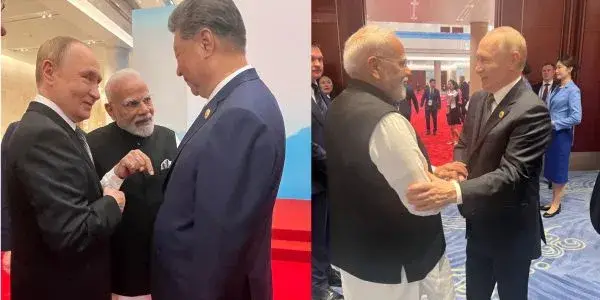
Modi’s first visit to China in seven years, including bilateral talks with Xi, signaled a thaw in relations strained since the 2020 Galwan clash. The leaders affirmed India and China as “development partners, not rivals,” agreeing to resume direct flights, visa facilitation, and the Kailash Mansarovar Yatra. This aligns with the declaration’s call for mutual trust and border peace, potentially reducing tensions along the Line of Actual Control.
Strategically, the SCO allows India to multi-align, strengthening ties with Russia and Central Asia while engaging China and Iran. However, the declaration’s critique of Western hegemony indirectly pressures India to distance from alliances like the Quad, complicating its relations with the U.S., EU, and Japan.
Challenges Ahead
Internal divergences—India-Pakistan rivalry, Russia’s Ukraine involvement, and Iran’s conflicts with Israel—test the SCO’s cohesion. For India, the platform’s effectiveness in addressing specific threats remains limited, requiring vigilant diplomacy to protect strategic autonomy.
Must Read: India’s Environmental Challenges 2025: Solutions for a Sustainable Future
Must Read: India-China Disputes Explained: Border Clashes, 1962 War, and the August 2025 Diplomatic Thaw
Global Context and Future Outlook
The Tianjin Declaration underscores the SCO’s ambition to reshape global governance, positioning it as a voice for the Global South against unilateralism. With no mention of Ukraine but focus on Gaza and Afghanistan, it reflects selective priorities, avoiding direct confrontation with Western powers while promoting alternatives like the SCO Bank.
As the world grapples with economic instability and security threats, the declaration’s implementation will determine the SCO’s credibility. For India, it offers a pathway to regional influence, but success hinges on balancing cooperation with safeguarding national interests.
In summary, the Tianjin Declaration is a blueprint for a multipolar era, with profound implications for India’s security and economic trajectory. As Modi noted, “India and China are partners in progress,” but navigating this partnership amid global shifts will define the road ahead.
Mahendra Singh is a seasoned journalist and editor at TheInterviewTimes.com with over 28 years of experience. An alumnus of IIMC, he writes on international affairs, politics, education, environment, and key social issues.