
China forced Reuters to remove a viral video of Xi Jinping and Vladimir Putin discussing human longevity. The takedown highlights Beijing’s media control and global challenges to press freedom.
New Delhi, September 7, 2025 — In a striking display of Beijing’s tightening control over global narratives, Reuters has withdrawn a viral video showing Chinese President Xi Jinping and Russian President Vladimir Putin discussing human longevity. The move followed a legal demand from China’s state broadcaster CCTV, raising fresh questions about censorship, media licensing, and press freedom.
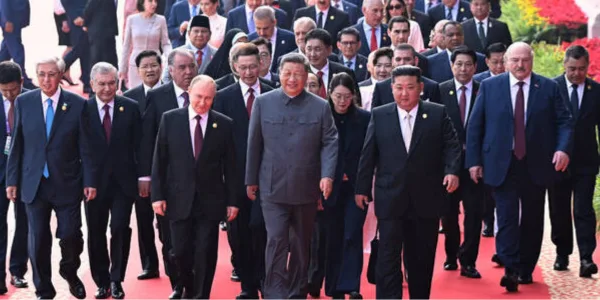
The footage was captured on September 3 during a grand military parade in Beijing, commemorating the 80th anniversary of the end of World War II in Asia. Seated together, Xi and Putin were caught in what appeared to be an unguarded hot-mic exchange. Xi reportedly remarked, “At 70, you’re still a child,” while Putin spoke of biotechnology and organ transplants potentially extending human lifespans to 150 years.
Reuters had licensed the raw material from CCTV, edited it into a four-minute clip, and distributed it to over 1,000 clients worldwide, including the BBC and Al Jazeera. Within hours, the segment went viral across social media, sparking memes and satirical commentary.
Must Read: Air Pollution Kills Over 18,000 Daily – Clean Air Day Calls for Action
Viral Moment Meets Irony
On X (formerly Twitter), users mocked the leaders’ fascination with “immortality” against the backdrop of their long years in power. One widely shared post quipped: “Xi and Putin plotting to outlive us all—longevity secrets from the parade?” The video quickly amassed millions of views, with hashtags like #XiPutinImmortality trending in multiple regions.
The viral moment stood in sharp contrast to the carefully choreographed spectacle of the parade, which showcased China’s military prowess and solidarity with Russia and North Korea. Analysts said the unscripted exchange inadvertently humanized—or ridiculed—the leaders at a time when they sought to project strength.
Beijing Intervenes
On September 5, CCTV issued a formal legal notice revoking Reuters’ license and demanding immediate takedown of the video. The broadcaster accused Reuters of “misrepresentation,” though it offered no evidence of factual errors. Reuters complied, issuing a global “kill” notice and scrubbing the clip from its website.
In a statement, the agency defended its reporting: “We stand by the accuracy of what we published. After careful review, we found no reason to believe our journalism compromised Reuters’ commitment to accuracy and impartiality.”
Experts See Censorship Beyond Borders
Media analysts say the incident highlights Beijing’s growing effort to control narratives abroad. CCTV, an arm of the Chinese Communist Party, has long censored sensitive topics such as Xi’s health or succession plans.
“This isn’t just about copyright—it’s about narrative control,” said Dr. Elena Vasquez, a media analyst at the Asia-Pacific Institute in Washington. “Discussions about aging or longevity could fuel speculation about Xi’s health, which is strictly off-limits in Chinese state media.”
Past cases include the suppression of reports on Xi’s rumored health concerns in 2019 and annual censorship around the Tiananmen Square anniversary. Experts warn that by licensing from state broadcasters, global outlets risk becoming vulnerable to political pressure.
Must Read: Understanding the Difference Between Taiwan and China
A Precedent for Press Freedom?
The incident underscores the delicate balance international media must strike when reporting on authoritarian regimes. Reuters’ compliance was legally prudent, but critics argue it sets a worrying precedent.
“When you rely on footage controlled by state broadcasters, you play by their rules,” Vasquez noted. “Retracting accurate content creates a chilling effect for global journalism.”
Global Ripples
Despite the takedown, remnants of the video continue circulating. Archived posts and screenshots remain on X and forums, particularly in Ukraine, where local media portrayed the episode as proof of “authoritarian fragility.” Singapore’s Straits Times also covered the controversy, highlighting its global ripple effects on media distribution.
Pro-China accounts largely ignored the story or repeated CCTV’s claims of misrepresentation without elaboration, reflecting Beijing’s wider strategy of narrative discipline.
Broader Geopolitical Stage
The Beijing parade itself carried heavy geopolitical symbolism. Alongside Putin, North Korean leader Kim Jong Un attended the event, signaling a united front against Western sanctions and U.S. influence. While China sought to project military might and alliance solidarity, the viral hot-mic moment revealed a less-scripted side—one that Beijing was quick to erase.
The Bigger Picture
For press freedom advocates, the episode reinforces the vulnerability of independent reporting in a world where authoritarian powers increasingly dictate terms. It also shows the limitations of “viral truth” in the digital age—where content can spread globally within hours but be erased just as quickly under legal or political pressure.
As of September 7, CCTV has declined to comment further. The Chinese Embassy in Washington has also remained silent. The original raw parade footage still exists through alternative channels, but the version featuring Xi and Putin’s longevity exchange has largely disappeared.
For now, the incident stands as a case study in how tightly controlled narratives collide with the realities of a connected world—where even hot-mic moments can shake carefully managed images of power.