
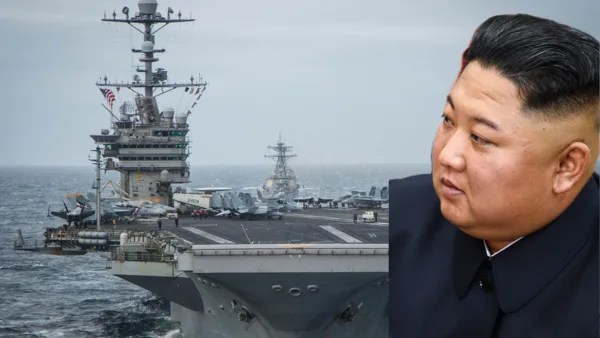
North Korea vows “more offensive action” after a U.S. nuclear carrier docks in South Korea, heightening regional tensions amid joint defense talks.
TheInterviewTimes.com | Busan, South Korea / Pyongyang, North Korea – November 8, 2025
Key Points
- North Korea vows “more offensive action” after a U.S. nuclear-powered carrier arrives in South Korea.
- Pyongyang labels the deployment a “provocation” escalating Korean Peninsula tensions.
- U.S. and South Korean officials reaffirm extended deterrence amid new sanctions.
- Analysts say North Korea’s threats follow its pattern of countering allied drills with missile tests.
- The United Nations Command reports vigilance but no unusual North Korean troop movements.
North Korea has issued a strong warning of “more offensive action” following the arrival of the U.S. nuclear-powered aircraft carrier USS George Washington in South Korea. The move, announced by North Korea’s Defense Minister No Kwang Chol, marks another spike in tensions on the Korean Peninsula amid a series of military drills and diplomatic standoffs.
The statement, published by the Korean Central News Agency (KCNA), called the U.S. carrier’s docking in Busan a “deliberate provocation” that escalates regional instability. North Korea accused Washington and Seoul of coordinating plans to integrate nuclear and conventional forces aimed at Pyongyang, referencing last month’s U.S.–South Korea Security Consultative Meeting (SCM) and a joint visit to the Demilitarized Zone (DMZ) by defense officials.
“We will continue to show more offensive action to cope with the enemies’ threat on the principle of ensuring our security and defending peace by dint of powerful strength,” Minister No declared, according to KCNA reports verified by Reuters and Yonhap.
North Korea’s Missile Test and Allied Response
The threat came a day after North Korea test-fired a short-range ballistic missile into the Sea of Japan, confirmed by South Korea’s Joint Chiefs of Staff. The U.S. Indo-Pacific Command labeled the launch “destabilizing” but said it posed no immediate threat to American forces or allies.
Meanwhile, South Korean naval officials clarified that the USS George Washington, part of the Fifth Carrier Strike Group, was making a scheduled port call for logistics and crew rest—the ship’s first visit to South Korea in over ten years. The docking coincides with ongoing “Freedom Shield” joint military exercises designed to bolster allied deterrence against North Korean aggression.
Must Read: U.S. Army to Buy 1 Million Drones: Massive Drone Surge Redefines Modern Warfare
U.S. Sanctions Add to North Korea’s Anger
The escalation also follows new U.S. sanctions targeting North Korean entities accused of cybercrime and weapons procurement. U.S. Defense Secretary Pete Hegseth, visiting Seoul, reaffirmed Washington’s “ironclad commitment” to South Korea’s defense and to extended deterrence, including the nuclear umbrella.
These developments have drawn sharp criticism from North Korea, which sees joint military drills and sanctions as hostile acts undermining its sovereignty. Analysts suggest that Pyongyang’s rhetoric serves both as a warning and a negotiation tactic, aimed at securing leverage ahead of potential diplomatic openings.
“This is Pyongyang signaling its displeasure and attempting to deter further joint exercises,” said Leif-Eric Easley, professor of international studies at Ewha Womans University, Seoul. “While risky, such statements often serve as bargaining chips ahead of potential diplomacy.”
Heightened Vigilance Along the Korean Border
The United Nations Command confirmed a state of increased alert along the DMZ but reported no unusual troop movements in North Korea. South Korea’s Defense Ministry stated that it is “closely monitoring” all North Korean military activities in coordination with U.S. forces.
Roughly 28,500 U.S. troops remain stationed in South Korea under the long-standing mutual defense treaty between the two allies. The presence of American forces has long been a core grievance for North Korea, which continues to expand its nuclear arsenal—estimated by U.S. intelligence to include over 50 warheads.
Regional Implications and Diplomatic Outlook
The latest developments highlight the fragile security environment in Northeast Asia. Experts warn that North Korea’s advancing missile and nuclear capabilities could trigger a broader regional arms race, drawing in Japan and China. Despite the tensions, diplomatic channels through the United Nations and intermediary nations remain technically open, though substantive talks have stalled since 2019.
As of Saturday evening, no additional missile launches or military incidents had been reported. However, with North Korea vowing “offensive action” and the U.S. reinforcing its deterrence presence, the standoff on the peninsula shows no signs of easing.