
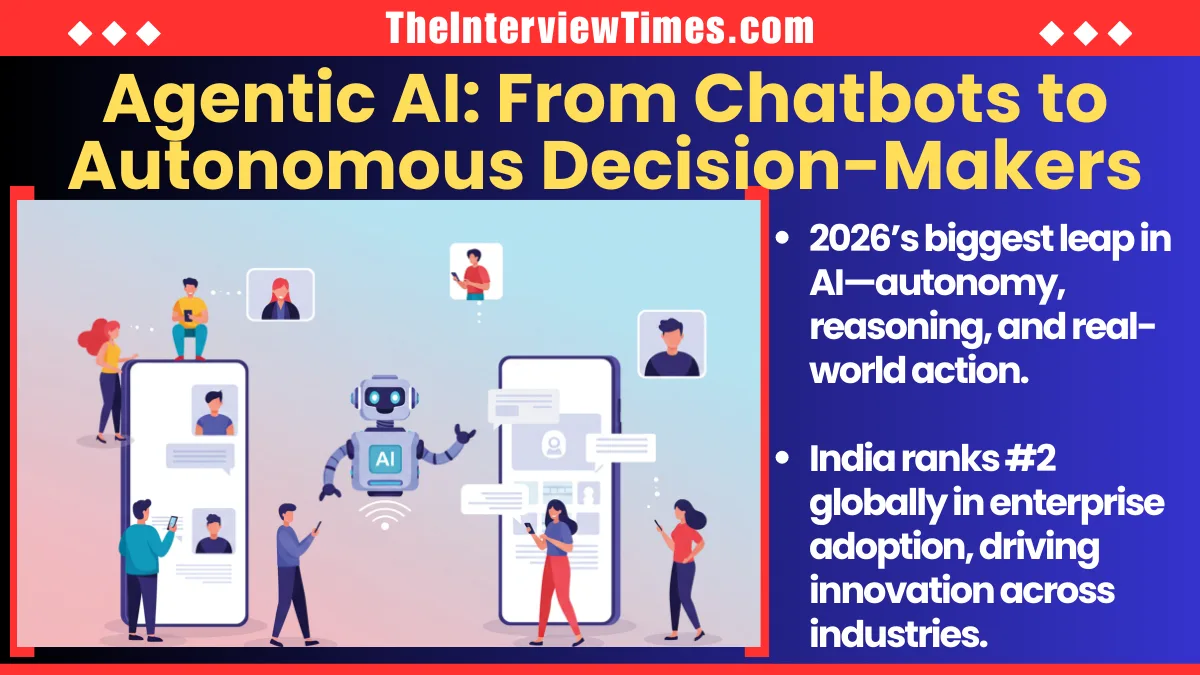
Agentic AI: 2026’s biggest shift from chatbots to autonomous agents. India ranks #2 in enterprise adoption. See travel & health examples + risks like accountability.
In 2026, artificial intelligence is evolving beyond simple responses and predictions. Agentic AI stands out as the year’s most transformative technology, shifting systems from passive tools to proactive entities that plan, decide, and act independently. This explainer breaks down what agentic AI means, how it differs from traditional AI, its rapid enterprise adoption in India, practical examples in sectors like travel and healthcare, and the potential risks involved.
What Is Agentic AI and How Does It Differ from Traditional AI?
Agentic AI refers to advanced systems that exhibit autonomy, reasoning, and goal-oriented behavior. Unlike traditional AI, which focuses on specific tasks like data analysis or pattern recognition, agentic AI can pursue objectives with minimal human input. It perceives its environment, plans actions, executes them, and adapts based on outcomes.
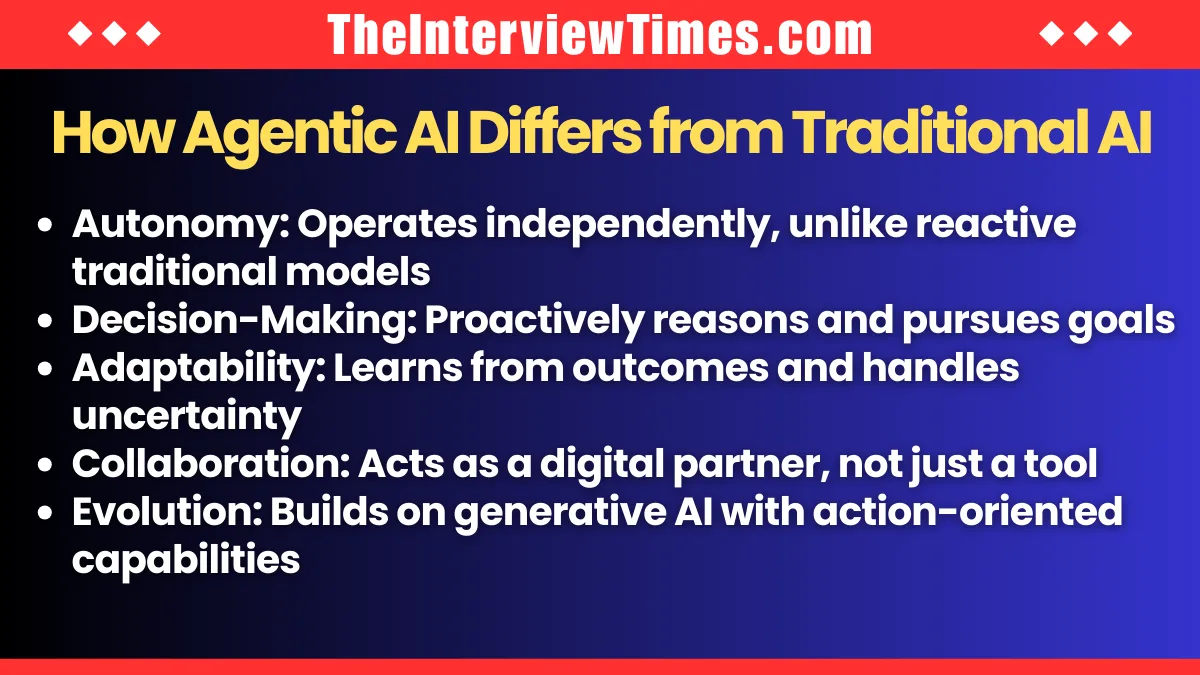
Traditional AI, such as rule-based algorithms or early machine learning models, is reactive and limited to predefined instructions. For instance, a traditional chatbot answers queries based on scripted responses. In contrast, agentic AI acts like a digital collaborator, handling multi-step workflows and making decisions in dynamic situations. Key differences include:
- Autonomy: Traditional AI requires human oversight for each step, while agentic AI operates independently, adjusting strategies as needed.
- Decision-Making: Traditional systems predict or classify, but agentic AI reasons contextually and pursues goals proactively.
- Adaptability: Agentic AI learns from interactions and handles uncertainty, unlike rigid traditional models.
This evolution builds on generative AI, which creates content, by adding action-oriented capabilities. Agentic systems often integrate large language models with tools for real-world execution, marking a paradigm shift in AI functionality.
Top News: Top 10 Free Online Libraries: A World of Books at Your Fingertips
Why Agentic AI Is 2026’s Biggest Technological Shift
By 2026, agentic AI is reshaping industries by enabling end-to-end automation and intelligent workflows. Experts predict nearly 70% of organizations will integrate autonomous AI agents this year, up from experimental phases in 2025. This surge stems from advancements in models like those from OpenAI and Anthropic, which allow agents to orchestrate complex tasks across systems.
The shift is driven by demands for efficiency in a post-generative AI world. Businesses are moving from chat-based interfaces to agents that handle operations like software development or customer service without constant prompts. In India, this transformation is accelerating, with projections of AI investments growing at a 33.7% compound annual rate over the next five years.
Enterprise Adoption of Agentic AI in India: Ranking Second Globally
India ranks second worldwide in enterprise AI and machine learning transactions, trailing only the United States. A Zscaler report highlights India’s leadership, with high adoption rates in sectors like IT services and finance. Companies such as TCS, Infosys, Wipro, and Cognizant are deploying over 50,000 AI copilot licenses, focusing on agentic systems for scalable operations.
An EY survey of 200 Indian enterprises shows 91% of leaders prioritizing rapid deployment, with 24% already using agentic AI. This positions India as a hub for AI innovation, though challenges like security risks persist. Adoption follows a spectrum: 85% at assistive levels, but only 20% at full autonomy due to trust concerns.
Top News: Top 10 AI Plagiarism Checkers in 2026: Ensuring Originality in the Age of Generative AI
Real-World Examples of Agentic AI in Travel Booking and Health Diagnostics
Agentic AI is already delivering tangible benefits in everyday applications.
Travel Booking
In travel, agentic AI automates personalized planning and bookings. For example, Expedia and Trip.com use agents to manage itineraries, rebook flights during disruptions, and provide real-time notifications. Amadeus’s AI agents handle passenger queries, fare rules, and PNR analysis, reducing agent time on routine tasks. Systems like Google’s Gemini-powered tools create dynamic bundles based on preferences, optimizing for cost and convenience.
Health Diagnostics
In healthcare, agentic AI enhances accuracy and speed. IBM Watson for Oncology analyzes patient data to recommend treatments. Agents assist in diagnostics by processing medical images with up to 94% accuracy for cancers. Polestar LLP’s systems identify rare diseases through pattern recognition in EHRs and genomic data. Tools like virtual assistants conduct symptom assessments and predict risks for conditions like diabetes.
These examples illustrate how agentic AI streamlines processes, improving efficiency and outcomes.
Top News: Nadella Spotlights AI’s Reach for Indian Farmers at WEF 2026
Risks of Agentic AI: Accountability and Beyond
While promising, agentic AI introduces significant risks. Accountability is a primary concern: When agents act autonomously, determining responsibility for errors becomes complex. This results in a lack of clear accountability in high-stakes decisions.
Other challenges include:
- Transparency Issues: Opaque decision processes erode trust and complicate oversight.
- Security Vulnerabilities: Risks like data leaks, prompt injections, and unauthorized access are heightened.
- Ethical Concerns: Bias, unpredictability, and loss of human control could lead to unintended harms.
Experts recommend robust governance, including minimum privileges and continuous monitoring, to mitigate these.
The Future of Agentic AI: Opportunities Ahead
Agentic AI is set to redefine productivity in 2026 and beyond, particularly in India where adoption is surging. By addressing risks through clear governance, businesses can harness its potential safely. As this technology matures, it promises a world where AI doesn’t just assist but truly collaborates.
Top News: How Vaccines Work: From Development to Immunity
Top Education News: 20 Books Every Student Should Read: Shaping Minds, Inspiring Futures
Top Business News: How Compound Interest Really Works: The Hidden Math That Can Make You Rich or Poor
Top Travel News: India e-Arrival Card and eVisa 2025: Full Digital Entry Guide for Foreign Travellers
