
TheInterviewTimes.com | March 04, 2026 | 13:35 PM IST | New Delhi
Asian markets saw their worst drop in years with Kospi crashing 12% amid US-Israel-Iran war escalation. Oil prices surged on supply fears through Strait of Hormuz, hitting Japan, Taiwan, and Hong Kong hard. Live updates on global economic impact.
Regional Markets in Freefall
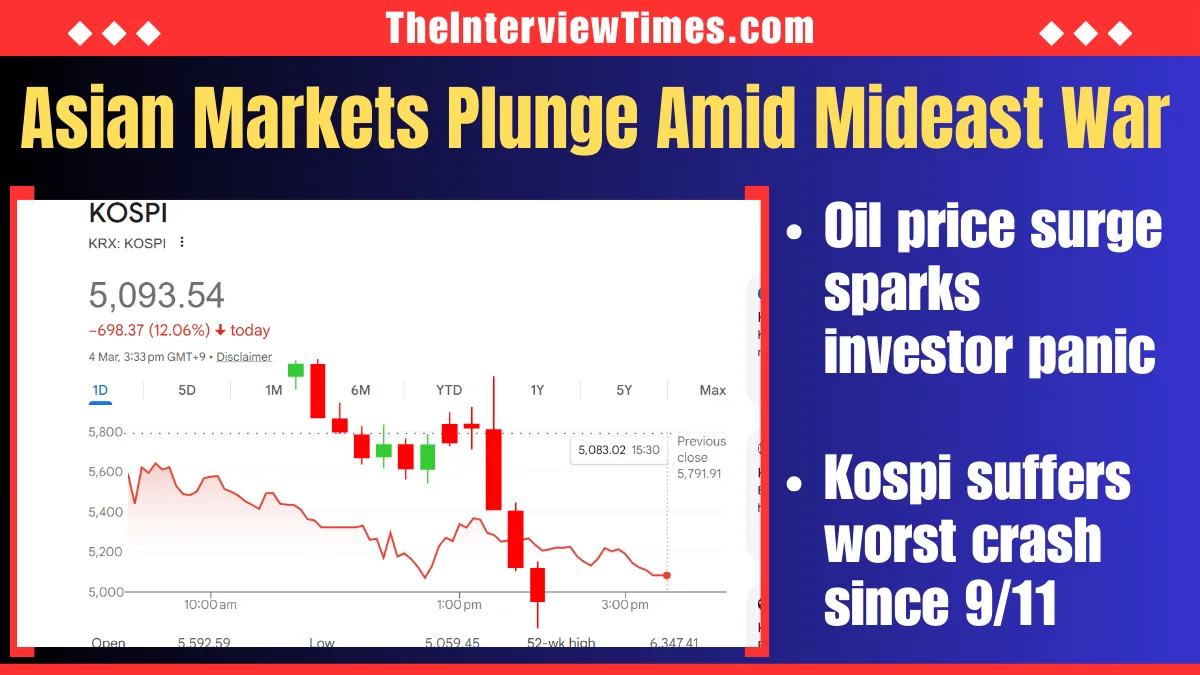
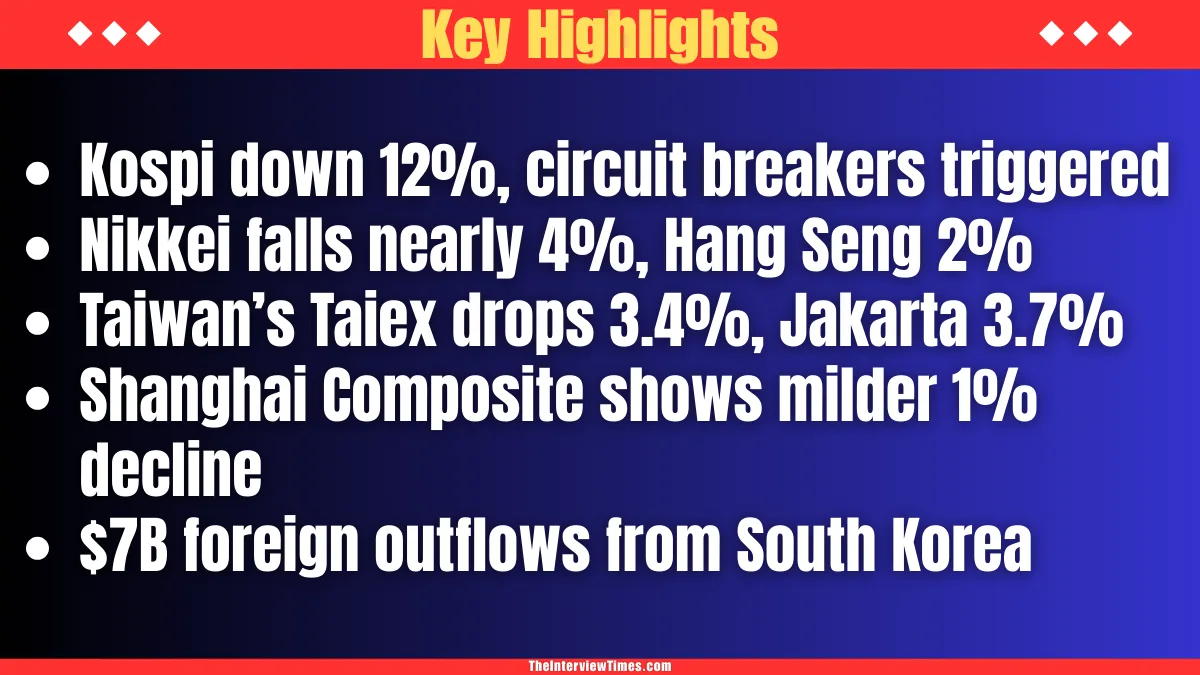
Asian stock markets entered a sharp downturn on March 4, 2026, triggered by the intensifying US-Israel-Iran conflict that began with strikes on February 28. South Korea’s Kospi index plummeted more than 12%, surpassing the record fall from the September 11, 2001 attacks, and dipped to around 5,000 points before partial recovery. The Korea Exchange activated circuit breakers on both Kospi and Kosdaq indexes after 8% drops, halting trading for 20 minutes in a bid to curb panic selling.
Japan’s Nikkei 225 index lost nearly 4%, closing down 3% at about 54,000 points, while Hong Kong’s Hang Seng fell 2% to 25,920. Taiwan’s Taiex shed 3.4%, Australia’s S&P/ASX 200 dropped 2%, and Jakarta stocks plunged 3.7% as risk aversion spread. Shanghai Composite bucked some trends with a milder 1% decline to 4,090 points.
Oil and Energy Fears Drive the Sell-Off
Crude oil prices climbed over 1.5% in early Asian trading, with Brent crude pushing toward multi-month highs amid fears of prolonged disruptions in Middle East supplies. The conflict has halted exports from the Persian Gulf region, including from Iran, Qatar, and Iraq, raising alarms over the Strait of Hormuz where 20-30% of global seaborne oil passes daily. Analysts at JPMorgan and others warn Brent could hit $120 per barrel if blockades occur, or even $200 in worst-case scenarios.
Asia faces acute vulnerability as it imports 60-90% of its oil from the Middle East, with Japan sourcing 90% of its needs there. Higher energy costs threaten to stoke inflation, squeeze corporate profits, and slow growth in export-heavy economies like South Korea and Taiwan. Samsung Electronics shares tumbled over 10%, reflecting tech sector exposure to rising input costs.
A Fragile Outlook Ahead
The rout erased much of Asia’s strong 2026 gains, with Kospi’s year-to-date advance cut from 50% to 37% after two brutal sessions. Foreign investors pulled over $7 billion from South Korean stocks recently, amplifying the pressure. Wall Street’s prior 0.9% S&P 500 drop set the tone, as President Trump’s signals of weeks-long operations fuel uncertainty.
Experts like those at Lloyds Bank note escalating missile and drone strikes across the region, including on US and Israeli targets, are deepening market fears. While some bargain hunting emerged, sustained oil spikes and conflict spread could prolong the pain for Asia’s interconnected markets.
Top News: India Energy Security Boost: Russia Vows Uninterrupted Oil and Gas Supply Amid West Asia Crisis
