
Discover how ISRO’s Bahubali Rocket and the CMS-03 satellite launch will change daily life in India—better internet, defence, and global tech power.
A New Dawn: What the Bahubali Rocket Means for You and India
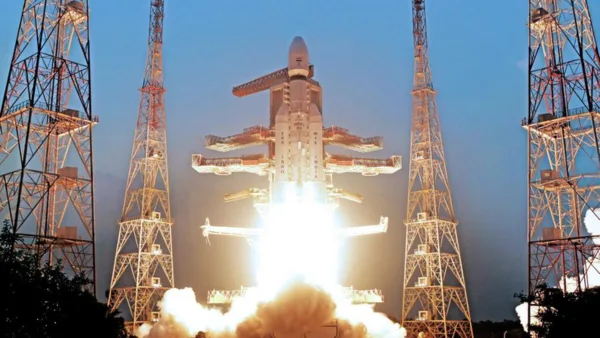
TheInterviewTimes.com | New Delhi | November3, 2025 — On November 2, 2025, India didn’t just launch another satellite—it launched a new era. ISRO’s Bahubali Rocket, officially known as LVM3-M5, thundered into the skies from Sriharikota carrying the heaviest communication satellite ever built in India, CMS-03.
But beyond the numbers, this mission is about how space technology is coming down to Earth—to transform your internet speed, national security, digital economy, and even India’s global image.
The Bahubali Rocket isn’t just a machine of fire and fuel—it’s a symbol of self-reliance, ambition, and everyday change.
Bahubali Rocket and the Everyday Indian: Faster Internet, Better Communication
The Bahubali Rocket launch has a direct impact on the way India connects. The CMS-03 satellite it carried is designed to strengthen India’s communication backbone, especially over oceans and remote regions.
That means:
- Faster internet in rural and coastal areas
- More reliable GPS and navigation systems for ships, aircraft, and even fishermen
- Stable video calls and data transfer, even in areas hit by natural disasters
From online classes in the Northeast to telemedicine in Lakshadweep, this single satellite—powered by the Bahubali Rocket—will help bridge India’s last digital gap.
Experience #LVM3M5’s mission milestones. Watch the liftoff video and the onboard camera video capturing its ascent from launch to orbit. pic.twitter.com/1jp2G9TyYV
— ISRO (@isro) November 2, 2025
Must Read: Resetting the Body’s Rhythm: The New Science Behind Protecting the Aging Brain
National Security Gets a Sky Shield
For the Indian Navy, CMS-03 is not just a satellite—it’s a new strategic advantage. The Bahubali Rocket has helped India place its most powerful communication satellite directly over the Indian Ocean Region, enabling:
- Secure communication between ships and command centers
- Real-time data sharing during rescue or combat operations
- Independence from foreign satellite networks
In short, India’s defense forces can now operate with more security, less dependency, and greater reach across one of the world’s most critical maritime zones.
Economic and Technological Leap—India Competes with the World
The Bahubali Rocket launch also marks India’s entry into an elite club of spacefaring nations capable of deploying heavy satellites with homegrown technology.
Until a few years ago, India had to rely on foreign rockets—like France’s Ariane-5—for heavier payloads. Now, LVM3-M5 can do it independently, saving millions of dollars and creating new export potential.
This boosts India’s credentials in the global space economy, projected to cross $1 trillion by 2030. ISRO’s low-cost, high-efficiency model makes it a preferred partner for countries and private companies seeking affordable, reliable space launches.
What a moment! #LVM3M5 lifts off with #CMS03, marking another milestone in India’s space journey. Relive the liftoff highlights pic.twitter.com/HOPEvYYljK
— ISRO (@isro) November 2, 2025
Must Read: The Future of Space Tourism: India’s Role with ISRO by 2025
Inside the Bahubali Rocket: The Engineering Behind the Glory
Standing 43.5 meters tall and weighing 642 tonnes, the Bahubali Rocket is built to lift heavy payloads—up to 8,000 kg into low Earth orbit or 4,000 kg into geosynchronous transfer orbit.
The secret lies in its three-stage architecture:
- Two solid boosters (S200) for raw power
- Liquid-fuel core stage (L110) for steady ascent
- Cryogenic upper stage (C25) using super-cooled hydrogen and oxygen for final precision
Each launch costs around $50–60 million—less than half of what Western companies charge. That’s why countries are lining up to use India’s rockets, turning ISRO into both a scientific powerhouse and an economic engine.
The CMS-03 Satellite—The Brain Behind the Bahubali Rocket’s Mission
The Bahubali Rocket carried CMS-03, a 4,410 kg communication satellite also known as GSAT-7R. Designed to replace the decade-old GSAT-7 (Rukmini), it features advanced multi-band transponders operating in C, Extended C, and Ku frequency bands.
What this means:
- Broader coverage across the Indian Ocean Region
- Crystal-clear data transmission for naval operations
- Enhanced capability to support disaster management and emergency response
CMS-03 will orbit 36,000 km above the Earth for the next 15 years, serving as a constant eye and ear in the sky for India’s defense and communication sectors.
Must Read: The Science of Sleep Cycles: How Your Brain Restores Itself Every Night
How the Bahubali Rocket Changes India’s Space Future
The Bahubali Rocket isn’t just about one satellite—it’s about where India is heading next.
This success strengthens ISRO’s roadmap toward:
- Gaganyaan, India’s first human spaceflight mission (2026)
- NGLV, a next-generation reusable rocket
- International partnerships, including NASA’s NISAR mission
Each of these programs will rely on the proven strength and reliability of the Bahubali Rocket.
It’s not hard to imagine a day when India offers launch services to multiple nations, not as a follower, but as a leader in space logistics.
What Will Change in Your Life
You may not feel it instantly, but the Bahubali Rocket launch is quietly reshaping life in India and beyond:
- More stable mobile networks during disasters and cyclones
- Improved satellite TV and streaming quality
- Precision farming, where farmers get real-time data from satellites
- Better weather forecasting, reducing loss from floods or droughts
- Safer navigation, from commercial shipping to fishing boats
In other words, every Indian—directly or indirectly—will benefit from the reach of this one rocket.
Global Impact—India Becomes the World’s Affordable Space Partner
While SpaceX dominates commercial launches, ISRO’s Bahubali Rocket is emerging as the cost-effective challenger. Its perfect success rate and low launch cost make it ideal for nations that want access to space but can’t afford Western pricing.
By offering reliable, budget-friendly launches, India positions itself as the “Space Hub for the Global South.”
This not only attracts foreign contracts but also boosts domestic innovation—from startups to universities working on small satellites and AI-driven data analytics.
Conclusion: The Bahubali Rocket and the Indian Dream
The Bahubali Rocket is more than a symbol of scientific achievement—it’s a mirror reflecting India’s ambition to rise as a self-reliant, tech-savvy power.
From improved internet access to defense security and economic growth, this mission shows that space is not just about reaching the stars—it’s about improving life on Earth.
As ISRO chairman S. Somanath said, “When we lift off from Sriharikota, the whole nation rises with us.”
And with the Bahubali Rocket, India has truly risen—boldly, brilliantly, and boundlessly.