
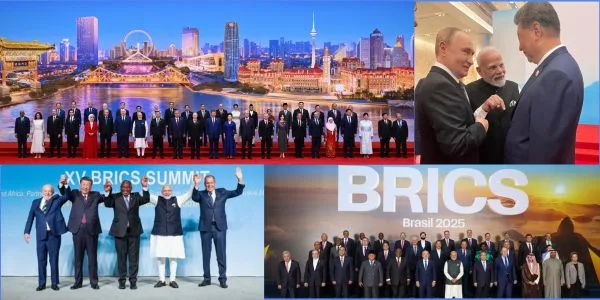
BRICS and SCO 2025 mark a turning point in global power, with expansion and the Tianjin Declaration reshaping economics, security, and diplomacy.
A New Phase in Global Geopolitics
In 2025, two major alliances—BRICS and the Shanghai Cooperation Organisation (SCO)—stand at the center of a potential shift in world order. Having covered global politics for over two decades, I have seen these groupings evolve from regional coalitions into frameworks with the capacity to challenge Western-dominated institutions.
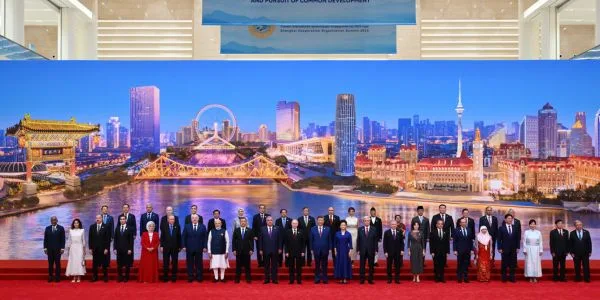
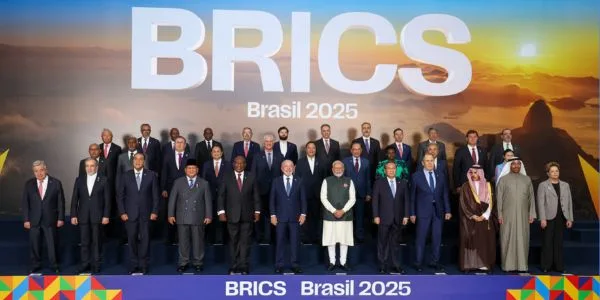
At the Tianjin SCO Summit (2025), leaders endorsed the Tianjin Declaration and advanced work on a ten-year plan for deeper cooperation. BRICS, meanwhile, has expanded beyond its original five to include Egypt, Ethiopia, Iran, the UAE, and Indonesia, bringing its membership to ten. Together, these forums are shaping new patterns in economics, security, and diplomacy.
BRICS and SCO 2025: Economic Shifts Toward Multipolar Finance
If BRICS continues to integrate successfully, the economic balance of power could tilt toward the Global South.
- Population & GDP: After its latest expansion, BRICS represents roughly 45–50% of the world’s population and about one-third of global GDP on a purchasing power parity (PPP) basis-already surpassing the G7 in PPP terms, according to IMF estimates.
- De-dollarization: The group is pushing initiatives like the New Development Bank and encouraging members to trade in local currencies. IMF COFER data shows the U.S. dollar now accounts for about 58% of global reserves, down from 70% in 2000. Russia–China trade is already settled largely in rubles and yuan, with Chinese data indicating more than 90% of their bilateral trade conducted in local currencies.
- South-South trade: Intra-BRICS trade is expanding steadily, though official numbers vary. What is clear is that these networks are beginning to redirect supply chains and financing away from Western hubs toward Eurasia, Africa, and Latin America.
The SCO, which now includes China, Russia, India, Pakistan, Iran, and Belarus among others, adds weight by anchoring Eurasian trade corridors and energy routes. Its members together account for a substantial share of global energy supplies, with BRICS(+) responsible for about 40% of the world’s crude oil output.
Must Read: Tianjin Declaration: A Pivotal Step Toward Multipolarity and Regional Stability at SCO Summit 2025
BRICS and SCO 2025: Geopolitical Realignment and Power Balance
On the diplomatic front, BRICS and SCO are seeking a multipolar balance.
- UN Reform: BRICS has consistently called for greater representation of developing nations in the UN Security Council and international institutions.
- Military capacity: According to SIPRI, China’s military budget reached ~$314 billion in 2024, placing it second only to the U.S. While combined defence spending for BRICS varies by membership definition, it clearly provides a counterweight to NATO and the G7.
- Strategic expansion: The SCO’s reach has extended from Central Asia into the Middle East and Eurasia, aligning with China’s Belt and Road Initiative (BRI). The group now provides an institutional platform to address disputes, resist sanctions, and promote alternatives to Western courts and banking systems.
BRICS and SCO 2025: Security Cooperation in a Changing World
Since its founding in 2001, the SCO has placed strong emphasis on security cooperation.
- Its Regional Anti-Terrorist Structure (RATS) coordinates intelligence sharing, while regular joint military drills have improved interoperability among the bloc’s forces.
- SCO members believe this cooperation strengthens stability in Afghanistan, Central Asia, and the Middle East—regions long destabilized by terrorism and illicit trade.
Still, some analysts caution that the SCO may also serve as a platform for Chinese power projection, which could heighten U.S.–China competition.
Must Read: BRICS: A Global Force Facing U.S. Pressure and Shifting Ties with India and Brazil
The Road Ahead: Promise and Peril
The future of BRICS and SCO is not guaranteed.
- Internal challenges: Divergences remain, from the India–China border standoff to vast economic gaps within BRICS (China’s GDP at $18 trillion vs. Ethiopia’s under $200 billion).
- Western pushback: In 2025, the U.S. has proposed broad-based tariffs, intensifying friction with China and raising the possibility of a “BRICS tariff” strategy in future.
If these alliances succeed, the result could be a more democratic, multipolar world order -one where the Global South has greater voice in finance, trade, and security. But the same forces might also lead to fragmentation into rival blocs, increasing the risk of proxy conflicts and economic volatility.
Conclusion
The rise of BRICS and SCO 2025 reflects a broader reality: the world is no longer unipolar. Whether this shift leads to fairer global governance or new geopolitical rivalries will depend on how effectively these alliances manage internal differences and external pushback.
For now, one thing is clear: the West no longer calls all the shots, and the coming decade will reveal whether these coalitions can translate potential into lasting power.
Mahendra Singh is a seasoned journalist and editor at TheInterviewTimes.com with over 28 years of experience. An alumnus of IIMC, he writes on international affairs, politics, education, environment, and key social issues.