

New Delhi, January 17, 2026, 12:01 p.m. IST
Chabahar Port remains vital for India’s access to Central Asia as US sanctions pressure grows. Here’s a full explainer on the project and geopolitics.
India’s strategic Chabahar Port project in Iran is once again at the center of global attention as the deadline for a key US sanctions waiver approaches. The current waiver, which allows India to operate the port, is set to expire on April 26, 2026. Amid reports suggesting India may withdraw due to rising US pressure, the Indian government has firmly rejected any such possibility.
Officials in New Delhi have made it clear that leaving the Chabahar Port project is not an option. India has recently transferred $120 million to Iran, fulfilling part of its committed investment. The government is also exploring new operational models, including the creation of a special company to continue port operations while complying with international restrictions.
Weekly Media Briefing by the Official Spokesperson (January 16, 2026)
— Randhir Jaiswal (@MEAIndia) January 16, 2026
https://t.co/x2f9W3pIAA
The situation has become more complex following US President Donald Trump’s warning on January 12, 2026, threatening a 25 percent tariff on countries trading with Iran. This move has intensified geopolitical pressure and highlighted the difficult balance India must maintain between its ties with Washington and Tehran.
Top World News: Explained: Why the United States Wants Greenland
What Is the Chabahar Port Project?
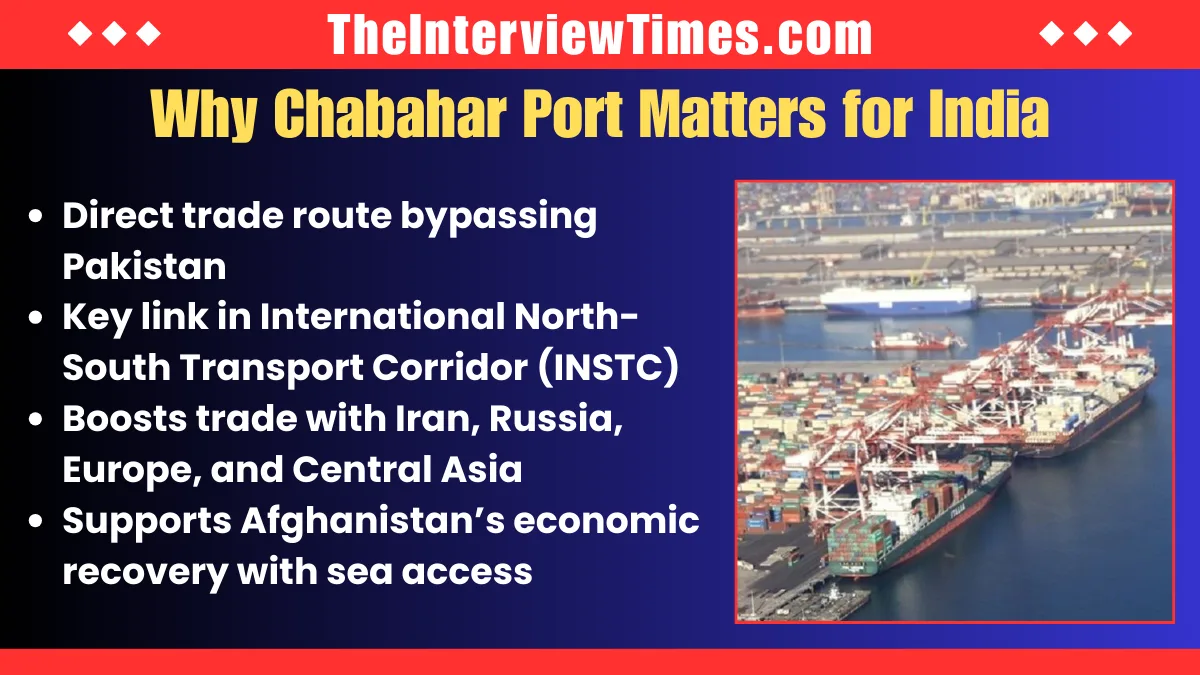
Chabahar Port lies in southeastern Iran, on the shores of the Gulf of Oman. It is Iran’s only ocean-facing port and holds major strategic importance. The project began with a trilateral agreement signed in 2016 between India, Iran, and Afghanistan.
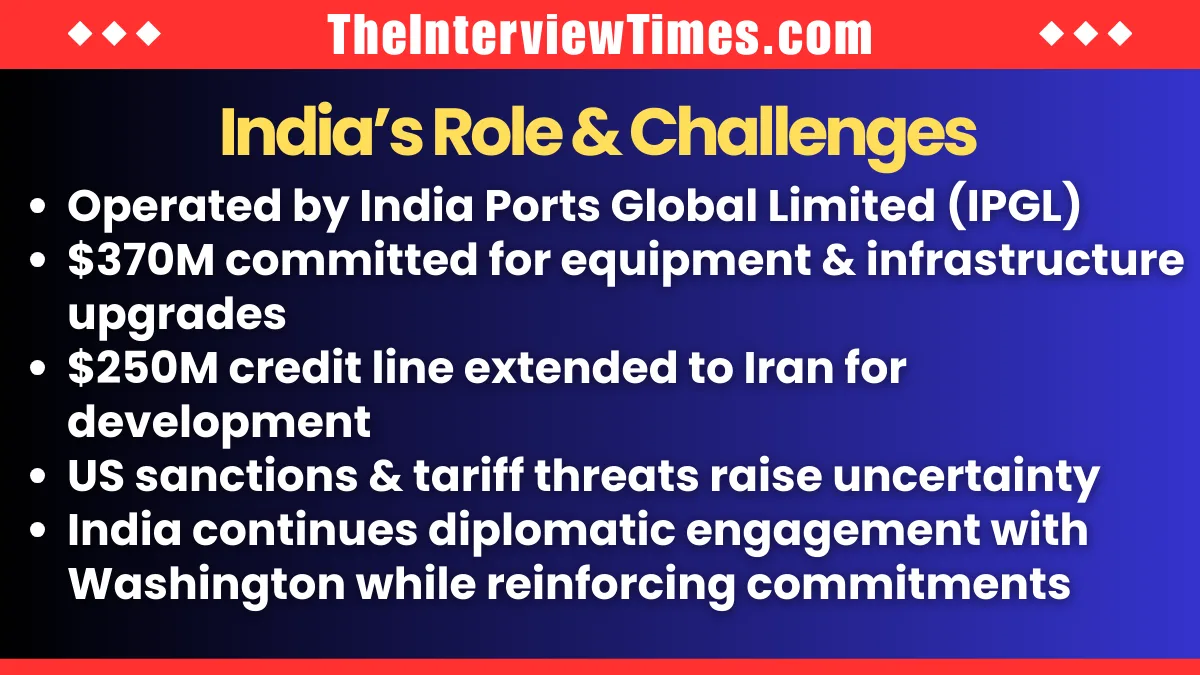
In 2024, India and Iran signed a 10-year agreement allowing India to operate the Shahid Beheshti terminal at Chabahar. Under this deal, India committed to investing $370 million for port equipment, infrastructure upgrades, and road connectivity.
India manages the port through India Ports Global Limited (IPGL). The project also links the port to rail and road networks extending into Afghanistan and Central Asia, making it a major regional trade hub.
Why Is Chabahar Port Important for India?
Chabahar Port gives India a direct trade route to Afghanistan and Central Asia, bypassing Pakistan entirely. This reduces both transportation time and costs for Indian exports.
The port is also a key part of the International North-South Transport Corridor (INSTC), which aims to connect India, Iran, Russia, and Europe. Once fully operational, the corridor could significantly boost trade volumes and regional economic integration.
For Afghanistan, the port offers a vital sea access route, supporting economic recovery after decades of conflict. For Iran, it opens new trade opportunities and strengthens economic resilience amid sanctions.
Beyond economics, the project supports regional stability by encouraging lawful trade, development, and cooperation.
Top World News: Yemen War Explained: Who’s Fighting, Why It Started, and What’s Next
Geopolitical Significance of Chabahar Port
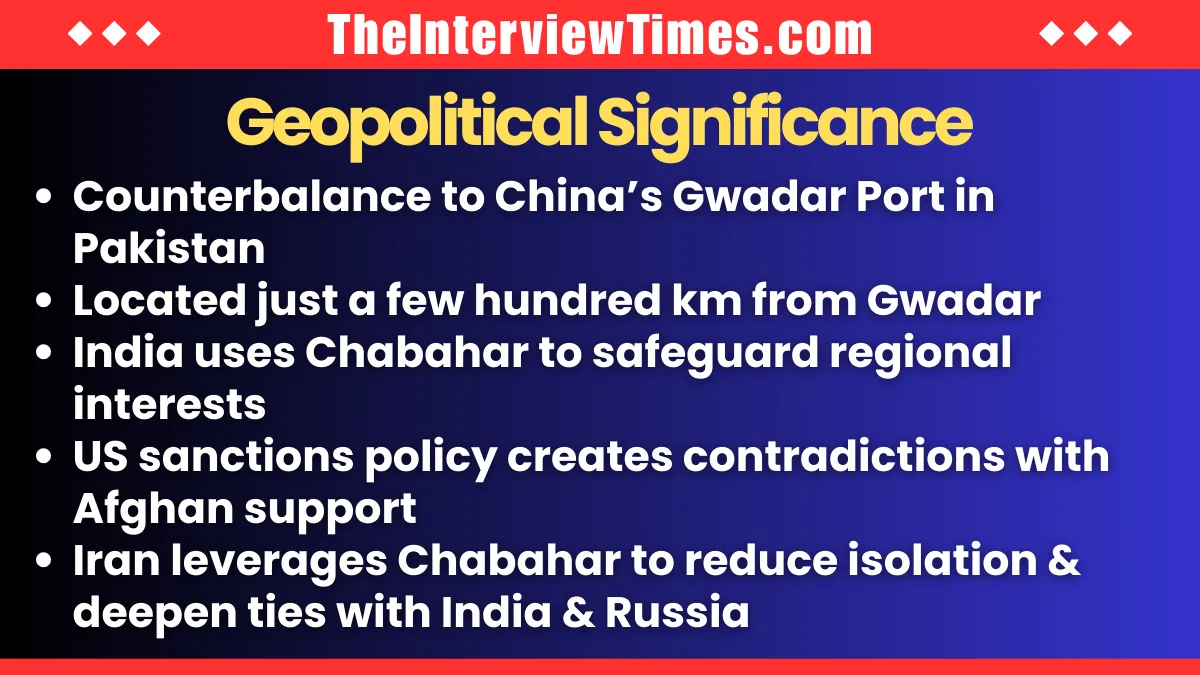
Chabahar plays a central role in the strategic competition in Asia. India views the port as a counterbalance to China’s Gwadar Port in Pakistan, which is part of Beijing’s Belt and Road Initiative.
Gwadar and Chabahar are located just a few hundred kilometers apart. While China expands its influence through its so-called “String of Pearls” strategy, India sees Chabahar as a way to protect its regional interests and maintain strategic balance.
For the United States, Chabahar has historically been viewed as useful for supporting Afghanistan. However, US efforts to isolate Iran through sanctions often clash with this objective, creating policy contradictions.
Iran, meanwhile, uses Chabahar to reduce economic isolation and strengthen ties with regional powers like India and Russia.
India’s Role and Commitments
India is the main driving force behind the port’s development. It has supplied cranes, cargo-handling equipment, and technical expertise. Indian personnel are involved in the port’s daily operations.
New Delhi has also extended a $250 million credit line to Iran for infrastructure development linked to the port. The project aligns closely with India’s “Connect Central Asia” policy, which focuses on expanding trade, energy cooperation, and diplomatic engagement.
India is actively engaging with countries like Uzbekistan, Kazakhstan, and Russia to expand usage of the Chabahar route under the INSTC framework.
Top World News: China-Taiwan Conflict Explained: Historical Roots and Current UN Escalation
US Sanctions and Ongoing Challenges
US sanctions on Iran remain the biggest challenge facing the Chabahar Port project. Although the US granted India a limited waiver in 2018, citing Afghanistan’s needs, that exemption has gradually narrowed.
In 2025, the US reduced the scope of the waiver and extended it only temporarily until April 2026. The latest tariff threat under President Trump has further increased uncertainty.
US sanctions make banks and private companies hesitant to participate, raising costs and slowing progress. Despite this, India continues diplomatic engagement with Washington to explain the strategic and humanitarian importance of Chabahar.
Why Chabahar Port Still Matters
The Chabahar Port project clearly shows how global geopolitics directly impact infrastructure and trade. For India, the port is not just an economic asset but a strategic necessity.
As pressure from major powers increases, India is walking a diplomatic tightrope. However, its recent financial commitments and strong public statements suggest New Delhi is determined to protect its long-term interests and regional role.
Top World News: Thailand’s $28 Billion Kra Canal: A Bold Vision to Bypass the Strait of Malacca
