
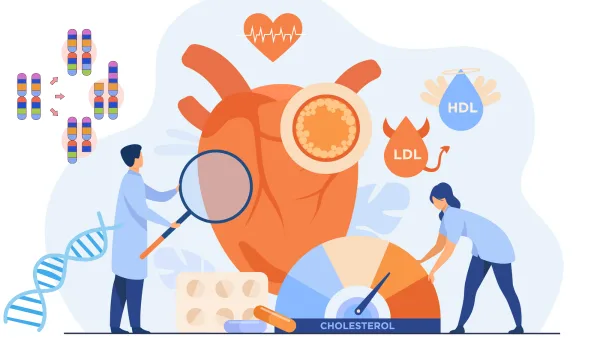
CRISPR gene therapy shows a 50% reduction in cholesterol and triglycerides in a groundbreaking trial, marking a new era in heart disease treatment.
Key Points
- New CRISPR-based therapy cuts cholesterol and triglycerides by nearly 50%.
- Phase 1 trial published in The New England Journal of Medicine.
- Single dose permanently deactivates the ANGPTL3 gene in the liver.
- Promising results raise hope for long-term heart disease prevention.
- FDA requires 15-year monitoring for gene therapy safety.
TheInterviewTimes.com | New Delhi | November 8, 2025 —In a major scientific milestone that could redefine cardiovascular care, researchers unveiled a CRISPR gene therapy that dramatically reduces cholesterol and triglyceride levels. Presented at the American Heart Association’s 2025 Scientific Sessions, the treatment achieved a nearly 50% reduction in LDL “bad” cholesterol and triglycerides among patients who previously failed to respond to conventional medications.
The Phase 1 clinical trial, published in The New England Journal of Medicine, involved 15 adults aged 31 to 68 from Australia, New Zealand, and the UK. All participants suffered from treatment-resistant lipid disorders — including uncontrolled cholesterol levels — despite years of taking statins and other therapies.
A Single Dose for Lifelong Cholesterol Control
The new therapy, called CTX310, is built on CRISPR-Cas9 technology, which edits specific DNA sequences in the liver to permanently deactivate the ANGPTL3 gene. This gene regulates lipid metabolism, and turning it off leads to naturally lower cholesterol and triglyceride levels.
According to Dr. Steven Nissen, chief academic officer at the Cleveland Clinic Heart, Vascular and Thoracic Institute, “Achieving 50% reductions in LDL cholesterol and triglycerides with one treatment is unprecedented. Fifteen years ago, such a breakthrough seemed impossible.”
Within two weeks of infusion, patients saw a rapid and sustained drop in both LDL cholesterol and triglycerides, maintaining lower levels throughout the 60-day follow-up. Some participants showed reductions as high as 87% for LDL and 84% for triglycerides — results that rival or surpass any existing drug therapy.
Must Read: Chronic Stress Is Rewiring Our Brains — And Changing the Way We Think
Safety and Regulatory Oversight
While no serious side effects were directly linked to the CRISPR therapy, a few participants experienced temporary back pain, nausea, or mild liver enzyme increases, all of which resolved naturally. One patient with pre-existing heart disease died six months later, though investigators confirmed the death was unrelated to cholesterol treatment or the gene-editing process.
Still, researchers emphasize the importance of long-term vigilance. Dr. Kiran Musunuru of Penn Medicine highlighted that ongoing safety assessments are crucial, especially in light of past CRISPR-related fatalities in unrelated studies.
Why This Matters for Global Heart Health
Heart disease remains the leading cause of death globally, responsible for nearly 2,500 deaths each day in the United States alone. Despite proven benefits of statins and PCSK9 inhibitors, millions struggle to maintain normal cholesterol levels due to side effects or lack of adherence.
This CRISPR-based approach offers hope for a one-time, lifelong correction. If validated in larger Phase 2 trials — expected to begin in late 2025 or early 2026 — CTX310 could transform how doctors manage cholesterol and lipid disorders worldwide.
The U.S. Food and Drug Administration requires all gene therapies to undergo 15 years of safety monitoring, ensuring that potential long-term genetic risks are thoroughly evaluated before broad approval.
Must Read: The Science of Sleep Cycles: How Your Brain Restores Itself Every Night
A New Era for Cholesterol Treatment
Experts believe that the success of CTX310 could mark the beginning of a new class of therapies that address cholesterol and cardiovascular risk at the genetic level. “We’re entering a truly pioneering era for heart medicine,” Dr. Nissen stated. “If these results hold, we may one day prevent heart attacks and strokes with a single gene-editing session.”
The implications go beyond cholesterol control — this study may pave the way for using CRISPR to tackle other common metabolic diseases in the future.
As scientists continue to monitor outcomes and expand trials, patients and clinicians alike await the next chapter in the battle against cardiovascular disease. This breakthrough may finally offer humanity a durable, genetic defense against one of its deadliest foes — cholesterol.