
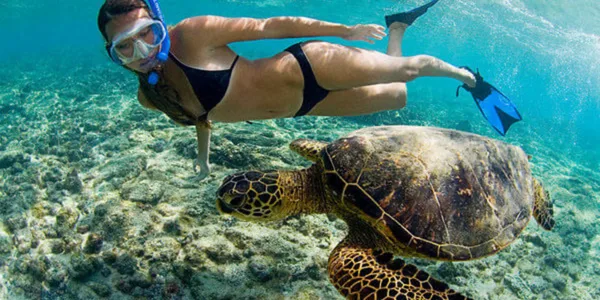
Green sea turtle recovery marks a global conservation success as IUCN reclassifies the species from endangered to least concern after decades of protection.
Abu Dhabi, United Arab Emirates –October 10, 2025 | The Interview Times — In a rare beacon of hope amid escalating biodiversity crises, the International Union for Conservation of Nature (IUCN) has reclassified the green sea turtle (Chelonia mydas) from Endangered to Least Concern on its prestigious Red List of Threatened Species. The announcement marks a defining moment in global conservation history—celebrating decades of green sea turtle recovery efforts that have reversed the fortunes of one of the ocean’s most iconic species.
Unveiled today at the IUCN World Conservation Congress in Abu Dhabi, the update recognizes a 28% population rebound since the 1970s, showing that persistent conservation can indeed heal the planet’s ecosystems. “This is one of the great conservation success stories of our time,” said Dr. Jeffrey Seminoff, co-chair of the IUCN Marine Turtle Specialist Group. “From the brink of oblivion to a thriving comeback, the green turtle reminds us that recovery is possible when science, policy, and communities unite.”
Key Highlights: Green Sea Turtle Recovery
- IUCN Update: Green sea turtle reclassified from Endangered to Least Concern in 2025.
- Population Rebound: Global populations up by an estimated 28% since the 1970s.
- Conservation Milestones: International agreements (CITES 1973), domestic protections, and Turtle Excluder Devices (TEDs) significantly reduced threats.
- Regional Successes:
- Raine Island, Australia: 20,000 nesting turtles counted in 2025, a 50% rise since 2014.
- Hawaii: Nesting females increased from under 100 to over 800 annually.
- Seychelles: Tenfold population surge after hunting bans since 1968.
- Ecological Impact: Recovery helps restore seagrass beds, coral reefs, and fisheries.
- Ongoing Threats: Climate change, plastic pollution, illegal harvesting, and bycatch still pose risks.
- Global Lesson: Green sea turtle recovery shows that science, policy, and community action can save endangered species.

Must Read: Who is Maria Corina Machado, 2025 Nobel Peace Prize Winner?
A Species on the Edge: The Perilous Past
The green sea turtle, the largest of the hard-shelled sea turtles, once roamed tropical and subtropical oceans in vast numbers—estimated between 19 and 33 million. Known for its emerald-hued fat, which inspired its name, the turtle plays a vital ecological role. By grazing seagrasses and algae, it helps maintain healthy coastal ecosystems, supporting coral reefs and fisheries.
However, by the mid-20th century, centuries of exploitation had devastated populations. Commercial hunting for meat, eggs, and shells decimated up to 95% of global numbers. Habitat destruction, bycatch in fishing nets, and pollution pushed the species to the brink. The IUCN listed it as Endangered in 1982.
“The green turtle was a poster child for marine biodiversity loss,” noted marine biologist Dr. Wallace J. Nichols, author of A Beautiful Ocean Lie. “Decades ago, beaches that once hosted thousands of nesting females were eerily silent. It was a wake-up call for the world.”
📢BREAKING NEWS: Arctic seals threatened by climate change, birds decline globally but green sea turtle rebounding – @IUCNRedList
— IUCN (@IUCN) October 10, 2025
Learn more from the latest update to the IUCN Red List of Threatened Species™, launched today at the #IUCNcongress.https://t.co/sYIJAAS28A pic.twitter.com/SAGGXUIMSD
The Tide Turns: Global Efforts Behind the Green Sea Turtle Recovery
The turning point began in the 1970s with landmark agreements like the 1973 Convention on International Trade in Endangered Species (CITES), which banned commercial trade. The U.S. Endangered Species Act of 1989 and similar global measures cemented protection.
A major breakthrough came with Turtle Excluder Devices (TEDs) — an innovation in shrimp trawling that allowed turtles to escape nets, cutting bycatch by up to 97%. Protected nesting beaches, hatchery programs, and community-led conservation transformed the species’ fate.
In Hawaii, nesting females increased from under 100 in the 1970s to more than 800 annually. In Australia’s Raine Island, surveys in 2025 recorded 20,000 nesting turtles in a single season, a 50% rise from 2014. Meanwhile, Seychelles, after banning turtle hunting in 1968, witnessed a tenfold population surge.
These successes demonstrate the power of green sea turtle recovery when nations, scientists, and communities act together. “Green turtles are ecosystem engineers,” explained Seminoff. “Their return strengthens seagrass meadows that store carbon and sustain fisheries worth billions.”
Must Read: Cassowary Bird: Facts, Habitat, and Why It’s Called the World’s Most Dangerous Bird

Lingering Shadows: Threats on the Horizon
While the IUCN’s new classification celebrates a monumental green sea turtle recovery, scientists warn that threats remain. Climate change poses the greatest danger—rising seas are eroding nesting beaches, and warmer sands are producing predominantly female hatchlings, risking long-term population imbalance.
At Raine Island, hatchling survival has declined by 80% due to inundation. Illegal poaching continues in parts of Southeast Asia, while plastic pollution and fishing gear entanglements still claim thousands of lives yearly. “We’ve pulled back from the abyss, but the rope is fraying,” cautioned Nichols. “This downgrade is a milestone, not a finish line.”
At the Abu Dhabi Congress, delegates are discussing new global measures such as AI-based turtle migration tracking and expanded TED adoption. Organizer Razan Al Mubarak, the UN Climate Change High-Level Champion, called it “a signal of Gulf leadership in ocean conservation.”

A Blueprint for Hope: Lessons from the Green Sea Turtle Recovery
The green sea turtle recovery joins a prestigious list of conservation comebacks, including the bald eagle and humpback whale. For the 172,620 species currently assessed on the Red List, this achievement underscores a vital truth: proactive protection works.
The success has ignited global enthusiasm. Social media campaigns like #TurtleTriumph celebrate the moment, while conservation volunteers from Costa Rica to Seychelles share stories of restored beaches and thriving hatchlings. “From my beach patrols to this global win—it’s proof every effort counts,” tweeted a volunteer from the Olive Ridley Project.
The IUCN urges continued vigilance, noting that conservation is an ongoing responsibility. Individual actions—reducing plastic use, supporting sustainable seafood, and reporting turtle sightings—remain key to sustaining this progress.
As Dr. Seminoff concludes, “The ocean’s giants are swimming stronger today because we chose to fight for them. Now, let’s do the same for the rest.”
The journey of the green sea turtle recovery is a powerful lesson: protecting nature today ensures a thriving ocean tomorrow.