
Cassowary bird facts, habitat, and behavior explained. Discover why it’s called the world’s most dangerous bird and the importance of World Cassowary Day.
Among the rainforests of northern Australia, Papua New Guinea, and nearby islands lives a bird unlike any other—the cassowary bird. Known for its striking colors, towering height, and razor-sharp claws, it has been called the “world’s most dangerous bird.” But beyond its fearsome reputation, the cassowary plays an irreplaceable role in sustaining rainforest ecosystems.
Cassowary Bird: A Living Relic
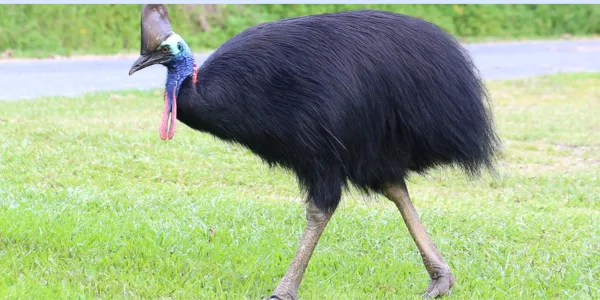
The cassowary bird is a direct link to prehistory, with a lineage that stretches back more than 60 million years. Standing up to 6.6 feet tall and weighing over 60 kilograms, it is the third-largest bird on Earth, after the ostrich and emu. Its glossy black plumage, vivid blue and purple neck, crimson wattles, and horn-like casque on its head make it one of the most visually unique creatures in the animal kingdom.
Why the Cassowary Bird Is Called Dangerous
The cassowary bird rarely attacks unprovoked, but when threatened, it can become extremely dangerous. Its most notable weapon is the dagger-like inner claw on each foot, which can grow up to 10 cm long. With powerful legs, a cassowary can deliver kicks strong enough to break bones or even kill.
There have been documented cases of cassowary attacks on humans, mostly when people tried to feed them or entered their territory. Wildlife authorities in Queensland consistently warn residents and tourists: admire cassowaries from a distance, never approach them.
Must Read: Every Year, 10M Hectares of Forests Vanish-Halting Deforestation Is Our Only Hope
Habitat and Diet
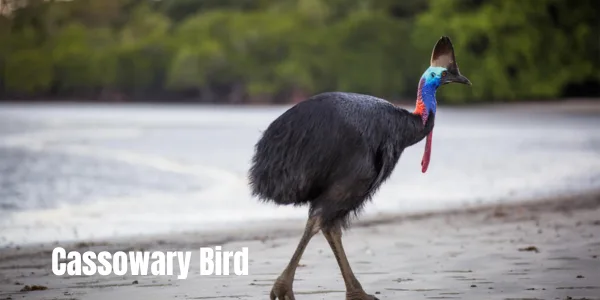
Cassowary birds thrive in tropical rainforests, wetlands, and mangroves, particularly in Queensland and Papua New Guinea. Despite their intimidating appearance, they are primarily fruit eaters. Cassowaries swallow large fruits whole, dispersing seeds across vast areas. This unique feeding habit has earned them the title of “rainforest gardeners.” More than 70 plant species rely on cassowaries for seed dispersal—many of them too large for other animals to consume.
Ecological Importance
The cassowary’s survival is directly tied to rainforest health. By dispersing seeds of large fruiting trees, cassowary birds maintain biodiversity and ensure forest regeneration. Some tree species can only germinate after passing through a cassowary’s digestive system, highlighting their keystone role in rainforest ecosystems. Without cassowaries, these forests would struggle to regenerate.
Conservation Concerns
Cassowaries are listed as vulnerable by the International Union for Conservation of Nature (IUCN). Their populations face serious threats, including:
- Habitat destruction due to logging and urban expansion.
- Road accidents, a leading cause of cassowary deaths in Queensland.
- Dog attacks on the rainforest’s edge.
- Climate change, which disrupts the fruiting cycles of rainforest plants.
Protecting the cassowary bird means preserving not just a single species, but the ecological balance of entire rainforests.
Must Read: Air Pollution Kills Over 18,000 Daily – Clean Air Day Calls for Action
World Cassowary Day: A Global Reminder
Every year on September 26, the world celebrates World Cassowary Day, first observed in 2014 at Mission Beach, Queensland. The event highlights the importance of cassowary conservation and raises awareness about the bird’s role as a “rainforest gardener.”
Community activities include educational talks, art exhibitions, rainforest walks, and campaigns encouraging motorists to slow down in cassowary habitats. For locals, it’s also a day to strengthen coexistence with a bird that has lived alongside humans for millennia.
Human Encounters and Safety
For communities living near cassowary habitats, experts recommend the following safety measures:
- Never feed cassowaries—it makes them aggressive and dependent.
- Keep pets under control in cassowary regions.
- Drive carefully on roads marked with cassowary crossing signs.
- If approached, stay calm, back away slowly, and avoid sudden movements.
A Bird of Mystery and Majesty
The cassowary bird may be the world’s most dangerous bird, but it is also one of the most essential. Its prehistoric lineage reminds us of Earth’s ancient past, while its ecological role shapes the future of rainforests.
To fear the cassowary is natural—but to respect and protect it is necessary. Preserving this bird is not just about saving a species, but about securing the survival of rainforests and the countless life forms that depend on them.
Conclusion
The cassowary bird stands as both a symbol of nature’s power and its fragility. Towering, colorful, and potentially lethal, it embodies the delicate balance between humans and wildlife. As we mark World Cassowary Day on September 26, the call is clear: coexist with respect, protect with urgency, and recognize that the rainforest’s most intimidating guardian is also one of its most vital.